

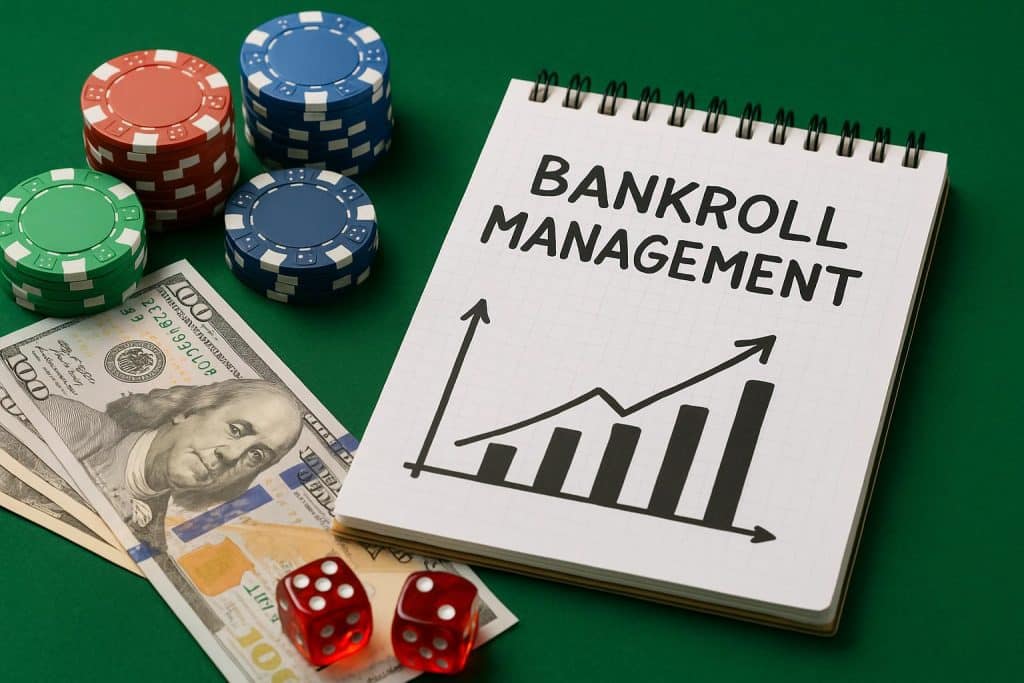
Entering the world of online gaming requires more than just luck or a knowledge of game mechanics; it requires a disciplined approach to financial management. While platforms like bplay555 offer a wide array of entertainment options, the foundation of a sustainable and enjoyable gaming experience lies in how effectively a player manages their funds. Without a solid plan, even the most skilled players can find themselves in precarious positions. This comprehensive guide explores the professional strategies necessary for maintaining control over your finances while maximizing the entertainment value of your gaming sessions.
Why is Establishing a Dedicated Bankroll the First Step?
The concept of a “bankroll” is borrowed from professional gambling and investment circles, yet it applies to every player, regardless of their stake levels. A bankroll is a specific amount of money set aside exclusively for gaming purposes. It is funds that you can afford to lose without impacting your daily life, bill payments, or savings goals.
Separating your gaming funds from your personal finances is crucial for psychological clarity. When you play with money from your general checking account, the lines blur between “entertainment money” and “rent money,” leading to stress and poor decision-making. By segregating these funds, you create a safety buffer. Professional players often suggest that a bankroll should be viewed as the cost of entertainment, much like buying a ticket to a concert or a sporting event. If the money is lost, the “ticket” has been purchased, and the experience is over. If you win, it is a bonus. This mental shift is the primary defense against irresponsible spending.
How Should Players Calculate Their Gaming Budget?
Determining the exact size of a bankroll is a personal calculation based on disposable income. Financial experts often cite the 50/30/20 rule for general budgeting—50% for needs, 30% for wants, and 20% for savings. Gaming falls strictly into the 30% “wants” category, competing with dining out, streaming subscriptions, and hobbies.
To calculate a safe monthly budget, start by analyzing your net income after all fixed expenses and savings contributions are deducted. From the remaining discretionary income, decide what percentage you are comfortable allocating to gaming. For many smart players, this figure might be 5% to 10% of their disposable income. For example, if you have $1,000 in truly disposable income per month, a safe gaming budget would be between $50 and $100. Sticking to this percentage ensures that gaming remains a fun pastime rather than a financial burden. It is imperative to recalculate this figure monthly, as income and expenses fluctuate.
What is Unit Betting and Why is it Effective?
Once a total bankroll is established, the next question is how to deploy it during a session. This is where “unit betting” becomes a valuable strategy. A unit is a fixed percentage of your total bankroll used for a single bet or spin. Professional players rarely bet arbitrary amounts; they stick to a consistent unit size to weather the natural variance of games.
A common standard in the industry is the 1% to 2% rule. This suggests that no single wager should exceed 1% or 2% of your total session bankroll. If you sit down with $100 for a session, your maximum bet should be between $1 and $2. This approach extends gameplay and protects against rapid depletion of funds during a losing streak. It essentially buys time—time to enjoy the game and time for luck to potentially turn around. By standardizing your bet size, you remove the emotional impulse to “chase” losses by increasing stakes, a behavior that statistically leads to faster ruin.
How Do Win Limits and Loss Limits Protect Profit?
Discipline in gaming is often defined by knowing when to stop. This is quantified through “Stop-Loss” and “Take-Profit” limits. These are non-negotiable boundaries set before a session begins.
A Stop-Loss limit is the maximum amount of money you are willing to lose in a single session. Once this limit is reached, play must cease immediately. A common recommendation is 50% of the session bankroll. If you start with $100 and drop to $50, you walk away. This ensures you never leave a session completely empty-handed and preserves capital for another day.
Conversely, a Take-Profit limit (or Win Limit) is often harder for players to adhere to because it requires stopping while ahead. The dopamine rush of winning often encourages players to continue, believing a “hot streak” will last indefinitely. However, statistical probability dictates that the house edge will eventually erode winnings. Setting a goal to walk away after increasing your bankroll by 20% or 30% locks in profit. Smart players view a session where they break even or make a small profit as a significant victory.
How Does Game Volatility Influence Budget Strategy?
Not all games consume a bankroll at the same rate. Understanding “volatility” or “variance” is key to tailoring your budget. Volatility refers to the risk level associated with a specific game.
- Low Volatility Games: These pay out smaller amounts more frequently. They are ideal for players with smaller bankrolls or those who wish to play for longer durations without seeing wild swings in their balance. Examples often include blackjack (with basic strategy) or certain low-variance slots.
- High Volatility Games: These pay out less frequently but offer the potential for much larger wins. These games can deplete a bankroll quickly during “dry spells.”
Smart budgeting requires matching your bankroll to the game’s volatility. If you choose to play high-volatility games, you generally need a larger bankroll or a much smaller bet size (relative to your bankroll) to survive the dry spells. If your budget is tight, sticking to low-volatility options is a statistically safer way to extend your entertainment time. Ignoring volatility is a common error that leads to premature session endings.
Why is Tracking Statistics Important for Improvement?
Professionalism in gaming involves record-keeping. While it may seem tedious for a hobby, maintaining a simple log of your sessions provides invaluable data. A “Statistics Blog” approach to your own history allows you to identify trends and leaks in your strategy.
Your tracking log should include:
- Date and time of session.
- Game played.
- Starting bankroll.
- Ending bankroll.
- Net profit/loss.
- Mood/Emotional state.
Over time, this data reveals patterns. You might notice that you consistently lose money on weekends but break even on Tuesdays, or that you perform better at table games than slots. Perhaps you realize that sessions longer than one hour result in higher losses due to fatigue. This data-driven approach moves you from a passive player to an active manager of your hobby, allowing you to optimize your behavior for better results.
How Can Players Avoid the “Gambler’s Fallacy”?
A critical aspect of budgeting is protecting your funds from logical fallacies. The most dangerous of these is the “Gambler’s Fallacy”—the belief that past events influence future outcomes in independent events. For example, believing that a slot machine is “due” to pay out because it hasn’t hit in a while, or that red must come up on roulette because black has hit ten times in a row.
This fallacy destroys budgets. It leads players to increase their bets to capitalize on a predicted outcome that has no statistical basis. Smart players understand that every spin, hand, or roll is an independent event with fixed odds. Your budget should never be adjusted based on the feeling that a win is imminent. Sticking to your pre-set unit betting strategy is the only way to insulate your bankroll from this psychological trap.
What Role Does Time Management Play in Budgeting?
Time is money, especially in gaming. The longer you play, the more exposure your bankroll has to the house edge. Therefore, budgeting time is just as important as budgeting money.
Setting a strict time limit for gaming sessions helps preserve your bankroll. Fatigue leads to mistakes, emotional betting, and a lack of focus. A standard recommendation is to limit sessions to 45 or 60 minutes, followed by a mandatory break. This allows the brain to reset and keeps the decision-making process sharp. Furthermore, limiting frequency—such as playing only twice a week rather than daily—drastically reduces the monthly financial impact of the hobby. Using the alarm on your phone or the “reality check” tools provided by many gaming platforms can help enforce these time boundaries.
How Should Bonuses and Promotions Be Handled?
Online platforms frequently offer bonuses, free spins, or deposit matches. While these can boost a bankroll, smart players approach them with caution and a calculator. Bonuses often come with “wagering requirements” or “playthrough requirements,” meaning you must bet a certain multiple of the bonus amount before you can withdraw any winnings.
From a budgeting perspective, bonuses should be treated as “play money” rather than cash equivalents until the wagering requirements are met. Do not increase your base betting unit because your balance looks inflated by a bonus. Continue to play as if you only have your deposited funds. If the bonus converts to real cash, great; if not, you haven’t risked your core bankroll chasing a difficult target. Always read the fine print to understand which games contribute to wagering requirements, as playing restricted games can void the bonus entirely.
What is the Significance of Emotional Control (Tilt)?
“Tilt” is a poker term that applies to all gaming. It refers to a state of emotional frustration or anger that clouds judgment, usually following a bad beat or a losing streak. When a player is “on tilt,” they abandon their budget, ignore their stop-loss limits, and bet aggressively to win back their money.
Budgeting is a logical exercise; tilt is an emotional reaction. The two cannot coexist. Recognizing the physical signs of tilt—increased heart rate, frustration, typing aggressively in chat—is vital. The smart player’s rule is simple: if you feel tilt coming on, the session ends immediately. No exceptions. Preserving your mental state is preserving your bankroll. There is no strategy or budget that can withstand the reckless betting patterns caused by emotional distress.
Conclusion: Sustainability Through Discipline
Budgeting for online gaming is not about restricting fun; it is about ensuring that the fun can continue indefinitely. By establishing a dedicated bankroll, utilizing unit betting, respecting volatility, and keeping detailed records, players transform their experience from a chaotic gamble into a managed hobby. The strategies outlined above—rooted in discipline and mathematical probability—are the hallmarks of a smart player. Remember that the goal of gaming is entertainment. When the cost of that entertainment is controlled and predictable, the experience remains positive, safe, and enjoyable.