

For founders building online platforms in highly regulated industries, the instinct is often the same: move fast on product, validate demand, and “handle compliance later.” In practice, that approach is one of the most reliable ways to stall a launch, burn capital, or end up rebuilding core systems under pressure.
In sectors like fintech, health tech, energy, and especially iGaming, regulation is not a box to tick at the end of development. It is a design constraint that shapes everything from architecture and vendor selection to payment flows and timelines. Teams that succeed internalize this early. Teams that do not often discover that the market moves slower, and at a higher cost, than expected.
Drawing on a decade of experience supporting online casino operators across multiple jurisdictions, Max Kerry of License Gentlemen has seen the same failure modes repeat. More than 500 licensing processes later, the pattern is clear: regulation rewards systems thinking. The following five lessons form a practical playbook for founders launching platforms in regulated environments, regardless of industry.
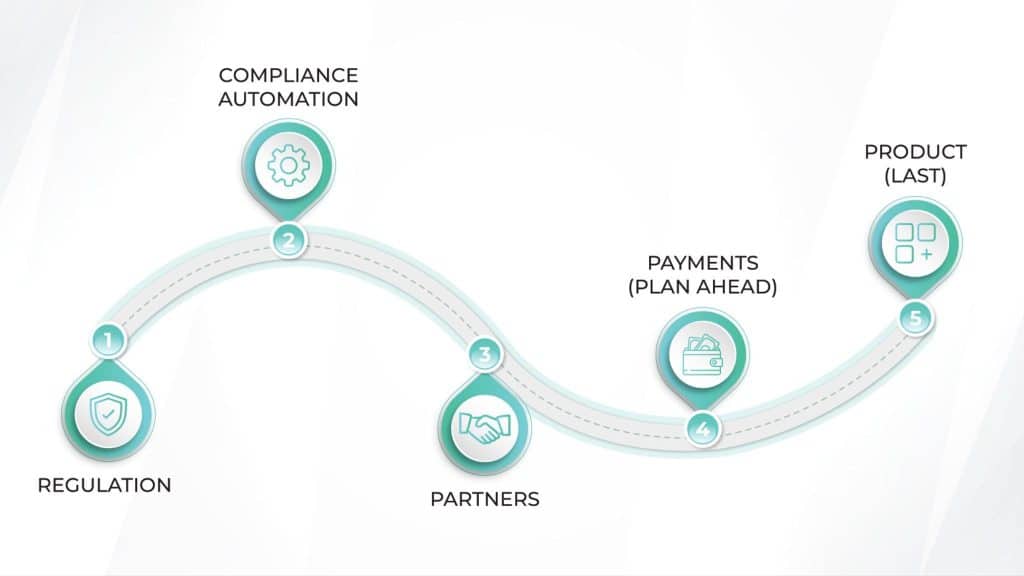
- Start with regulation, not the product
One of the most common mistakes is treating jurisdiction as an afterthought. Founders design a product they believe is globally viable, then discover late in the process that key features are incompatible with local regulatory frameworks.
In iGaming, this mistake shows up when operators build platforms without understanding licensing timelines, data residency rules, or player protection requirements. The result is often months of rework or delayed market entry.
“Regulation defines what is possible, not just what is allowed,” Kerry notes. “If you design first and ask regulatory questions later, you are usually designing twice.”
A better approach is to map jurisdictions, constraints, and timelines before committing to core product decisions. Which markets are realistic in the first year? Which licenses require local entities, specific technical audits, or pre-approved vendors? These answers directly influence architecture, staffing, and budget.
This principle applies far beyond gaming. Fintech platforms encounter similar friction with payments licensing, while digital health products must design around data handling and reporting requirements from day one.
- Treat compliance as infrastructure, not paperwork
Compliance is often framed as documentation and policies. In reality, modern regulation increasingly expects compliance to be embedded directly into systems.
In iGaming, this includes automated KYC and AML workflows, player monitoring, transaction logging, audit trails, and regulatory reporting. Manual processes do not scale and tend to fail during audits or regulatory reviews.
Centralized self-exclusion systems such as the UK’s GAMSTOP illustrate this shift. Platforms are expected to integrate directly with national infrastructure rather than manage exclusions in isolation. That requirement has architectural implications that cannot be bolted on later.
Founders should ask early: which compliance requirements can be automated, and which will require ongoing operational oversight? Building these workflows into the platform reduces long-term risk and operational cost.
- Choose partners who understand the full stack
Highly regulated launches fail most often at the seams between legal, technical, and operational teams. A licensing consultant may secure approval, but if the platform or payment setup does not align with license conditions, the approval is effectively useless.
License Gentlemen operates with what it describes as a whole-stack perspective. Licensing work often extends into platform setup, payment provider coordination, and third-party integrations because these elements are interdependent.
“Licenses do not exist in a vacuum,” Kerry explains. “They come with assumptions about how the platform operates, how payments flow, and how users are monitored.”
This lesson is transferable across regulated industries. Founders should favor partners who understand how regulatory requirements translate into real technical and operational constraints, rather than those who operate in narrow silos.
- Plan payments earlier than you think you need to
Payment systems are one of the most underestimated sources of friction in regulated platforms. Providers impose their own risk rules, onboarding timelines, and technical requirements, often shaped by the same regulators governing the platform.
In iGaming, operators regularly discover that a licensed platform is still unable to process payments due to unresolved provider approvals or incompatible transaction flows. Fixing these issues late can delay launches by months.
Planning payments early means understanding which providers support which jurisdictions, how payouts and chargebacks are handled, and what transaction monitoring is required. It also means designing user flows that align with provider expectations, not fighting them.
This lesson resonates in fintech and marketplaces as well, where payment constraints frequently shape product functionality more than founders anticipate.
- Build for regulatory change, not regulatory stability
Regulated markets rarely stand still. One of the clearest recent examples came in 2023, when Curaçao introduced sweeping reforms to its gambling licensing regime. Operators were given fixed transition timelines, new compliance requirements, and limited guidance during the initial rollout.
For many platforms, the challenge was not awareness but execution. Systems built without flexibility struggled to adapt, while teams without strong regulatory relationships faced uncertainty around eligibility and timelines.
During the transition, License Gentlemen supported operators through license migrations and new applications under tight deadlines, coordinating legal, technical, and operational changes in parallel.
The takeaway for founders is simple: assume regulation will change. Design systems that can absorb new reporting requirements, updated workflows, or revised eligibility rules without fundamental rewrites.
While iGaming represents an extreme case of regulatory intensity, the underlying lessons apply broadly. Regulation shapes product design. Compliance belongs in systems, not binders. Partners must understand how legal rules meet technical reality. Payments are foundational, not peripheral. Change is inevitable.
Founders who internalize these principles early gain more than regulatory approval. They gain predictability, credibility, and the ability to scale without constant rework.
For builders navigating these challenges, insights from operators and advisors working at the regulatory edge can offer valuable perspective. Additional context from License Gentlemen is available via its educational content, including its YouTube channel where regulatory shifts and operational implications are discussed from an operator-facing standpoint.
In regulated industries, speed comes not from ignoring constraints, but from designing intelligently around them.