

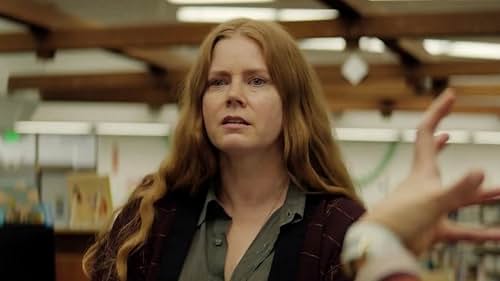
So, did she or didn’t she? It’s the one question everyone asks after watching Nightbitch: does Amy Adams’ character literally turn into a dog? The movie leaves the answer blurry on purpose, but the real meaning is found by looking at the ending from two different angles.
On one hand, the film offers physical “proof” of her change, like the patch of thick, dark hair growing on her neck. Yet, the transformation also works as a powerful metaphor. Think of feeling so exhausted you call yourself a “zombie”—you aren’t literally undead, but the feeling is real. The film treats her change this way, where her intense feelings of maternal rage and isolation become physically real to her.
This storytelling approach is called magical realism, where magical things happen in an otherwise normal world, and the story treats them as real. The point isn’t whether the transformation is literal, but to show how a woman’s identity can radically shift under pressure.
Beyond the Bark: What Does ‘Nightbitch’ Say About Modern Motherhood?
Whether the transformation is physical or just in her head, it taps directly into the identity loss many new parents feel. She was once a promising artist, but now she’s just “Mom”—a role that leaves no room for her own messy, ambitious, or angry feelings. The symbolism of the mother in Nightbitch explores what happens when that buried self finally fights its way back to the surface.
Instead of treating this change as monstrous, the film dares to ask: what if that anger isn’t something to be ashamed of? Becoming “Nightbitch” is her act of rebellion. She stops trying to be the perfect, polished mother and instead embraces her wild, instinctual side. This channels the powerful themes of maternal rage not into destruction, but into a new source of strength and freedom.
Ultimately, her journey offers a unique artistic interpretation of modern motherhood—a rebellion against the pressure to be selfless and hide any negative emotions. By embracing the Nightbitch, she isn’t losing her humanity; she’s reclaiming a vital part of it that society told her to suppress.
The Final Verdict: Why the ‘Real’ Answer Isn’t the Point
The film’s powerful emotional truth matters more than whether the transformation was physically real. The ambiguity isn’t a puzzle to solve, but a reflection of a messy, human journey. The true meaning of the final scene is her victory of integration.
When her husband calls her by her new name with a smile, it confirms she no longer has to hide her wild side. She can be both mother and beast, fully accepted. She didn’t just become a dog; she finally became whole.