

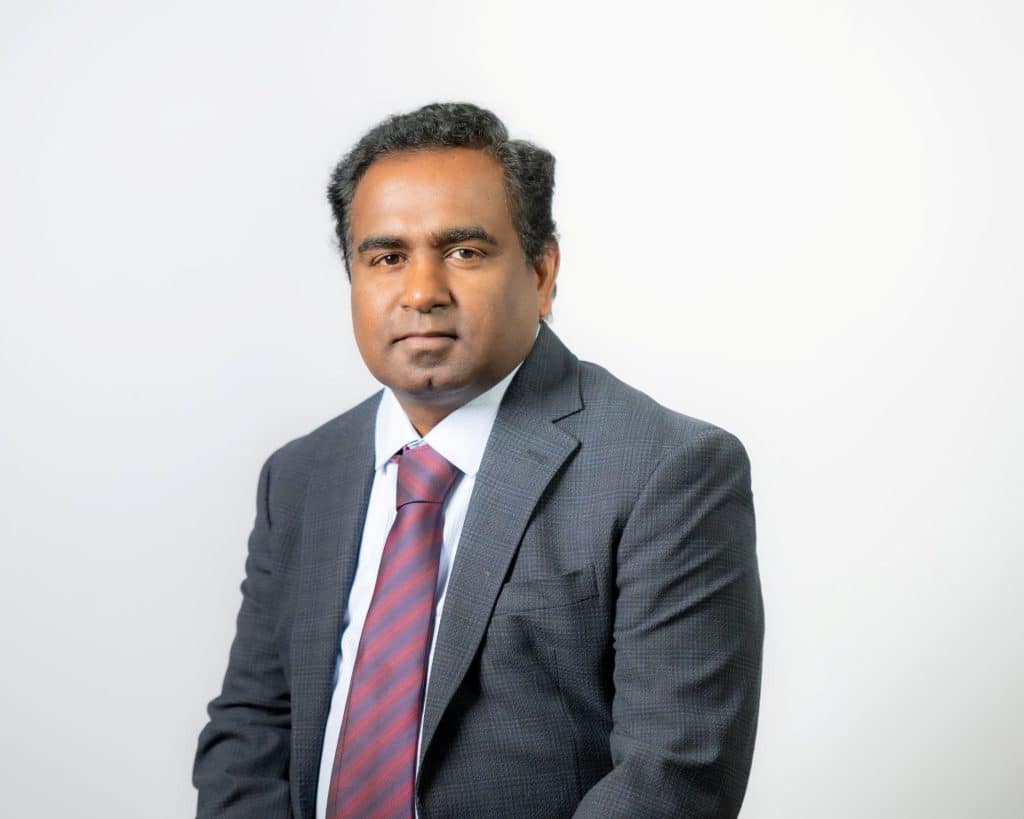
The various aspects of the modern financial landscape have been characterized by an increasing urgency to demand accuracy, reliability, and integrity of the data. For financial institutions in the present day, the world has become more of a complex network of regulations, such as the Dodd-Frank Act, or Basel III, where uniform reporting and advanced analytics are the sole means of ensuring the existence of compliance and confidence. The future-ready organisations will be determined by the capacity to combine governance and technological intelligence as these regulatory frameworks keep changing. It is in this changing area that risk analytics and regulatory reporting are being transformed by experts, such as Ravikumar Mani Naidu, to be more flexible, comprehensive, and reliable.
Having worked in the fields of finance, risk, and compliance, Ravikumar has been instrumental in ensuring operations are geared towards the international standards of SOX, IFRS and BCBS-239. His work focuses on precision and encourages active data stewardship. He has helped in achieving full adherence to such essential requirements as Swap Data Reporting (SDR) and the FR 2052a liquidity monitoring structure by the Federal Reserve. He has integrated reconciliation in these intricate procedures and this has enhanced transparency and the internal controls within the entities. “True financial integrity lies in how seamlessly systems communicate accuracy,” he added, capturing his belief that reconciliation is the foundation of trust in modern finance.
One of his most notable achievements involves driving automation-led reconciliation transformation at a leading company. The initiative standardized processes across global operations, a significant feat given the challenges of remote execution during the pandemic. His leadership in building reconciliation workflows reduced manual work by nearly 60%, while accelerating financial close cycles by half. The result was improved audit readiness, consistent reporting, and a more resilient control environment, designed to scale in line with regulatory expansion.
The strategic vision is further highlighted in the works of the strategist in liquidity and risk reporting. With the framework, he facilitated real-time dashboards, which gave them a view of liquidity positions and stress situations, through the combination of GL reconciliation and liquidity data aggregation. His harmonization of data made it easy to align data in accounting and risk data so that the regulators, auditors, and even the institutions could all use the same validated single version of the truth. This not only enhanced confidence with submissions, but it also made the reduction of reconciliation exceptions more than half.
His input towards Basel III and BCBS-239 compliance has also been crucial, as the reconciliation was the key that held the disjointed systems together. By creating unified data models, he harmonized the risk-weighted assets and liquidity facilities and thus attained full harmony between finance and risk. His technological methodology took the reconciliation logic to enterprise risk management and transformed what previously was a post-validation control to a living, predictive mechanism. The outcome was a more powerful governance stance, which is automated, scaled and transparent.
Beyond compliance, the expert’s work represents a larger trend toward intelligence-driven financial ecosystems. His use of AI and robotic automation for predictive reconciliation and anomaly detection reflects an evolving mindset, one where accuracy is anticipated, not merely corrected. He emphasizes that reconciliation must progress from isolation to integration, functioning as a continuous feedback loop between risk, compliance, and finance.
Looking ahead, he anticipates broader adoption of blockchain and distributed ledger technologies, which could transform reconciliations into secure, immutable processes. He also envisions expansion beyond financial metrics toward non-financial domains like ESG reporting, where reconciliation would validate environmental, social, and governance disclosures alongside monetary data. As finance moves toward “autonomous accounting,” the reconciliation layer will likely serve as the final assurance of trust.
Such professionals as Ravikumar Mani Naidu explain that contemporary compliance is an art and a system, a combination of vigilance, technology, and precision. His experience in a major corporation shows the aspect of how innovation can help to make governance strong and not complex. The next stage of financial integrity will be characterised by experts who are capable of delivering an analytical vision and executing functional roles as global markets seek new reporting standards. In the current data-driven economies, the process of reconciliation is the starting point of resilience, and the confidence is its endpoint.