

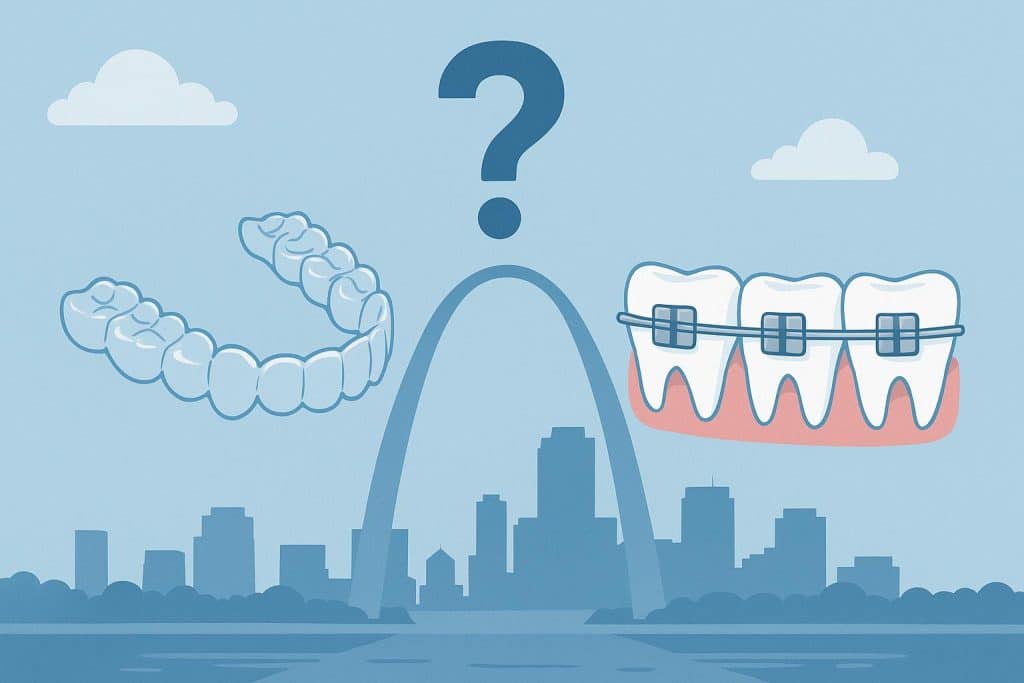
Thanks to medical science, today orthodontic treatment is not limited to metal wires and brackets. An increasing number of patients is finding clear aligners more suitable than traditional braces. For St. Louis residents, the best option is the one that suits your specific condition. However, clear aligners in St. Louis have emerged as lifesavers for those who are not up for the familiar baseness of traditional braces.
Much more than appearances, the differences between clear aligners and traditional braces are varied. The best one for you is the one that suits your lifestyle and treatment goals. Without going into their differences, here’s a decision-making guide with clear steps to help you decide on the best option for you.
Step 1: Assess How Complex Your Case Is.
The objective of both clear aligners and traditional braces is similar: to shift your teeth into proper alignment, not abruptly but gradually. In the case of braces, the deed is done by metal wires. While for aligners, a transparent bracket does the job.
It is widely acknowledged by orthodontists that traditional braces are much more versatile than aligners. Their ability to provide greater control over the teeth movements is a big plus point. From complex biting corrections to severe crowding, they can handle most of your teeth problems. Clear aligners are getting effective, but their application remains limited in most complex cases.
If you are suffering from any of the following, go for traditional metal braces.
- Rotated Teeth
- Major Jaw Alignment Issues
- Complex Bite Correction
For anything milder, you can go with clear aligners. We recommend you consult an experienced orthodontist and decide according to the complexity of your case.
Step 2: Consider Your Lifestyle
One of the biggest advantages of clear aligners is that they can be removed. You can take them out for meals, important presentations, or on special occasions. In the case of traditional braces, this is not possible as they are fixed in place for the duration of treatment.
With traditional braces, you can not eat hard foods like crisp apples and popcorn. They can damage the brackets and wires. Conversely, you can eat whatever you want with clear aligners as long as you remove them beforehand.
The catch with clear aligners is that, once taken off, some patients forget to put them back on. This irresponsibility can be damaging. You need a disciplined routine with clear aligners. But if you are somewhat careless, go for the traditional braces with their set-it-and-forget-it approach.
Step 3: Keep Abreast of the Adjustments Required
Clear aligners are much more comfortable than traditional braces. There are no brackets that rub against your cheeks. There is no need for periodic tightening either. Most patients experience mild pressure when switching to a new set of aligners, but it’s generally manageable with over-the-counter pain relief if needed.
After fresh adjustments, traditional braces can be a little uncomfortable too. The latest braces are much more comfortable than those available a few years ago.
Some patients have also reported some speech adaptations. This is normal in the first few days. Once you get accustomed to the new additions, it becomes manageable.
Step 4: Consider the Maintenance and Oral Hygiene Requirements
Clear aligners are maintenance-heavy. You must remove them before ingesting anything except water. They also need regular cleaning. Failure often results in staining and bacteria buildups.
Traditional braces are not with maintenance either. Oral hygiene is as important. Food particles often get trapped around brackets. For better oral care, floss threaders or water flossers are recommended.
If you prefer to have fewer cleaning requirements, braces are more convenient since they remain fixed. If you prefer to remove them, then you have to accept additional cleaning rituals. Whichever you choose, oral care cannot be neglected.
Step 5: Consider Your Aesthetic Preferences
Clear aligners use transparent plastic trays that are invisible and sit perfectly over your teeth. On the other hand, traditional braces use metal wires that are visible from a mile away. If you are conscious about metal braces hanging on your teeth, this invisibility offers an aesthetic advantage.
If you are continuously in social or professional engagements, the invisibility might be non-negotiable. In such cases, the choice becomes obvious.
Step 6: Consider Treatment and Follow-Up Timelines
The duration of your treatment squarely falls on the severity of your problem. How well you comply with the requirements and precautions also helps in reducing it. Braces require frequent visits to your orthodontist but are relatively easier to comply with. Conversely, clear aligners may require fewer appointments with your doctor, but will require you to be proactive.
If you frequently forget to put on your aligners, your treatment duration will naturally be longer. However, there is no such compulsion with fixed braces. This seemingly small consideration may be the make-or-break factor for those struggling with hectic schedules.
Make the Right Choice for Your Oral Health
Above listed factors must be seriously considered before making any decision. The flexibility and aesthetics of clear aligners in St. Louis will appeal to some. While others will prefer the familiar approach of traditional braces. Consult an experienced orthodontist and remember that the best choice will be the one that suits your daily routine and dental condition.