

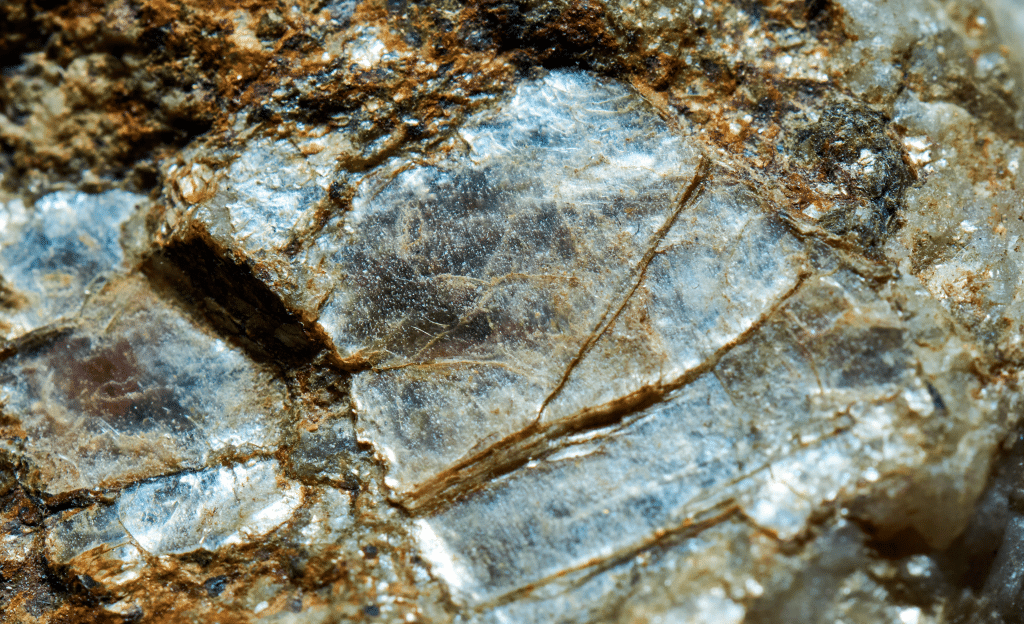
Mica can be found in our daily lives: in a smartphone, a car’s paintwork, or in a cosmetic palette. This naturally occurring silicate plays a critical role in modern manufacturing. Engineers, chemists, and product designers rely on it because few materials offer the same combination of thermal stability, electrical insulation, flexibility, and visual appeal.
For those wondering what is mica used in, the answer spans industries as varied as aerospace, construction, electronics, cosmetics, and energy. Understanding these applications sheds light on why mica continues to be one of the most commercially important industrial minerals in circulation today.
What Makes Mica Unique as an Industrial Mineral
Before understanding what mica is used in, let’s look at its properties. Mica belongs to a group of sheet silicate minerals that naturally split into thin, durable layers. This layered structure is what gives mica electrical insulation capability, resistance to high temperatures, chemical inertness, low density, flexibility without breakage and natural shimmer and reflectivity.
These properties help mica to function in roles where metals, plastics, or ceramics alone would fail. Because it can be processed into sheets, flakes, or powder, manufacturers can alter it for highly specific engineering needs.
Electrical and Electronics Sector: The Backbone of Mica Demand
If there is one sector that answers the question what is mica used in most, it is electronics. Electrical systems require materials that can tolerate heat while preventing current leakage. Mica excels at both.
It is widely used as insulation in:
- Transformers
- Capacitors
- Motors and generators
- High-voltage equipment
- Power cables
Its dielectric strength allows it to withstand strong electric fields without breaking down, which is why it has long been trusted in safety-critical electrical infrastructure. Even in compact electronics such as sensors or handheld devices, thin mica sheets can provide insulation without adding bulk.
For engineers, this reliability is what is needed. Electrical failure can often be dangerous. Mica’s stability under thermal and electrical stress is what makes it be used across power distribution, industrial automation, and electronics manufacturing.
Construction Materials and Building Products
Another major industry where mica is used is construction. Builders and material scientists incorporate ground mica into cement, plaster, drywall compounds, and roofing products because it improves performance in subtle but important ways.
In wallboard joint compounds, for example, mica enhances spreadability and reduces cracking as materials cure. In roofing and exterior coatings, its plate-like particles create a barrier effect that slows moisture penetration and weather damage. This can extend product lifespan while improving durability.
Builders also prefer it for its fire-resistant properties. When added to insulation or plaster systems, it can increase resistance to heat transfer and reduce structural damage in case of a fire. These advantages explain why construction manufacturers often specify mica as a performance additive rather than merely a filler.
Paints, Coatings, and Automotive Finishes
The coatings industry also uses mica for functional and aesthetic purposes. When mixed into paints or industrial coatings, mica flakes align themselves in layers, forming a protective shield against environmental stress.
This layered structure helps coatings resist ultraviolet radiation and moisture intrusion.
In automotive finishes, mica pigments produce a pearlescent effect that enhances depth and color brilliance. That subtle shimmer seen on high-end vehicles is also a result of the processed mica particles reflecting light at different angles.
Manufacturers also use mica because it improves coating performance without significantly increasing weight or altering application characteristics.
Plastics, Rubber, and Polymer Engineering
Within polymer manufacturing, mica serves as a functional filler that improves mechanical and thermal properties. When blended into plastics or elastomers, it can increase stiffness, reduce shrinkage, and improve dimensional stability.
These improvements are needed in molded components used in transportation and machinery. Lightweight materials are key for efficiency, but they must still withstand mechanical stress. Adding mica helps engineers reach that balance.
Rubber manufacturers also rely on mica as a processing aid and filler. It can act as a mold-release agent, improve heat resistance, and enhance durability in finished products such as seals or gaskets. These characteristics illustrate how mica mineral uses extend beyond visible products into the internal components that keep machinery running.
Cosmetics and Personal Care Products
Outside industrial environments, mica is most used in cosmetics. Finely ground mica powder produces a natural shimmer.
Common cosmetic products containing mica include:
- Eyeshadow
- Highlighter
- Lip gloss
- Nail polish
- Foundation
In addition to its natural shimmer, mica improves texture and spreadability. It allows products to glide smoothly across skin. It also helps pigments remain evenly distributed, which improves consistency and shelf stability.
For consumers asking what is mica used in everyday life, cosmetics is the best example. Its presence in beauty products shows how a mineral used for industrial performance can also play a role in personal care.
Energy, Drilling, and Heavy Industry Applications
In drilling operations for oil, gas, and geothermal energy, coarse mica flakes are added to drilling fluids. These particles help seal porous rock formations and prevent fluid loss, which stabilizes boreholes during drilling.
Mica can also reduce wear on drilling equipment and assist in managing temperature within the well. These advantages lead to lower operational costs and improved safety. In heavy industry, where equipment operates under intense pressure and heat, materials that extend tool life and maintain stability are highly valued.
Aerospace and High-Temperature Engineering
High-temperature environments place extreme demands on materials. In aerospace systems, furnaces, and industrial machinery, components need to tolerate heat without losing structural integrity or insulating ability.
Mica performs exceptionally well in these conditions. It is used in:
- Thermal insulation panels
- Electrical insulation systems
- Heat shields
- Observation windows for furnaces
Because mica maintains its properties despite being exposed to high temperatures, engineers rely on it. This reliability is one reason it remains relevant even as advanced synthetic materials enter the market.
Decorative, Architectural, and Design Uses
Mica is also used in decorative paints, textured finishes, and architectural coatings. Designers use it to add subtle light reflection to walls, furniture, and surfaces without relying on artificial additives.
Artists and craft manufacturers also use mica pigments for visual effects in resins, inks, and specialty coatings.
Emerging Technologies and Future Potential
Research has shown new possibilities for mica. Scientists have demonstrated that ultrathin mica layers can function as atomically flat insulating substrates in nanoscale electronics. This opens potential applications in next-generation semiconductors and precision sensors.
Why Mica Remains Indispensable
Across sectors, there is a question of why mica continues to be used despite the availability of synthetic alternatives. The answer lies in its rare combination of properties. Few materials offer high dielectric strength, thermal resistance, flexibility, chemical stability, and optical reflectivity.
These properties allow a single mineral to be used in power infrastructure, consumer goods, transportation, and scientific research.
Final Thoughts
From power grids and construction materials to cosmetics and aerospace systems, mica quietly supports technologies that shape daily life. Understanding what is mica used for reveals not only its versatility but also its importance as a foundational industrial resource.
If your business depends on high-performance insulation, thermal protection, or engineered mineral solutions, working with an experienced supplier matters. Axim Mica specializes in premium mica-based insulating materials designed for reliability, consistency, and long-term value. Get in touch for high-quality mica materials.