

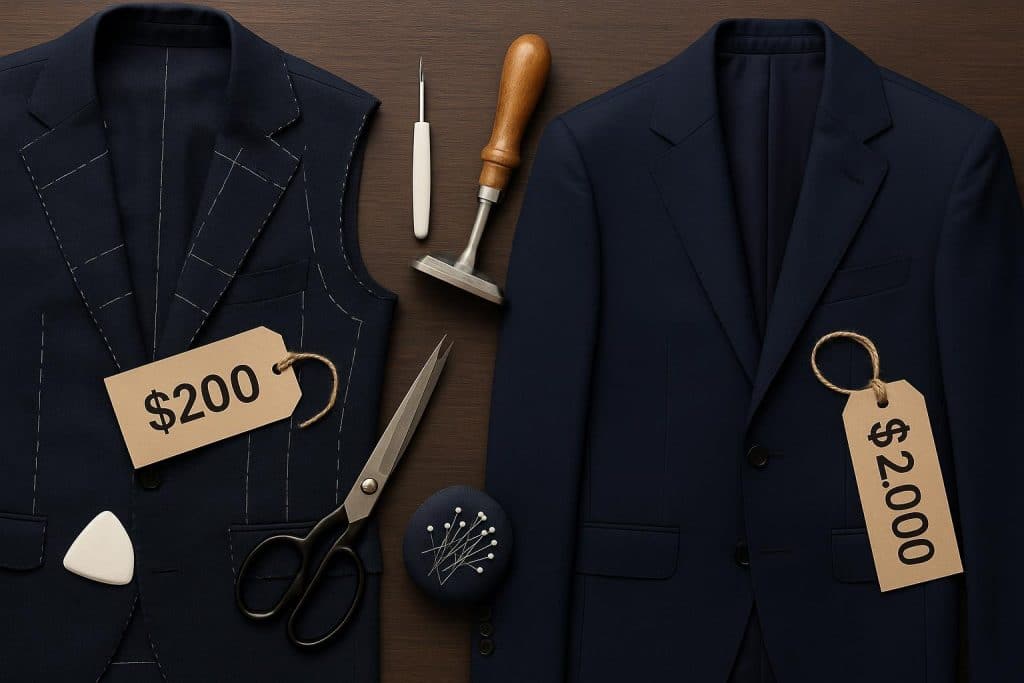
The difference between looking merely acceptable and genuinely exceptional often comes down to millimeters. Not the fabric quality, not the brand name, not the price tag, but the precise adjustments that make a garment fit your specific body rather than an abstract size category. Professional tailoring is the most underutilized tool in men’s professional wardrobes, capable of transforming an affordable suit into something that commands attention and respect. The best part? Most essential alterations can be completed within 72 hours.
The Off-Rack Reality
When you purchase suits for men from a retail store, you’re buying clothing designed to fit a statistical average. That suit was created based on measurements from thousands of bodies, resulting in proportions that work reasonably well for many but perfectly for almost no one.
The consequence is that most men walk around in suits that almost fit. The jacket sleeves extend past their wrists. The trousers pool around their ankles. The jacket shoulders extend beyond their natural shoulder line. These small imperfections accumulate into an overall impression of someone who settled for close enough rather than pursuing excellence.
The Transformation Points
Professional tailoring addresses specific areas where fit makes dramatic impact. Jacket sleeves need to end exactly where your wrist meets your hand, allowing about a half inch of shirt cuff to show. This detail changes everything, making your arms appear proportional and creating clean lines that suggest precision.
Trouser length determines whether you look polished or sloppy. Pants should break slightly at the shoe, creating one gentle fold rather than multiple bunches. The correct length creates a continuous line from waist to shoe, elongating your silhouette.
Jacket shoulders represent perhaps the most crucial alteration. If the shoulder seam extends beyond your natural shoulder, the entire jacket appears too large. A skilled tailor can adjust shoulders, though this ranks among the more complex alterations.
The waist suppression dramatically affects your silhouette. Off-rack suits typically offer minimal waist shaping, creating a boxy appearance. Taking in the waist and adjusting the back creates the classic V-shape that suggests fitness and vitality. This alteration alone can make a $200 suit look like luxury tailoring.
The 72-Hour Window
The timeline for tailoring matters more than many men realize. Most essential alterations, hemming sleeves, adjusting trouser length, taking in the waist, can be completed within 72 hours by a competent tailor. This quick turnaround means you can purchase a suit on Monday and wear it perfectly fitted by Thursday. You don’t need to plan weeks in advance or settle for imperfect fit because alterations seem too time-consuming.
This speed advantage is particularly valuable for time-sensitive situations. You’ve been invited to an important presentation, you’ve received a promotion that requires elevated appearance, or you simply realize your current suits no longer serve your professional image. Professional tailoring can solve these challenges within days, not weeks.
However, the 72-hour rule applies to standard alterations. More complex adjustments, reworking shoulders, completely restructuring a jacket, creating custom linings, require additional time. Understanding which alterations fall within the quick-turnaround category helps you make realistic plans and set appropriate expectations.
Finding the Right Tailor
Not all tailors offer the same skill level. Professional suit tailoring requires understanding how jacket construction works, how fabric drapes, and how small adjustments cascade through the entire garment.
Recommendations from well-dressed colleagues provide your best starting point. Local menswear stores often have relationships with skilled tailors. Expect to pay appropriately for quality work. Investing $75 to $150 in alterations for a $200 suit dramatically outperforms buying a $350 suit that fits poorly.
The Communication Factor
Successful tailoring depends on clear communication between you and your tailor. When you bring in a suit, explain your goals. Do you want a contemporary slim fit or a classic silhouette? Do you prefer minimal or no break in your trousers? Should the jacket sleeves show more or less shirt cuff? These preferences aren’t right or wrong, but they need to be specified.
A skilled tailor will offer guidance based on your body type and current style trends, but the final decisions remain yours. Don’t feel pressured into alterations you don’t want. Conversely, trust professional advice when a tailor suggests adjustments you hadn’t considered. Their experience allows them to see opportunities for improvement that untrained eyes miss.
Beyond Basic Alterations
Once you’ve experienced the impact of proper fit, you might explore more advanced tailoring options. Converting a standard two-button jacket to a three-roll-two configuration changes its entire character. Adjusting the lapel width modernizes an older suit. Adding functional buttonholes to jacket sleeves, called working cuffs, introduces subtle luxury detail.
These advanced alterations often exceed the 72-hour window, but they represent the next level of suit customization. You’re moving beyond simple fit corrections into actual garment modification, transforming off-rack pieces into something approaching bespoke quality. This evolution demonstrates how tailoring expertise can extend a suit’s life and relevance far beyond its original state.
The Confidence Multiplication
The psychological impact of proper fit extends far beyond aesthetics. When your suit fits correctly, you move differently. You’re not tugging at sleeves, adjusting shoulders, or stepping on your own trouser hems. This physical ease translates to mental ease, allowing you to focus completely on your work rather than your wardrobe malfunctions. Research in business journals shows different types of dress affect perceptions of professionalism and competence, relating to job evaluations and hiring decisions.
People respond differently to someone wearing a properly fitted suit. The attention to detail suggests broader competence and professionalism. You’re signaling that you care about excellence in all areas, not just the immediately visible ones. This impression opens doors, creates opportunities, and influences how seriously others take your contributions.
Making It Standard Practice
Treating tailoring as an automatic step rather than an optional extra transforms your entire approach to professional dress. When you purchase any suit, you immediately schedule tailoring before even considering wearing it. This mindset shift means you never settle for almost-right fit, never compromise on details that matter, and never waste money on clothes that don’t serve you well.
The 72-hour rule makes this standard practice realistic. You’re not committing to weeks of waiting or complex scheduling. You’re simply acknowledging that transformation from acceptable to exceptional requires a brief professional intervention. That intervention, measured in hours rather than days and dollars rather than hundreds, might be the single most effective investment you make in your professional appearance. The question isn’t whether you can afford professional tailoring. It’s whether you can afford not to.