

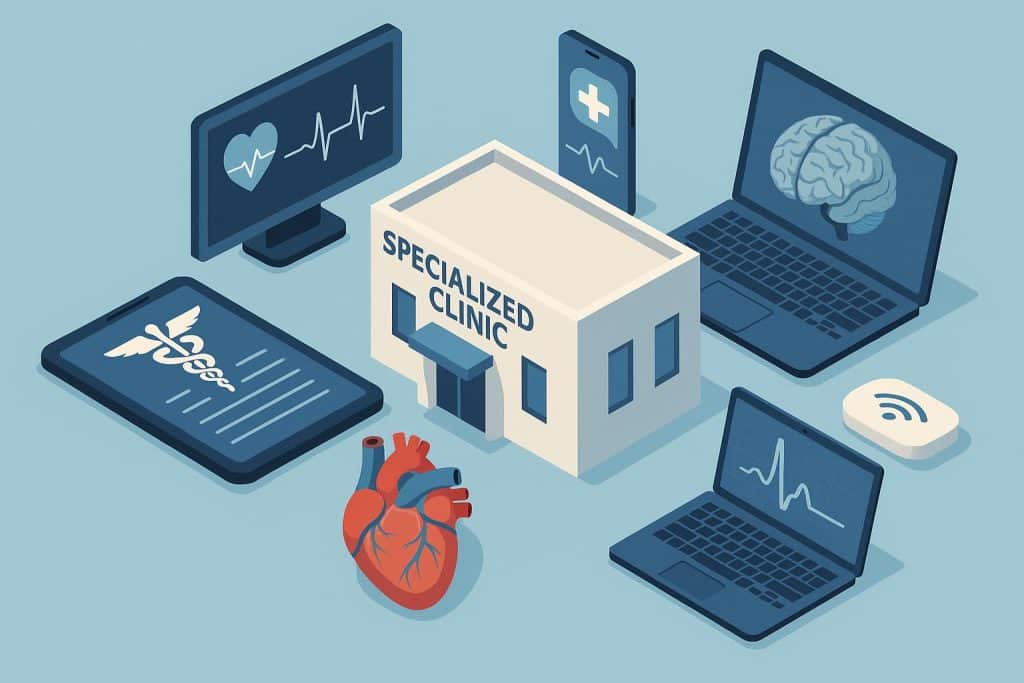
Specialized clinics deal with patients who need focused expertise over multiple visits. Someone managing a chronic condition can’t just show up once and be done. They need ongoing monitoring, treatment adjustments, and regular check-ins with providers who understand their specific situation. Many clinics still run on paper charts, disconnected software systems, and phone calls between staff members. These manual processes create delays in treatment decisions and gaps in patient care that shouldn’t exist.
Technology solves practical problems that specialized practices face every day. Digital systems track patient progress across visits without digging through file cabinets. Software handles administrative work that pulls medical staff away from actual patient care. Platforms let patients reach their care teams between appointments instead of waiting weeks for the next visit. Clinics adopting these tools report measurably better outcomes and higher patient satisfaction scores.
Patient Portals Improve Engagement and Compliance
Treatment plans for specialized conditions require patient participation outside clinic walls. Patients need to track symptoms, stick to medication schedules, report progress between visits. Phone tag and paper forms make this tracking inconsistent at best. Many patients forget instructions or can’t reach staff when questions come up.
Patient portals change this dynamic completely. People access test results, medication lists, and care instructions through secure platforms whenever they need them. They message providers directly instead of being stuck on hold. Staff respond to questions without constant phone interruptions disrupting their workflow.
A weight management clinic using portal technology sees notably stronger engagement from patients. Members log meals, track weight changes, review progress notes between visits. Providers spot concerning patterns early and adjust treatment approaches quickly. This continuous visibility helps patients stay accountable to their goals.
Remote monitoring takes this further by letting patients share data directly from home. Blood pressure readings, glucose levels, other metrics flow into the system automatically from connected devices. Providers review trends without anyone manually entering numbers. This real-time connection supports better clinical decisions based on actual patient data rather than what someone remembers to mention during a fifteen-minute appointment.
Specialized Billing Systems Reduce Administrative Burden
Medical billing creates headaches for specialized practices because insurance requirements vary wildly by procedure type. Prior authorizations delay when treatment can start. Claims get denied and force staff to resubmit paperwork multiple times. These administrative tasks eat up hours that should support patient care instead.
Billing software designed for specific specialties handles complexity more efficiently than generic systems. The platforms know which codes apply to common procedures without staff looking them up constantly. They flag missing information before claims get submitted. Staff catch errors that would definitely cause denials.
Pediatric practices face particularly weird billing situations with multiple insurance types and vaccine administration tracking requirements. Pediatric billing software streamlines these processes by managing immunization records right alongside payment processing. Staff verify coverage faster and submit cleaner claims the first time. The practice receives payments sooner, which matters a lot for cash flow.
Revenue cycle management improves substantially when billing systems connect directly with scheduling and clinical records. Staff see upcoming procedures that need authorization before patients even arrive. They verify benefits ahead of appointments. Clinics avoid providing services that won’t get reimbursed, which protects both the practice and patients from unexpected bills.
Telehealth Expands Access for Specialty Care
Geography severely limits who can access specialized treatment. Patients in rural areas might travel three hours each direction for appointments. People with mobility challenges struggle to reach clinics regularly. Transportation costs and taking time off work create real barriers to consistent care that many providers underestimate.
Telehealth platforms remove many of these obstacles practically overnight. Patients connect with specialists from home through video visits. Follow-up appointments happen virtually when physical exams aren’t strictly necessary. This convenience dramatically increases visit completion rates.
Mental health specialties adopted telehealth fastest because treatment rarely requires physical examination anyway. Patients maintain therapy schedules more consistently when they don’t face a commute. Providers expand their reach way beyond immediate geographic areas, which helps underserved populations access care.
Some conditions absolutely need in-person evaluation, but telehealth handles many follow-up visits effectively. Nutritionists conduct counseling sessions remotely without losing effectiveness. Pain management doctors assess whether treatments are working through virtual check-ins. Technology also enables hybrid care models mixing virtual and in-person visits. Patients come to the clinic for procedures or necessary tests but handle routine follow-ups remotely. This flexibility reduces appointment backlogs and improves overall access.
Technology as a Patient Outcome Tool
Technology fundamentally reshapes how specialized clinics deliver care. Patient portals strengthen engagement through constant connection. Specialized billing software improves revenue cycles and reduces administrative burden. Telehealth platforms expand access beyond geographic barriers. These tools work together supporting daily operations rather than creating additional complexity.
Clinics gain real efficiency because systems handle repetitive tasks automatically. Providers spend more time on direct patient interaction instead of paperwork. Patients experience measurably better outcomes through consistent monitoring and faster interventions when problems arise. Specialized practices adopting appropriate technology strengthen both clinical results and patient satisfaction simultaneously.