

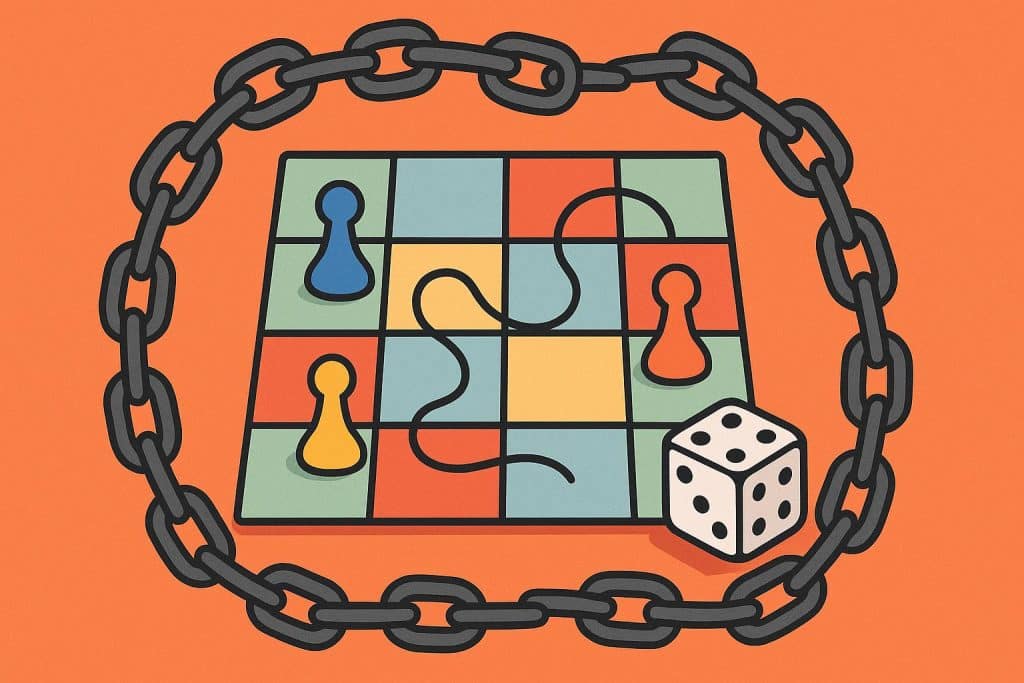
Why Limits Spark Better Games
Constraints sound negative, but in games they create the ‘playground’ where choices matter. When the space of possible actions is smaller, players learn faster and feel the result of each decision.
For designers, limits reduce noise. Instead of adding features, the focus shifts to making a few interactions clear, readable, and satisfying for both new players and people learning advanced tactics.
In Short: Good constraints guide attention, shape difficulty, and make a game easier to understand.
Rules First, Freedom Second
In game design, constraints are the rules that narrow what can happen and how players act. A quick way to see this is to try Megaways slots free play and notice how a changing reel layout reshapes expectations each spin. Even with randomness, the rule set decides what feels possible and what feels fair.
Good limits also protect the core idea. If every action solves every problem, nothing feels special; if the limits are sharp, each tool has a purpose.
One useful test is to describe the game in one sentence that includes a restriction, such as ‘only one jump’ or ‘one move per turn.’ If the sentence is hard to write, the rules may still be too loose.
Three Constraint Types That Shape Design
Not all limits live in the rulebook. Some come from the production process, and others come from the tone a game is trying to keep consistent.
Time and Resource Limits
Short schedules push teams to prototype early and cut anything that does not serve the main loop. This can lead to cleaner interfaces, fewer systems, and stronger pacing.
Aesthetic and Theme Limits
A tight art style or theme can turn ‘less detail’ into a signature look that players remember. It also helps every level, sound, and animation feel like it belongs in the same world.
Design Tricks for Turning Limits Into Variety
Once the boundaries are clear, creativity moves to the edges: small changes produce big differences. These techniques help a limited system stay fresh without losing clarity.
- Change One Variable: Alter speed, timing, or spacing while keeping the rules the same.
- Reuse With a Twist: Bring back a mechanic, but swap the context, goal, or feedback.
- Gate New Options: Unlock a single new action only after the old one is mastered.
- Combine Simple Pieces: Let two basic rules interact so new situations appear naturally.
- Raise the Cost: Make a strong action slower or rarer so it must be chosen carefully.
The key is consistency. Players can handle surprise, but they need stable rules to predict outcomes and plan.
When Constraints Hurt the Player Experience
Limits fail when they feel arbitrary. If the reason for a restriction is invisible, players read it as unfair friction instead of a meaningful challenge.
| Helpful Constraint | Harmful Constraint |
|---|---|
| Clear rule with immediate feedback | Hidden rule that blocks progress |
| Short failure loop with fast restart | Long restart that repeats the same setup |
| Trade-off that creates a real choice | Restriction that only removes options |
Balance comes from iteration. Testing shows which limits create skill and strategy, and which ones only slow the pace.
A Simple Way To Add Constraints Today
Start with one constraint that can be explained in a single line: one input, one mechanic, or one goal. Build a tiny prototype around it and watch what choices appear.
Then tighten the rules. Remove any feature that solves too many problems, and add feedback that helps players read the limits quickly.
Finally, expand inside the box. Add levels, modifiers, or new goals that respect the constraint, so the game grows without losing its identity.