

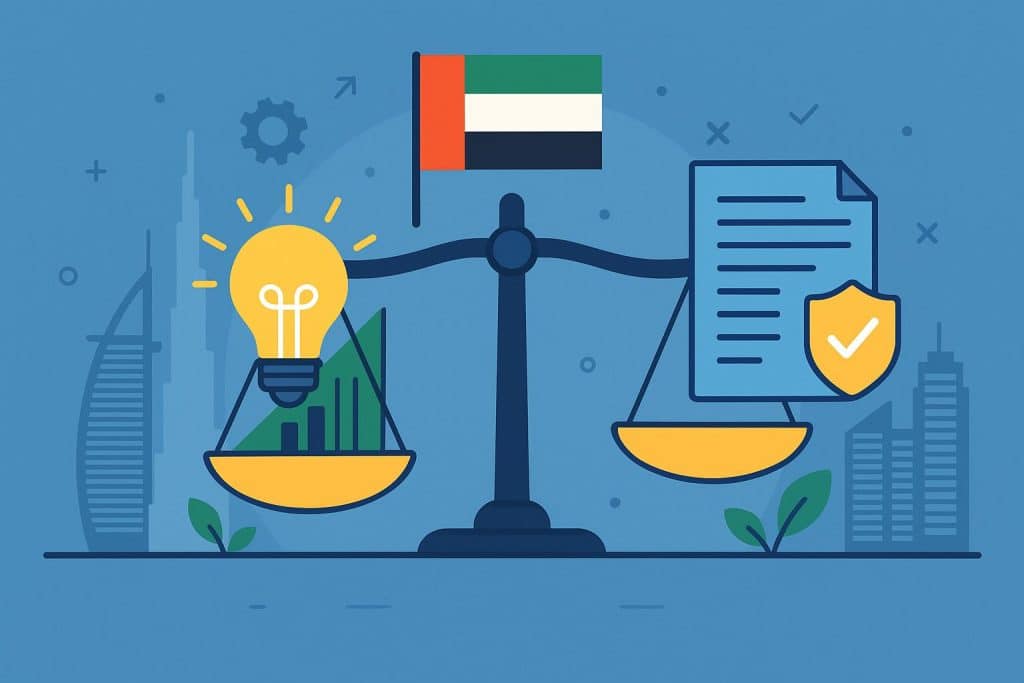
The UAE has built a reputation as one of the fastest-growing economies in the world. This burst of growth would have been impossible without embracing technology. They continue this path with ambitious development plans, heavy investment in technology, and business-friendly tax laws. From digital payments and smart mobility to advanced logistics and remote healthcare, innovation is now part of everyday life for both businesses and consumers.
To address the negative implications, the government has devised clear rules to make sure that the consumers and competitors remain safe. Their ultimate goal is finding the right balance of creativity and oversight to move forward in a morally acceptable way. When done well, this balance allows businesses to experiment and expand while protecting consumers, investors, and the wider economy.
The Role of Technology in Economic Growth
Digital tools, nominally artificial intelligence, are transforming how different sectors across the UAE operate. Tasks that once required large teams and extended timelines can now be handled through software automation and data systems. Online payments, customer service, logistics, and marketing have all become faster and more efficient.
This change has dramatically lowered entry barriers for start-ups. Entrepreneurs can now launch products, test ideas, and reach customers without heavy upfront costs.
For established companies, technology helps improve operational efficiency and reduce costs. In essence, it allows larger companies to respond more quickly to market changes. For example, cloud platforms support collaboration, while analytics tools provide deeper insight into customer behavior and financial performance.
Beyond business, technology also shapes public services in the Emirates. Smart transport systems that incorporate biometric identification, digital licensing platforms, and online healthcare services reflect a broader impact of technological innovation. Together, these developments have boosted productivity, encouraged foreign investment, and continue to support the country’s long-term economic goals.
Why Compliance Matters
As businesses rely more heavily on digital platforms, regulators aim to create an environment where innovation can grow without exposing individuals or businesses to unnecessary risk.
One of the most significant developments in this area is the UAE’s Personal Data Protection Law (PDPL), introduced in 2021. This law sets clear rules for how personal data must be collected, stored, and processed, applying to most private-sector organizations operating in the country. It requires companies to obtain clear consent, limit data collection to what is strictly necessary, and implement proper security controls. Fines for violations can reach several million dirhams, and repeat breaches can lead to operational restrictions or license suspension.
In the financial sector, compliance requirements are even more detailed. The Central Bank of the UAE (CBUAE) oversees insurance companies, banks, and payment providers through a wide range of reporting, audit, and solvency regulations. Insurance firms, for example, are required to submit regular financial statements, undergo independent audits, and demonstrate that they maintain sufficient capital reserves to cover future claims.
Consumer protection has also become a major regulatory focus. New financial laws introduced by the UAE government have strengthened complaint-handling systems, unified dispute resolution processes, and increased penalties for misconduct. These reforms require banks and insurance companies to provide clearer information, fairer contract terms, and faster resolution of customer complaints.
Together, these frameworks form the foundation of trust in the UAE’s digital economy. By enforcing data protection standards, financial reporting rules, and consumer safeguards.
Challenges Businesses Face
While innovation opens doors, it also brings new challenges. One of the most common difficulties is keeping up with regulatory updates. As technology evolves, laws and guidelines must adjust, which can leave companies working in uncertain conditions for short periods of time.
Data privacy is another growing concern. Organizations collect and process large volumes of information, from payment details to personal records. Protecting this data requires ongoing investment in cybersecurity systems, staff training, and monitoring tools. Even small errors can result in serious legal and reputational consequences.
Cross-border operations add further complexity. Many companies based in the UAE serve international markets, meaning they must comply with multiple regulatory standards at once. Aligning these different rules while maintaining smooth operations can be demanding.
Despite these pressures, businesses that treat compliance as part of their core strategy often perform better over time. Rather than viewing regulation as a burden, they build systems that support both innovation and responsibility, creating more stable foundations for growth.
Digital Insurance as a Practical Solution
Financial services offer a useful way to understand how innovation and regulation work together in practice. As digital platforms become more common, people increasingly prefer to manage routine financial tasks online. One everyday example is arranging personal coverage, such as car insurance, through secure digital channels.
Online platforms allow users to compare policies, review terms, and submit applications without visiting physical offices. Automated systems speed up approvals and claims processing, reducing waiting times and paperwork. For customers, this means quicker decisions and greater clarity.
Behind the scenes, regulatory frameworks ensure that these platforms operate fairly. Providers must explain policy terms in plain language, safeguard personal data, and follow strict pricing and reporting guidelines. Regular audits and compliance checks confirm that companies remain financially capable of honoring claims.
This mix of smart technology and careful oversight creates a system that feels both efficient and dependable. Users benefit from convenience, while regulators maintain standards that protect public interest. It is a practical example of how digital progress and responsibility can move forward together.
The Future of Smart Regulation
The UAE has shown a willingness to rethink traditional regulatory approaches. Instead of relying solely on fixed rules, authorities increasingly use flexible frameworks that adapt as markets change. One example is the use of controlled testing environments, where businesses can trial new ideas under regulatory supervision before launching them widely.
These spaces allow companies to experiment while giving regulators insight into potential risks and benefits. Lessons learned from these trials help shape future policies, ensuring that rules reflect real-world conditions rather than theoretical models. This open dialogue supports better outcomes for everyone involved.
Education plays a role here as well. Training programs and digital skills initiatives help professionals understand both emerging technologies and compliance requirements. This shared knowledge makes collaboration smoother and supports a culture where innovation and regulation reinforce each other.
Conclusion
By aligning innovation with thoughtful regulation, the country has created an environment where opportunity and responsibility can coexist. This balance can nurture trust, stability, and long-term economic resilience.
As digital tools continue to reshape industries, maintaining this harmony will be even more critical. While innovation pushes boundaries, it can create ambiguity and room for chaos. The only way through is a delicate legal framework and assured compliance.