

The Big Shift: Barrier-First Skincare
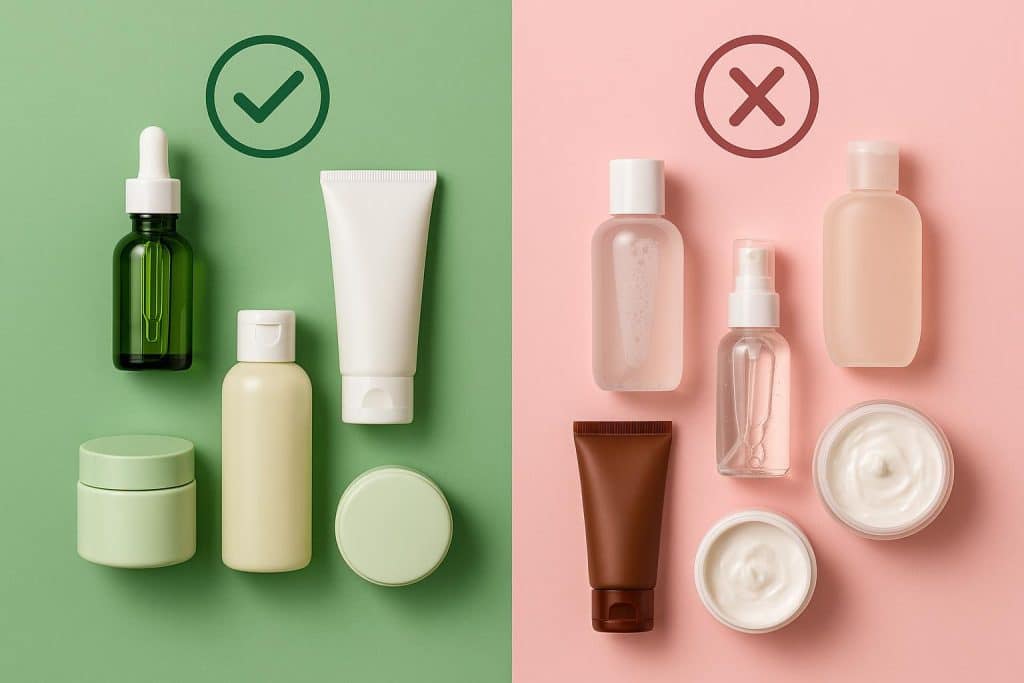
“One of the biggest changes in skincare right now is the shift toward barrier-first care instead of harsh, overcomplicated routines”, says Dr. Shamsa Kanwal, MD, board-certified dermatologist at MyHSTeam. People are starting to see the link between over-exfoliation and the problems they are trying to fix, including chronic redness, acne flares and stubborn pigmentation. The most reliable results in 2026 usually come from a simple routine that skin can tolerate every day, with gentle cleansing, daily moisturization and steady use rather than constant switching.
Barrier-first skincare works best when actives are paced carefully, Kanwal adds. That means spacing exfoliants, introducing retinoids gradually and choosing comfort over the feeling of sting. If your skin burns when you apply a product, that is usually a sign to cut back, simplify your routine and rebuild with a calmer baseline before adding more actives again.
Trend 1: Tinted Sunscreen and Visible Light Protection
“Broad-spectrum SPF protects against UV, but pigmentation-prone skin is also sensitive to visible light” says Cheryl Karcher, MD, a board-certified dermatologist. This is one reason tinted sunscreens with iron oxides are receiving so much attention. In practical terms, tinted options can be especially helpful for melasma and post-acne marks because they add a layer of visible light defense.
The most realistic recommendation is still simple. Wear SPF 30+ daily, and consider SPF 50 for long outdoor exposure. If you struggle with recurring pigment, a tinted formula may be worth choosing as your everyday option, especially on the upper cheeks and upper lip.
Trend 2: PDRN and Polynucleotides
“PDRN and polynucleotides are being marketed as skin regenerating ingredients, sometimes linked to the term salmon DNA” says Christina Collins, MD, FAAD, a board-certified dermatologist. The clinical literature is stronger for in-office or injectable use than for topical products, because penetration and dosing differ. Topical versions may still support hydration and comfort, but it is best to treat them as an optional add-on rather than a replacement for proven steps like sunscreen and retinoids.
If you want to try these products, choose reputable brands, patch test, and keep your routine otherwise stable for at least two to four weeks. That way you can actually tell whether the new product is helping or simply adding irritation.
Trend 3: Exosomes in Skincare and Why Caution Matters
Exosomes are one of the most talked-about regenerative trends, but they are also one of the most misunderstood. In medical settings, exosomes are discussed in the context of biologics and regenerative medicine, and regulation matters. The U.S. FDA has issued safety communications stating there are no FDA-approved exosome products and warning patients about unapproved products marketed with broad health claims.
For consumers, the safest approach is to be skeptical of dramatic claims and to avoid injections or procedures offered outside properly regulated medical environments. If a product promises to regenerate skin, reverse aging, and heal multiple conditions, treat that as a red flag rather than a reason to buy.
Trend 4: At-Home Red Light Therapy
At-home red light devices continue to trend because they fit modern life. Clinical studies of red and near-infrared light have shown improvements in wrinkles and skin texture in some settings, but outcomes depend heavily on wavelength, dose, and consistency.
If you use red light, aim for a realistic plan. Use it consistently for at least eight to twelve weeks, protect your eyes, and keep expectations modest. Red light can support texture and glow, but it will not replace sunscreen, topical retinoids, or professional procedures for deeper concerns.
Trend 5: Skin Cycling and the Return of Simpler Routines
Skin cycling is not new science, but it reflects a useful idea. Your skin often responds better when strong steps are alternated with recovery nights. This trend has helped many people stop the cycle of irritation, breakouts, and peeling. A simple pattern is exfoliation once weekly, retinoid two to three nights weekly, and the remaining nights focused on hydration and barrier repair.
How To Try New Trends Without Ruining Your Skin
Start with one change at a time. Patch test on the inner arm for three nights, then test on a small facial area for another three nights. Avoid launching a new serum, a new exfoliant, and a new sunscreen in the same week. If you develop burning, swelling, or a rash, stop and reset to cleanser, moisturizer, and SPF until calm.
If your main goal is brighter, calmer skin, the fastest path is usually not the newest ingredient. It is consistent sun protection, gentle cleansing, non-comedogenic hydration, and one well-chosen active that you can use long term.
FAQs
What is the most important skincare trend to follow in 2026?
Barrier-first care. Gentle routines that you can repeat daily usually outperform aggressive routines that you can only tolerate for a week.
Are tinted sunscreens really better for hyperpigmentation?
They can be, especially for melasma and post-inflammatory hyperpigmentation. Iron oxides in tinted formulas can add visible light protection on top of UV protection.
Should I buy PDRN or polynucleotide serums?
They are optional. The evidence base is stronger for injectable use than for topical use. If you try them, treat them as supportive, not essential.
Are exosome products safe?
Be cautious. Regulatory bodies have warned about unapproved exosome products and broad health claims. Avoid procedures that use unregulated products or unclear sourcing.
Does red light therapy work at home?
It can help some people with texture and fine lines when the device has appropriate wavelengths and you use it consistently for weeks. Results are usually modest and gradual.
Did You Know
Many skincare wins are about reducing inflammation rather than chasing stronger actives. When your barrier is calm, pigment fades faster, breakouts heal faster, and makeup sits better. That is why SPF 30+ daily and consistent moisturization remain the foundation, even when new ingredients trend.
Conclusion
The best skincare in 2026 is not a single miracle ingredient. It is a repeatable routine. Tinted sunscreens are a meaningful upgrade for pigmentation-prone skin, PDRN and polynucleotides are promising but still evolving in topical form, exosomes require extra caution and regulatory awareness, and red light therapy can be a helpful add-on for patient users. When in doubt, anchor your routine with gentle cleansing, non-comedogenic moisturization, and SPF 30+ daily, then add one trend at a time.