

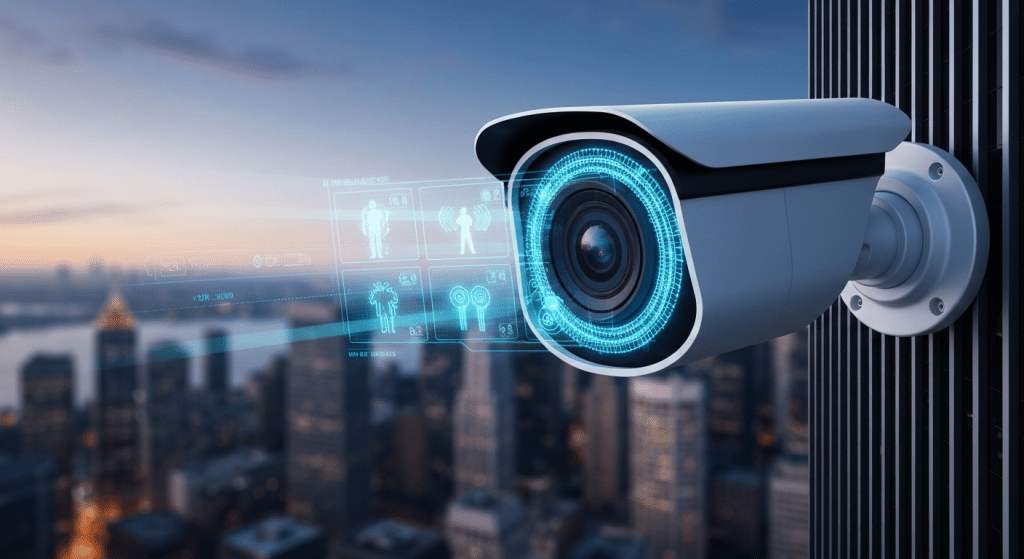
Key Highlights
- An AI security camera learns the normal patterns within your environment to establish a baseline.
- The system actively filters out ordinary footage, showing your team only unusual or suspicious events in real time.
- This intelligent filtering significantly reduces screen fatigue and the number of false alarms for security personnel.
- By providing real-time alerts for potential threats, AI enables a proactive security approach, preventing incidents before they escalate.
- The technology seamlessly integrates with existing CCTV camera systems, offering a simple setup process.
- Through machine learning, the AI continuously improves its understanding, becoming more accurate at identifying genuine threats over time.
Introduction
Are your security teams overwhelmed by endless video footage in a restricted area? With billions of hours recorded daily, manual monitoring is impossible. AI surveillance cameras solve this problem by analyzing feeds in real time to detect threats as they happen. Instead of just recording incidents, they help you identify and respond to risks immediately, keeping your environment safer.
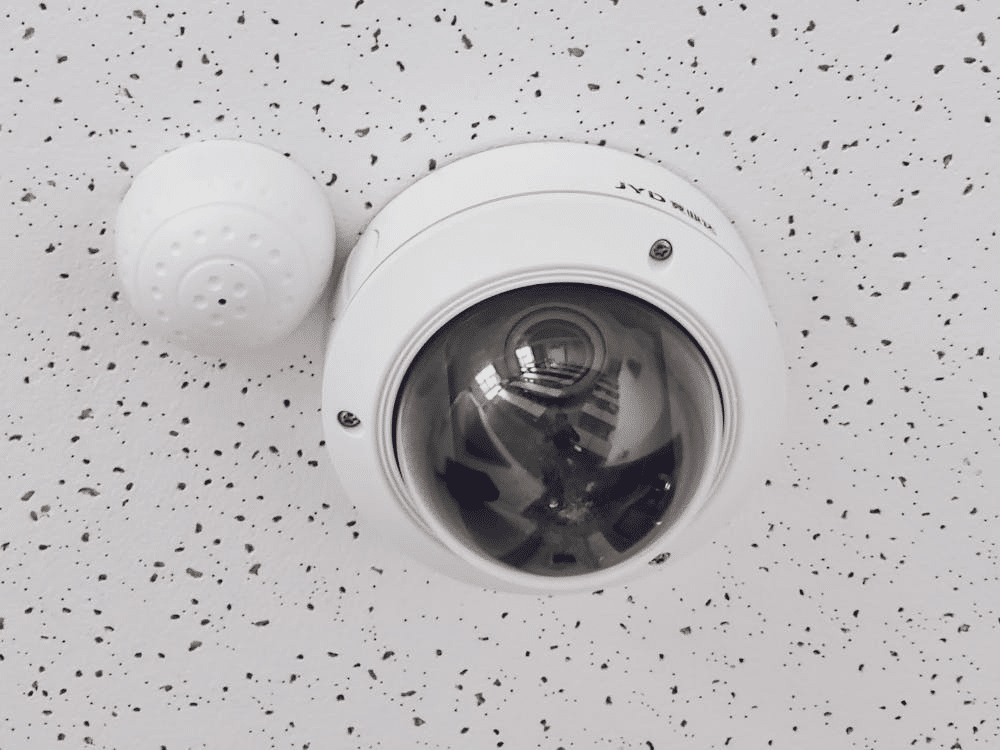
Understanding AI Security Cameras and Their Role in Real-Time Threat Detection
An AI security camera uses artificial intelligence to transform video surveillance with predictive analytics. Instead of staff monitoring screens, AI analyzes all feeds at once, learning normal activity patterns. This allows proactive threat detection—when the system spots unusual behavior like unauthorized access or erratic driving, it instantly alerts your security team. Key features include adaptive learning, filtering out irrelevant data, and real-time alerts using license plate recognition. This shifts security from reactive to proactive, stopping threats before they escalate.
How AI Security Cameras Differ from Traditional Surveillance
Traditional surveillance systems are reactive—they simply record footage, leaving your team to sift through hours of video after an incident. This delayed response puts security teams at a disadvantage.
An AI security camera is proactive. With advanced computer vision and analytics, they analyze footage in real time, detecting not just movement but unusual behaviour and potential threats.
This intelligent monitoring delivers instant alerts the moment something suspicious occurs, enabling immediate action. Your cameras become a powerful, preventative security tool—not just passive recorders.
Essential AI Features That Enhance Threat Detection
AI security cameras enhance real-time threat detection with advanced features that help your team act quickly and decisively by highlighting only important security threat events.
Built on machine learning, these systems continuously improve through:
- Behavioral Anomaly Detection: Flags activity that deviates from normal patterns, leading to significant advancements in threat detection.
- Intelligent Event Filtering: Hides routine footage so teams see only what requires attention.
- Continuous Learning: Regularly analyzes new footage to boost accuracy in spotting threats.
With these capabilities, your team can focus on responding to risks instead of monitoring uneventful screens.
Real-Time Alert Systems in AI Security Cameras
AI-powered security systems offer real-time alerts, instantly notifying staff of unusual events. This immediate communication shortens response times and equips your team with crucial information.
When choosing an AI security camera, prioritize systems that provide contextual alerts. Instead of generic notifications like “motion detected,” advanced systems specify the type of event, allowing your team to respond quickly and appropriately. Focus on alert features that highlight only important events, reducing notification fatigue and ensuring every alert matters.
Facial Recognition for Immediate Threat Response
Facial recognition technology is a popular AI technology that boosts security by matching faces to a database and alerting staff to unauthorized or suspicious individuals. This allows for immediate responses in high-security settings.
However, real-time threat detection doesn’t always require identifying persons of interest. Many advanced video analytics systems focus on behaviours instead of identities. By monitoring actions—such as loitering or trespassing—these systems can spot threats while preserving privacy, providing effective and respectful security.
Object and Person Detection Technologies
Modern AI security cameras offer more than basic person detection. Advanced video analytics add context by distinguishing between people, vehicles, and other objects—crucial for behavior analysis.
This technology enables real-time security by recognizing objects and assessing actions for unusual behavior based on time and location. Such awareness helps identify potential threats early and delivers actionable intelligence to your team.
Differentiating Between Real Threats and False Alarms
Traditional security systems generate too many false alarms, often triggered by harmless events like shadows or falling leaves. This wastes time as security staff investigates non-threats.
AI security cameras solve this with advanced algorithms and motion detection technology powered by machine learning. Instead of reacting to minor changes, AI learns the normal patterns of an environment—such as rain, swaying trees, or animals—and filters them out.
The system distinguishes between routine events and real threats, such as:
- A cat running across a parking lot (normal)
- A person trying to break into a car (threat)
- Headlights from passing traffic (normal)
- Someone climbing a fence (threat)
By focusing only on suspicious activities, AI video analytics significantly reduces false alarms, allowing your team to address genuine security concerns.
Monitoring Crowded or High-Risk Areas Effectively
Monitoring large areas like malls, campuses, or public squares is challenging. With hundreds of cameras, human operators can’t track everything, leading to missed incidents and reduced safety.
AI video analytics acts as a force multiplier for your security team, monitoring unlimited camera feeds from one or multiple locations. It filters out irrelevant footage and highlights only significant events for review.
Instead of watching countless screens, your team receives focused alerts about unusual activities. This delivers superior situational awareness, enabling even small teams to manage multiple live alerts and maintain control over access points and high-risk zones.
Enhancements for Night Vision and Low-Light Scenarios
Security challenges persist after dark, but traditional night vision often produces grainy, low-light footage that obscures critical details. AI-powered deep learning models transform threat detection in these conditions by analyzing noisy videos and video feeds, reducing distortions, and sharpening images for improved clarity.
Beyond enhancing image quality, AI actively interprets footage, identifying human shapes and movements—even in near-total darkness—and providing valuable insights by flagging suspicious behavior that operators might miss. This upgrades night vision cameras from passive recorders to proactive, 24/7 sentinels.
| Feature | Traditional Night Vision | AI-Enhanced Night Vision |
| Clarity | Grainy, low-resolution; details hard to see | Algorithms reduce noise and enhance traffic flow clarity like never before, sharpening images |
| Detection | A human operator must spot movement | AI identifies suspicious shapes and behaviours |
| Alerts | Prone to false alarms from animals or the environment | Distinguishes real threats from routine nighttime activity |
| Analysis | Manual review of raw footage | Real-time analysis and instant alerts |
Conclusion
AI security cameras are transforming real-time threat detection in public spaces with advanced features that boost surveillance effectiveness. Intelligent algorithms reduce false alerts, while facial recognition targets real risks. These cameras excel in crowded or low-light areas, further improving security. Adopting AI-driven cameras strengthens your security strategy and provides peace of mind. Consider how AI security cameras can effectively meet your needs.
Frequently Asked Questions
How do AI security cameras minimise false alerts?
AI security cameras minimize false alarms by using machine learning and computer vision to learn what is “normal” for a scene. The system’s video analytics can then ignore routine movements like swaying trees or animals, only alerting security operations when it detects genuinely unusual behavior, including potential changes in customer behavior that deviate from this learned baseline.
Can AI security cameras automatically notify authorities?
Most AI systems are designed to first alert security teams, who can verify the threat and initiate an appropriate emergency response. This human-in-the-loop approach ensures continuous monitoring for accuracy, improves response times, and prevents false dispatches to authorities, which is a critical component of ensuring public safety and efficient alert security.
What should I consider when choosing an AI security camera for real-time threat detection in Australia?
When choosing a solution, evaluate your specific security needs first. Look for a system that allows for easy integration of AI with your existing surveillance cameras and access control systems. The right choice will significantly boost your operational efficiency and strengthen your overall security measures by providing actionable, real-time intelligence to your team.