

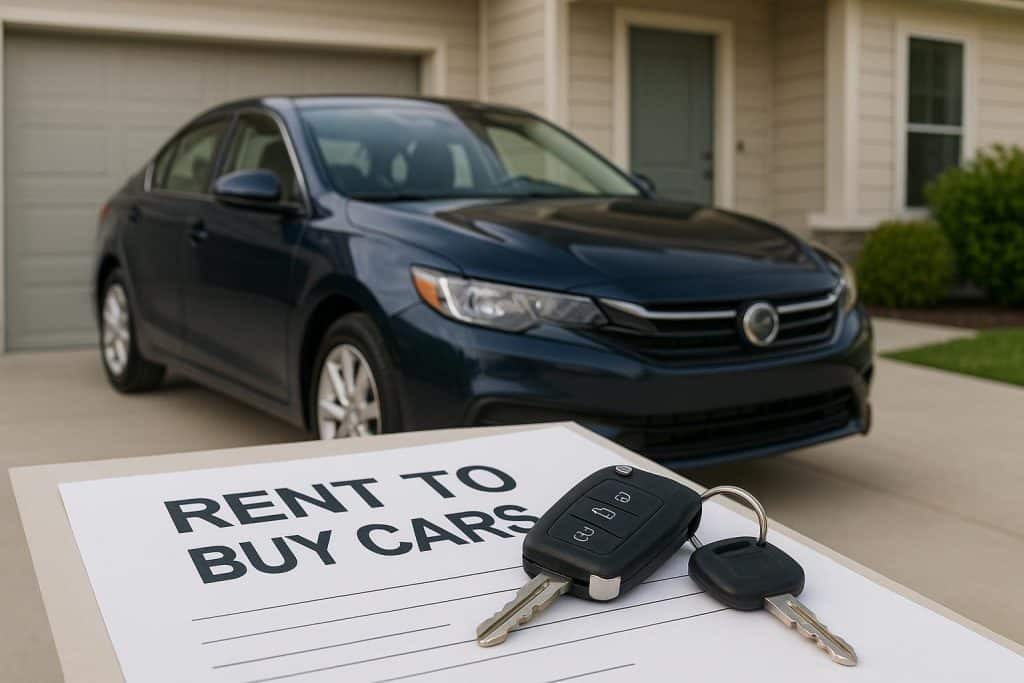
Getting behind the wheel of a new car should feel exciting—not overwhelming. Yet for millions of people, the traditional car-buying process involves mountains of paperwork, credit checks, hefty deposits, and the looming pressure of long-term financial commitments. According to a 2023 survey by Experian, nearly 38% of car buyers report feeling stressed or anxious during the purchasing process. That’s a significant number of people walking away from dealerships with more anxiety than excitement. Rent to buy cars are changing that experience entirely, offering a flexible, low-pressure alternative that puts drivers in control from day one.
This article breaks down exactly how rent-to-buy schemes work, who benefits most from them, and why the numbers behind this model make it a compelling option for a growing number of drivers.
What Is a Rent to Buy Car Scheme?
A rent-to-buy scheme allows a driver to rent a vehicle for an agreed period, with the option—or in some cases, the obligation—to purchase it outright at the end of the term. Think of it as a “try before you buy” approach to car ownership.
Unlike traditional financing, rent-to-buy arrangements typically require minimal upfront costs, no formal credit checks from major bureaus, and flexible weekly or monthly payment structures. Ownership is transferred only once all agreed payments have been made.
How Common Are Rent to Buy Arrangements?
The popularity of alternative car acquisition models has grown substantially. Key statistics paint a clear picture:
Alternative finance models (including rent-to-buy and lease-to-own) now account for nearly 22% of all vehicle acquisitions in markets like the UK and Australia, up from 14% a decade ago.
A report from the Finance & Leasing Association found that over 1.6 million vehicles were acquired through non-traditional financing in 2022 alone.
Among first-time car buyers, 42% say flexible payment options are their top priority when choosing how to acquire a vehicle.
These numbers reflect a fundamental shift in how people think about car ownership.
Why Does the Traditional Car-Buying Process Cause Stress?
To understand the appeal of rent-to-buy, it helps to understand what makes conventional car purchasing so difficult for many people.
Credit requirements are one of the biggest barriers. Traditional auto loans require a solid credit history. For those with poor credit, no credit, or inconsistent income—such as freelancers or casual workers—securing a loan can feel impossible.
Large upfront costs are another issue. Deposits on financed vehicles can range from 10% to 20% of the vehicle’s value, which on a $20,000 car means anywhere from $2,000 to $4,000 upfront before you’ve driven a single kilometer.
Finally, long-term financial lock-in creates anxiety. Committing to a five or seven-year loan on a depreciating asset is a significant financial decision, and many buyers aren’t confident they’re making the right call.
How Rent to Buy Cars Reduce Stress at Every Stage
Minimal Entry Barriers
Most rent-to-buy arrangements don’t require formal credit checks. Instead, providers assess affordability based on current income and living expenses. This opens the door for people who have been turned away by banks and traditional dealerships.
According to a survey conducted by the Australian Finance Industry Association, 67% of rent-to-buy users said they chose this path specifically because they were ineligible for conventional financing.
Clear, Predictable Payments
One of the most anxiety-inducing aspects of car ownership is unexpected costs. Rent-to-buy contracts often include bundled services—such as registration, basic insurance, and roadside assistance—within the weekly or monthly payment. This eliminates surprise expenses and makes budgeting far more straightforward.
A study by Canstar found that drivers on bundled rent-to-buy agreements were 31% less likely to report financial stress related to vehicle costs compared to those on standard auto loans.
Flexibility Without Penalty
Life changes. Jobs shift. Families grow. Standard car loans rarely accommodate these realities without hefty early exit fees. Many rent-to-buy contracts, by contrast, offer greater flexibility—allowing drivers to swap vehicles, extend their term, or exit the arrangement with far less financial penalty.
This flexibility is particularly valued by younger drivers. A 2022 Deloitte survey found that 54% of Millennials and Gen Z drivers prioritized flexibility over ownership when choosing how to acquire a vehicle.
About Rent to Buy Cars
Does renting to buy cost more overall than buying outright?
In most cases, yes—the total cost over the life of a rent-to-buy agreement will be higher than an outright cash purchase. However, the trade-off is access. For people who cannot afford a lump sum or don’t qualify for traditional financing, rent-to-buy provides a pathway to ownership that would otherwise be closed off. The convenience, bundled services, and lower entry costs often justify the difference for many buyers.
Will I actually own the car at the end?
Yes. Once all agreed payments are made, ownership is transferred to the driver in full. Unlike a standard rental, the goal of a rent-to-buy agreement is eventual ownership. Some contracts allow for an early buyout option at a reduced price, giving drivers even more control.
What happens if I miss a payment?
This depends on the provider and the specific contract. Most reputable rent-to-buy companies have processes in place to manage missed payments before taking action. It’s important to read your contract carefully and communicate with your provider early if financial difficulties arise.
Is the vehicle maintained during the rental period?
Many providers include basic maintenance or roadside assistance as part of the package. Some even include scheduled servicing. Always confirm what’s included in your specific agreement before signing.
Are rent-to-buy cars new or used?
Both. Some providers specialize in new vehicles, while others focus on pre-owned cars. Used rent-to-buy vehicles can offer excellent value, particularly for buyers who are more concerned with reliable transport than having the latest model.
Who is best suited to a rent-to-buy arrangement?
This model works particularly well for people with limited credit history, those recovering from financial hardship, new migrants without an established credit profile, and anyone who values flexibility over a rigid long-term loan commitment.
The Bigger Picture: Financial Inclusion Through Flexible Ownership
Rent-to-buy arrangements aren’t just about convenience—they’re about access. For many people, a car isn’t a luxury; it’s essential for getting to work, dropping kids at school, or accessing healthcare. When traditional financing shuts people out, rent-to-buy fills a critical gap.
Research from the Urban Institute found that lack of reliable transportation is one of the top five barriers to employment for low-to-moderate income earners. By providing an accessible path to car ownership, rent-to-buy schemes contribute to greater economic mobility—not just individual convenience.
Is Rent to Buy the Right Choice for You?
The answer depends on your financial situation, long-term goals, and priorities. If you have strong credit and sufficient savings for a deposit, a traditional loan may offer a lower total cost. But if flexibility, low entry costs, and stress-free payments matter more to you right now, a rent-to-buy agreement could be a genuinely smart move.
Before signing anything, compare providers carefully. Look at the total cost of the agreement, what’s included in the payment, the exit conditions, and the provider’s reputation. Transparency is a hallmark of a trustworthy rent-to-buy company.
The road to car ownership doesn’t have to be complicated. For a growing number of drivers, rent-to-buy is proving that getting behind the wheel—and eventually owning what’s in your driveway—can be a far less stressful experience than the traditional model ever allowed.