

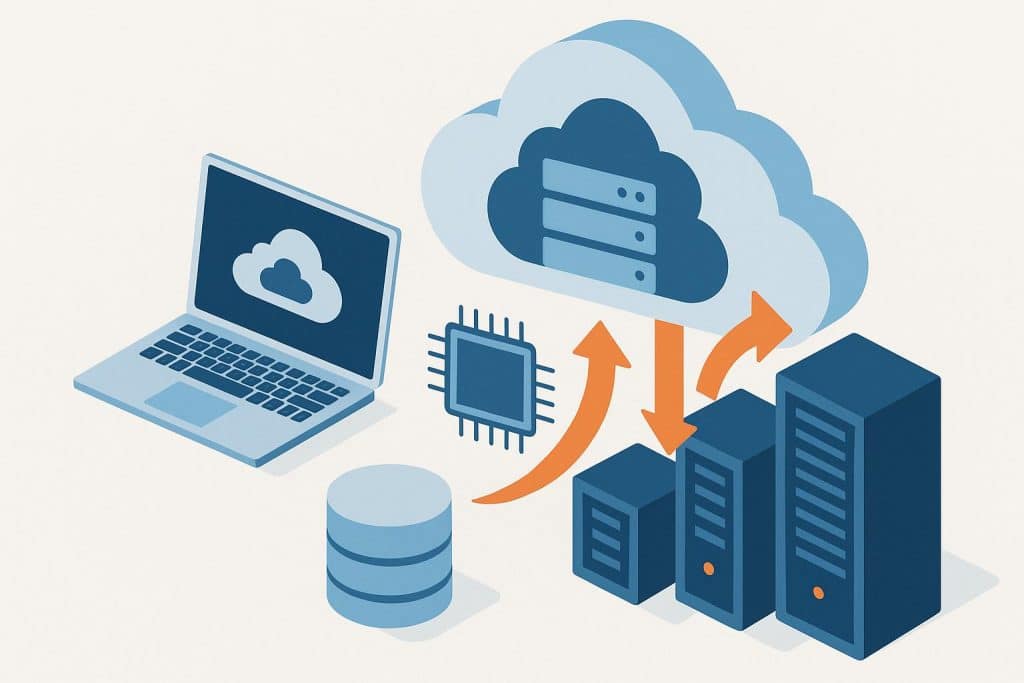
A cloud server has become one of the most practical infrastructure solutions for modern businesses. Companies no longer want to depend on rigid hardware purchases, slow deployment cycles, or hosting environments that cannot keep up with growth. They need infrastructure that can launch fast, scale when traffic changes, and support websites, apps, databases, internal systems, and development workflows without unnecessary complexity. That is why more teams now choose cloud server rental instead of relying on outdated hosting models or expensive physical equipment.
A cloud server is a virtualized computing environment built on cloud infrastructure. It works like a regular server, but with more flexibility and better scalability. You can install an operating system, deploy software, manage storage, configure networking, and run workloads just as you would on a traditional server. The difference is that the underlying resources come from a cloud platform rather than a single physical machine dedicated only to you. This gives businesses access to on-demand computing power without the burden of buying, maintaining, and replacing hardware.
For startups, e-commerce brands, software teams, agencies, and growing companies, this model solves several problems at once. It reduces upfront costs, speeds up deployment, and makes infrastructure easier to adapt as requirements change. Whether a company needs a production environment for a web platform, a staging server for testing, or a secure place to host internal tools, the ability to rent a cloud server gives it far more freedom than many traditional hosting options.
This guide explains what a cloud server is, how cloud server rental works, why businesses use it, and what to evaluate before choosing a provider.
What Is a Cloud Server?
A cloud server is a virtual server that runs on cloud infrastructure rather than on a single standalone physical machine allocated in a traditional way. It behaves like an independent server with its own CPU, RAM, storage, operating system, and network configuration. From the user’s perspective, it functions like a real machine that can host websites, run applications, process data, store files, and support business operations.
The key advantage is flexibility. A cloud server can usually be deployed much faster than physical hardware can be purchased and configured. It can also be resized more easily. If your workload grows, you can often increase compute resources without rebuilding your infrastructure from scratch. If your needs are temporary or seasonal, you can scale down again and avoid paying for capacity you no longer use.
This is why the term cloud server is so important in modern IT planning. It describes a server model that fits the way businesses operate today: fast-moving, budget-conscious, and dependent on reliable digital infrastructure.
Why Cloud Server Rental Is Growing
Cloud server rental continues to grow because businesses want infrastructure that works like a service rather than a long-term construction project. In the past, launching a new server often meant buying hardware, waiting for delivery, planning rack space, configuring the system, and preparing it for production. That process made sense for some enterprise environments, but it is too slow and too rigid for many modern teams.
With cloud server rental, a company can create a server environment much faster and pay only for the resources it actually uses. That changes the economics of infrastructure. Instead of large capital expenses, businesses move toward operating expenses that are easier to control and easier to align with real demand. This matters for startups protecting cash flow, agencies launching client projects, and established companies that want to avoid wasting budget on idle capacity.
There is also a strategic advantage. A rented cloud server can support experimentation. A business can test a new application, region, or service model without committing to permanent hardware. If the project succeeds, it can scale. If it changes direction, the infrastructure can be adjusted without leaving behind sunk equipment costs.
Who Should Rent a Cloud Server?
The audience for cloud infrastructure is broad because the use cases are broad. A startup may rent a cloud server to host its first SaaS application. An online store may use one to improve performance during traffic peaks. A software company may rely on several cloud servers for development, staging, production, and automated testing. A digital agency may deploy separate environments for different clients to keep projects isolated and easier to manage.
Small and mid-sized businesses also benefit because a cloud server gives them more control than shared hosting without forcing them into the cost and rigidity of dedicated hardware. They can run websites, CRMs, analytics tools, VPNs, customer portals, and internal business software in a more professional environment. Teams with remote employees may also use cloud servers to centralize applications and improve access control.
For many organizations, the question is no longer whether cloud infrastructure is useful. The real question is when it makes sense to rent a cloud server instead of continuing to rely on limited hosting platforms or aging on-premises systems.
Cloud Server vs Shared Hosting
Shared hosting is still common for very small websites and entry-level projects, but it has serious limitations. Multiple users share the same environment, which can reduce performance consistency and limit what you are able to configure. In many cases, you cannot install custom software, adjust system settings properly, or isolate workloads in a meaningful way.
A cloud server offers a more serious environment. You get your own virtual machine with a dedicated operating system instance and allocated resources. That means more predictable performance, better control over applications, and a stronger foundation for growth. You can configure security rules, install the software stack you need, use containers, manage databases, and build a setup that fits the actual project instead of the restrictions of a mass-market hosting plan.
For business-critical websites and applications, the difference is important. Shared hosting can be cheap, but it often becomes a bottleneck once performance, flexibility, or security starts to matter more.
Cloud Server vs Dedicated Server
A dedicated server gives you full access to physical hardware, and for some specialized enterprise workloads, that still makes sense. But many companies do not need an entire physical machine to themselves. They need a server that is flexible, deployable on demand, and easy to scale without major operational effort.
That is where cloud server rental often becomes the smarter option. A cloud server can provide enough performance for many applications while offering a much easier path for growth and cost management. Instead of paying for a full machine regardless of actual usage, businesses can start with a smaller configuration and expand only when the workload justifies it.
Dedicated servers can still be useful for highly specialized cases, but for many modern businesses, a cloud server provides a better balance between performance, control, and efficiency.
Main Benefits of Cloud Server Rental
One of the biggest benefits of cloud server rental is speed. Businesses can deploy infrastructure quickly, sometimes within minutes, instead of waiting through hardware procurement or slow hosting approval cycles. This helps teams move faster, especially when launching products, testing environments, or responding to changing traffic conditions.
Another major benefit is scalability. A cloud server is easier to resize than a traditional physical machine. If your project needs more RAM, additional CPU power, or larger storage volumes, those changes are usually simpler to implement. This makes cloud infrastructure especially attractive for businesses with variable demand, fast growth, or projects that evolve over time.
Cost efficiency matters too. When companies rent a cloud server, they usually avoid major upfront hardware investments. That lowers the barrier to entry and makes budgeting more flexible. Instead of buying infrastructure for a future scenario that may or may not happen, teams can align expenses with current needs and expand gradually.
Operational simplicity is another reason businesses prefer this model. The provider handles the physical layer, while the customer works with the virtual environment. That reduces the burden of hardware maintenance and lets internal teams focus on the applications, services, and workflows that actually create value.
Common Use Cases for a Cloud Server
A cloud server can support far more than a standard website. It is commonly used for hosting web applications, e-commerce platforms, content management systems, APIs, and SaaS products. Developers use cloud servers for testing, CI/CD pipelines, container workloads, and staging environments. Companies use them for databases, analytics tools, remote work solutions, backup systems, and internal business platforms.
For content-heavy websites, a cloud server provides more stability and flexibility than basic hosting. For custom applications, it allows deeper system control and better workload isolation. For agencies, it offers a practical way to separate projects by client. For software teams, it creates an environment that can be reproduced, modified, and scaled as products mature.
This versatility is one of the main reasons cloud server rental continues to expand across industries. The same infrastructure model can support a wide range of workloads, from simple business sites to complex production systems.
What to Check Before You Rent a Cloud Server
If you plan to rent a cloud server, do not focus only on the lowest advertised price. Real value depends on infrastructure quality, storage performance, network reliability, operating system options, control panel usability, scalability, and support.
Start with the hardware layer. Fast SSD or NVMe storage can make a major difference in application responsiveness, database behavior, and overall system speed. CPU generation also matters, especially for workloads that depend on strong single-core or multi-core performance. Network throughput, bandwidth terms, and regional availability are equally important if your users depend on stable access.
The control panel is another practical factor. A well-designed interface makes it easier to deploy a server, reinstall the OS, monitor usage, manage snapshots, configure networking, and resize resources. Poor usability turns ordinary tasks into friction, which becomes expensive over time in both effort and mistakes.
You should also review backup options, security controls, and billing structure. Some businesses want predictable monthly pricing. Others prefer hourly or usage-based models because they support temporary or experimental workloads. A good cloud server rental provider should match the way your team actually works.
How to Choose the Right Cloud Server Size
One of the most common mistakes is renting more server power than the workload really needs. A cloud server should be sized based on practical requirements, not assumptions or fear of future growth. A small business website, development environment, or lightweight internal app usually does not need a large machine. On the other hand, database-heavy applications, e-commerce stores with heavy traffic, and multi-user systems may need more compute power and storage performance from the beginning.
The right approach is to evaluate the application stack, expected traffic, concurrency, storage needs, and software dependencies. Then choose a plan that leaves reasonable headroom without wasting budget. One of the strengths of cloud server rental is that scaling later is usually easier than it would be with traditional infrastructure, so you do not have to overbuild on day one.
Smart planning matters more than oversized provisioning. The best cloud server is not the biggest one. It is the one that fits the workload well and can grow when the business actually needs it.
Security Considerations for Cloud Server Rental
Cloud infrastructure can improve operational resilience, but security still depends on how the server is configured and managed. A rented cloud server should be treated like a real production environment. That means using strong authentication, limiting access, updating packages regularly, configuring a firewall, and separating services where appropriate.
It is also important to plan backups and recovery workflows from the start. Backups should be scheduled, tested, and stored in a way that supports real recovery instead of just creating a false sense of safety. Monitoring matters too. CPU spikes, unusual traffic, failed login attempts, and storage pressure can all point to performance or security issues before they become serious outages.
The advantage of a cloud server is that it usually provides more flexibility for snapshots, replication, and controlled rebuilding than a simple shared hosting account. But the responsibility for a secure operating environment still belongs to the user or the internal IT team.
Why Businesses Prefer to Rent a Cloud Server Instead of Buying Hardware
When businesses compare cloud infrastructure with physical server ownership, the difference often comes down to agility. Buying hardware can still make sense in narrow cases, but it is slower, less flexible, and often harder to scale efficiently. A purchased server may sit underused for months, yet still require maintenance, replacement planning, and operational overhead.
When companies rent a cloud server, they get a more adaptable model. They can deploy resources when needed, adjust them as the workload changes, and avoid turning infrastructure into a fixed long-term commitment. This is especially useful for organizations that expect growth, seasonality, experimentation, or changing technical requirements.
Cloud server rental also fits the way digital businesses operate now. Teams need to move quickly, support distributed users, and launch services without waiting on procurement cycles. Renting cloud infrastructure aligns much better with those realities than buying hardware for every new initiative.
Final Thoughts on Cloud Server Rental
A cloud server is not just a hosting option. It is a flexible infrastructure model that helps businesses launch faster, scale more easily, and manage costs more rationally. For websites, applications, development environments, internal tools, and production workloads, the ability to use cloud infrastructure on demand has become a major advantage.
Cloud server rental is growing because it solves real business problems. It reduces hardware dependence, improves deployment speed, and gives teams more room to adapt as projects change. Whether you need a single environment for a business website or a larger platform for software delivery, the decision to rent a cloud server can simplify operations and create a stronger foundation for growth.
The best results come from choosing the right provider, sizing the environment based on real needs, and treating the server as a strategic part of your infrastructure. Done well, a cloud server can support both immediate projects and long-term business expansion without the limitations of traditional hosting or the burden of physical hardware.