

1. Introduction to Auto Transport
The auto transport industry has undergone significant transformation in recent years. With the rise of online car purchases, interstate relocations, and seasonal travel, the demand for reliable vehicle shipping services has increased dramatically. What was once considered a specialized logistical service is now a mainstream necessity for individuals and businesses alike.
At the core of this industry are two essential players: brokers and carriers. While they work together to deliver vehicles safely and efficiently, their roles are fundamentally different. Understanding how each operates is crucial for anyone planning to ship a vehicle.
A lack of clarity often leads to confusion, unexpected costs, or delays. By gaining a clear understanding of how the system works, customers can make informed decisions and avoid common pitfalls.
2. What is an Auto Transport Broker?
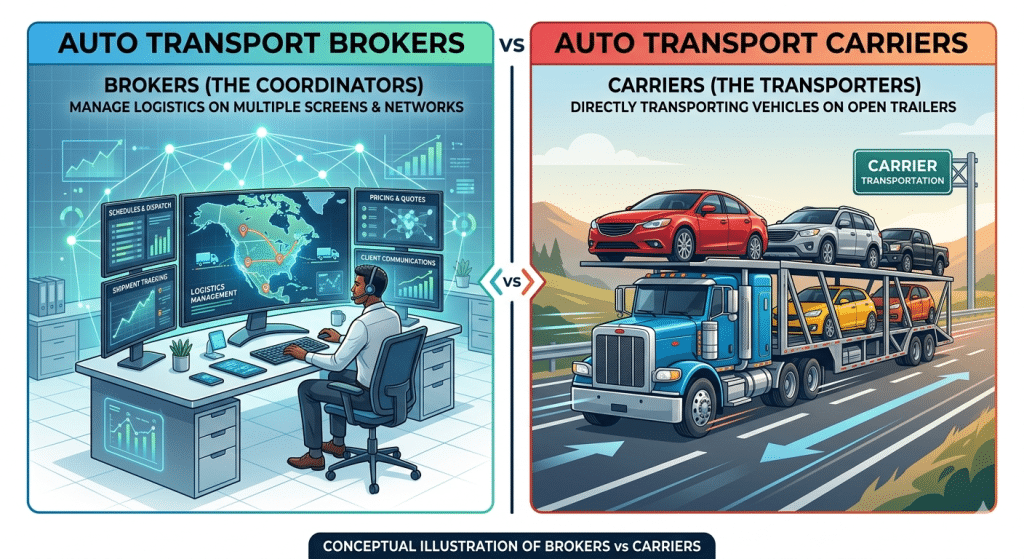
An auto transport broker serves as the intermediary between customers and carriers. Rather than transporting vehicles directly, brokers coordinate shipments by connecting clients with licensed carriers that operate on specific routes.
Brokers leverage extensive carrier networks to find the most suitable match based on timing, budget, and location. This flexibility allows customers to access multiple shipping options without needing to contact individual carriers themselves.
One of the primary advantages of working with a broker is convenience. Brokers handle scheduling, paperwork, and communication, simplifying what would otherwise be a complex process. They also help secure competitive pricing by comparing multiple carrier bids.
Companies like Yorka Auto Transport provide a streamlined experience by managing logistics from start to finish, ensuring that customers receive reliable and efficient service.
3. What is an Auto Transport Carrier?
Auto transport carriers are the companies responsible for physically moving vehicles. They own and operate the trucks, employ drivers, and handle the actual transportation process.
There are two primary types of carriers: open and enclosed. Open carriers are the most commonly used due to their affordability and availability. Enclosed carriers, however, offer added protection and are typically used for luxury, exotic, or classic vehicles.
Understanding the difference between open and enclosed trailer options is essential when choosing the right shipping method for your vehicle.
Carriers are responsible for inspecting the vehicle at pickup and delivery, managing transit logistics, and ensuring safe handling throughout the journey. Their performance directly impacts delivery time and vehicle condition upon arrival.
4. Brokers vs. Carriers: Key Differences
Although brokers and carriers collaborate closely, their roles differ significantly. Brokers manage the logistics and coordination, while carriers handle the execution of transport.
Brokers provide access to a wide range of options, making them ideal for customers seeking flexibility and competitive pricing. Carriers, on the other hand, offer direct service but may have limited route availability.
Communication is another key difference. Brokers act as intermediaries, ensuring smooth coordination between all parties. Direct communication with carriers can be more straightforward but may require more effort from the customer.
Choosing between a broker and a carrier depends on individual needs. Those looking for a hassle-free experience often prefer brokers, while others may opt for direct carrier engagement for more control.
5. The Auto Transport Process Explained
The auto transport process follows a structured sequence designed to ensure efficiency and transparency.
It begins with booking, where customers provide details such as vehicle type, pickup and delivery locations, and preferred dates. Accurate information at this stage is critical.
Once booked, a carrier is assigned. Brokers identify a suitable carrier based on availability and route compatibility. After confirmation, pickup is scheduled.
During pickup, the vehicle undergoes a detailed inspection, documented in the Bill of Lading. This document serves as a condition report and must be reviewed carefully.
The vehicle is then transported to its destination. Throughout transit, updates may be provided depending on the service level.
For individuals relocating or purchasing vehicles remotely, professional vehicle shipping services eliminate logistical challenges by managing the entire process efficiently.
Upon delivery, a final inspection is conducted to confirm that the vehicle arrived in the same condition. Any discrepancies are documented and addressed accordingly.
6. How to Choose the Right Auto Transport Partner
Selecting a reliable auto transport partner requires careful consideration. Proper licensing and insurance should always be verified before booking.
Customer reviews and testimonials provide valuable insights into a company’s reliability and service quality. Consistent positive feedback is a strong indicator of trustworthiness.
Be cautious of unusually low quotes, as they may indicate hidden fees or unreliable service. Clear communication and transparency are essential qualities to look for.
Asking the right questions can prevent future issues. Customers should inquire about delivery timelines, insurance coverage, and contingency plans in case of delays.
Working with an experienced broker like Yorka Auto Transport can simplify the selection process by connecting customers with vetted carriers and ensuring smooth coordination.
7. Conclusion
Auto transport is a complex yet highly organized industry driven by the collaboration between brokers and carriers. Each plays a vital role in ensuring vehicles are transported safely and efficiently.
Understanding the differences between these roles empowers customers to make smarter decisions. It reduces uncertainty, improves communication, and enhances the overall experience.
In a process where timing, safety, and reliability are critical, having the right knowledge—and the right partner—makes all the difference.