

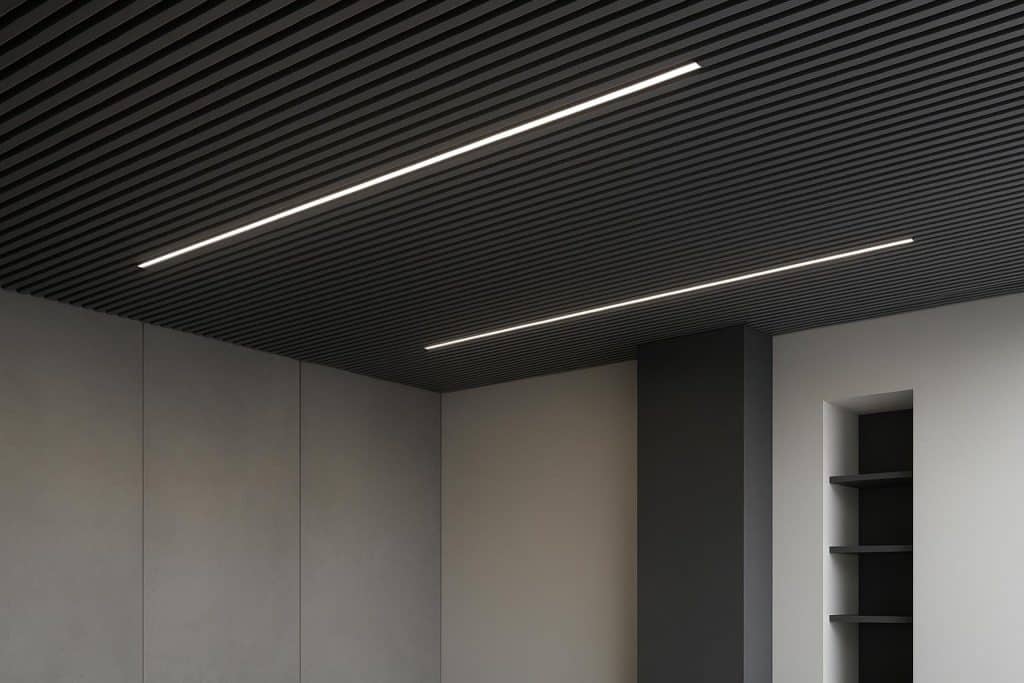
What Defines Metal Linear Ceilings in BC Architecture?
Metal linear ceilings BC represent specialized suspended architectural systems consisting of elongated aluminum or steel baffles and planks designed to provide aesthetic continuity and integrated acoustic control in high-traffic commercial and institutional environments. These systems utilize a carrier-based infrastructure to maintain precise module alignment while allowing for plenum access.
In my tenure managing large-scale interior installations in Vancouver, I have found that specifying metal linear systems often comes down to moisture resistance and fire ratings. In coastal projects near the Burrard Inlet, humidity levels necessitate the use of 0.040-inch-thick aluminum over galvanized steel to prevent oxidation. I ensure all systems meet CAN/ULC-S102 requirements for flame spread and smoke development.
Material Attributes of Wood and Metal Linear Systems
Wood and metal linear systems possess distinct material attributes, including specific NRC (Noise Reduction Coefficient) ratings, weight per square foot, and recycled content percentages that determine their suitability for LEED-certified building envelopes. Metal systems offer high durability and integration with LED lighting, while wood systems provide natural acoustic diffusion.
When I installed wood linear baffles in a Surrey corporate office, we had to account for a weight of 3.5 pounds per square foot. This required a heavy-duty 15/16-inch T-bar grid reinforced with 12-gauge hanger wires. For metal linear ceilings BC projects, I prioritize the “open area” percentage, as this dictates how much sound energy reaches the fiberglass infill or acoustic fleece backing to achieve a target NRC of 0.75 or higher.
Seismic Requirements for Linear Ceiling Installations
Seismic requirements for metal linear ceilings BC installations mandate the use of heavy-duty main runners, perimeter clearance of 2 inches, and four-way splay wire bracing to comply with the BC Building Code and ASTM E580 standards. These components prevent system collapse during lateral acceleration in seismic zones 4 and 5.
I have seen many installation errors where the installer fails to use “pop rivets” to secure the carrier to the perimeter trim on the “fixed” side of the room. This rigid attachment is required on two adjacent walls, while the opposite two walls must remain “floating” to allow for movement. Neglecting this creates a system that binds and buckles during a tremor.
Seismic Material Comparison: Standard vs. Seismic-Rated
| Component | Standard Linear Component | Seismic-Rated Component | Engineering Requirement |
|---|---|---|---|
| Wall Angle | 7/8″ L-angle | 2″ Shadow Mold or Wide Flange | ASTM E580 / BCBC |
| Hanger Wire | 12-gauge (non-tensioned) | 12-gauge with 3-tight wraps | CSA S136 Standards |
| Lateral Bracing | None | 4-way Splay Wires at 45° | Lateral Force Resistance |
| Compression Post | None | EMT or Telescoping Strut | Vertical Uplift Prevention |
Step-by-Step Installation of Seismic Braces for Linear Systems
Installing seismic braces requires securing four 12-gauge wires to the structural deck at 45-degree angles and attaching them to the ceiling carrier to form a rigid lateral restraint system. This configuration must be repeated every 12 feet in both directions to meet safety protocols.
- Anchor splay wires into the concrete slab using 1/4-inch expansion bolts rated for seismic loads.
- Pull wires taut at 45 degrees relative to the ceiling plane.
- Twist each wire with a minimum of three full turns within a 1.5-inch distance at the carrier connection point.
- Insert the vertical compression post (EMT conduit) between the structural deck and the carrier.
- Secure the post to ensure the ceiling cannot move upward during vertical ground acceleration.
Risks and Maintenance of Linear Systems
Risks associated with metal linear ceilings BC installations include “oil canning” in metal planks due to thin gauges and the “expansion-contraction” cycles of wood members caused by fluctuating indoor humidity levels. Improper handling of long-span aluminum baffles often results in permanent kinks that ruin the visual line of the ceiling.
One common mistake I see in Vancouver renovations is the lack of “seismic gaps” in large continuous runs. If the ceiling exceeds 2,500 square feet, it must be divided by a seismic separation joint. Failing to do this causes the entire system to act as a single mass, increasing the likelihood of structural failure.
Final Technical Synthesis
Achieving a high-performance linear ceiling requires the integration of material science, acoustic engineering, and strict adherence to the seismic bracing protocols defined by the BC Building Code. Professional installers must balance the design’s visual requirements with the suspension system’s mechanical constraints to ensure longevity and safety.
Frequently Asked Questions ABout Metal Linear Ceilings
Can metal linear ceilings be used outdoors?
Yes, if they are specified with exterior-grade finishes and wind-load-rated locking carriers.
How do you clean wood linear ceilings?
Use a dry microfiber cloth or a low-suction vacuum; avoid liquid cleaners that might warp the wood grain.
What is the standard spacing for linear baffles?
Spacing is typically 4 inches or 6 inches on center, depending on the desired “openness” of the plenum.
Are linear ceilings compatible with fire sprinklers?
They are compatible, but sprinklers must be dropped through the carrier or centered between baffles to maintain spray patterns.