

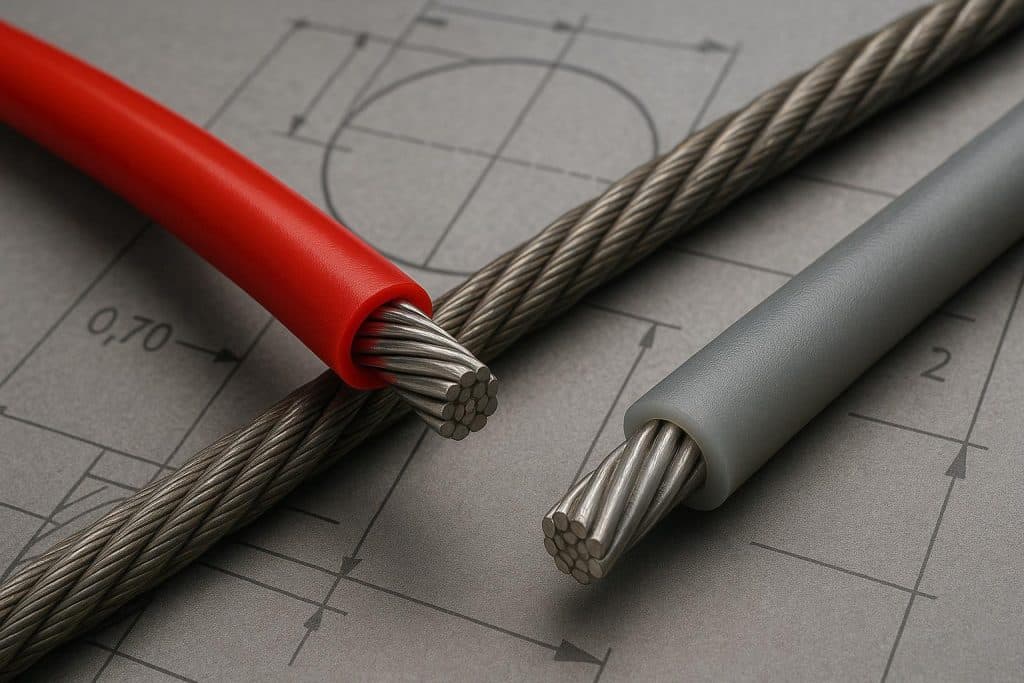
Material selection dictates the success and safety of any load-bearing infrastructure. In rigorous industrial and marine environments, bare metal often falls short against environmental degradation, friction, and constant wear. This is where polymer coated steel cables provide an essential engineering solution. By combining the high tensile strength of steel with advanced synthetic polymers, engineers create highly resilient, multi-functional tension systems.
Understanding the mechanical properties of a nylon and vinyl coated steel cable is critical for project success. Properly specified protective cable coatings prevent catastrophic failures, extend operational lifespans, and ensure safe handling. This article breaks down the construction, extrusion processes, and practical applications that make these materials indispensable.
The Basics of Polymer Coated Steel Cables
At its core, a coated cable begins with high-quality steel wire rope. Manufacturers weave individual high-carbon steel wires into distinct geometric patterns, known as strands. These strands are then helically wrapped around a central core to form the final rope.
The wire rope construction directly determines the cable’s mechanical behavior. For example, a 1×19 configuration offers high stiffness and breaking strength, making it ideal for static structural rigging. Conversely, 7×7 and 7×19 constructions provide significantly higher flexibility, allowing the cable to route smoothly through pulleys and complex mechanical assemblies.
Once the steel core is formed, engineers apply advanced polymer coatings. These jackets serve as functional barriers, locking in necessary lubrication while keeping out destructive environmental elements.
The Crucial Role of Galvanization and Corrosion Resistance
Before the polymer jacket goes on, the base steel often undergoes galvanization. A galvanized steel cable receives a precise metallurgical coating of zinc. This zinc layer acts as a sacrificial anode, meaning it will oxidize before the underlying steel begins to rust.
This dual-layer defense system is vital for comprehensive corrosion protection. While the outer polymer jacket blocks moisture and chemicals, microscopic abrasions or cuts can occasionally expose the metal underneath. Galvanization ensures that even if the synthetic coating suffers localized damage, the structural integrity of the steel wire rope remains intact.
For maximum resilience, particularly in extreme offshore environments, engineers might specify stainless steel cores over galvanized options. However, for most commercial and industrial engineering applications, the combination of zinc galvanization and a thick polymer jacket provides an optimal balance of cost and corrosion resistance.
Extrusion Processes for Nylon and Vinyl Coatings
The application of synthetic jackets requires precise cable extrusion processes. During manufacturing, the bare steel wire rope passes through an extrusion die where molten polymer is continuously formed around the metal. Temperature control and pull speed dictate the exact thickness and uniformity of the jacket.
Vinyl coatings, typically made from Polyvinyl Chloride (PVC), are extruded to provide a flexible, cost-effective weather barrier. Vinyl effectively resists sunlight, water, and many everyday chemicals. It offers a smooth finish that feels comfortable to handle, making it a standard choice for general-purpose applications.
Nylon coatings require more demanding extrusion parameters. Nylon is highly crystalline, meaning the material science behind its application focuses on superior abrasion resistance and high-cycle durability. Extruding nylon over steel creates a tough, rigid jacket that withstands severe friction, heavily loaded pulleys, and extreme mechanical stress.
How Polymer Coatings Enhance Flexibility, Durability, and Safety
Adding a synthetic jacket significantly changes how a cable performs in the field. Cable durability increases dramatically because the coating absorbs impact and prevents individual steel wires from rubbing directly against other metal surfaces. This reduction in metal-on-metal friction drastically lowers the rate of fatigue.
From a safety perspective, protective cable coatings are invaluable. Bare steel cables can develop “fishhooks”—broken individual wires that protrude from the strand and cause severe hand injuries. A sturdy polymer jacket contains these broken wires, improving industrial safety and making manual handling much safer for operators.
Furthermore, the polymer layer can be extruded in various high-visibility colors. This allows engineers and safety inspectors to quickly identify specific load-bearing systems, differentiate between power lines and structural supports, or clearly mark hazard zones in busy industrial environments.
Exploring Industrial and Marine Cable Applications
The versatility of these materials makes them vital across multiple heavy-duty sectors. In marine engineering, components face constant exposure to saltwater, intense UV radiation, and heavy mechanical loading. Marine cable applications rely heavily on vinyl-jacketed ropes for boat rigging, lifeline systems, and underwater tethering due to their excellent waterproofing capabilities.
In industrial engineering, manufacturing plants utilize coated cables for overhead conveyor systems, heavy-duty hoist mechanisms, and automated safety tethers. The high abrasion resistance of nylon makes it the preferred material for repetitive-motion machinery.
Commercial sectors also rely heavily on these systems. From fitness equipment mechanics and architectural guardrails to agricultural netting supports, polymer-coated steel provides the necessary strength while maintaining a clean, aesthetic, and safe exterior profile.
Engineering Considerations for Selecting Nylon and Vinyl Coated Steel Cable
Specifying the correct nylon and vinyl coated steel cable requires careful evaluation of the operating environment. Engineers must weigh the primary differences between nylon and vinyl to ensure optimal long-term performance.
Consider these key material variables during the specification process:
- Operating Temperature: Nylon generally withstands wider temperature extremes without cracking or degrading compared to standard vinyl.
- Flexibility Requirements: Vinyl remains softer and more pliable, making it easier to route through tight radii without kinking.
- Friction and Wear: Nylon boasts a much lower coefficient of friction and superior abrasion resistance, essential for load-bearing systems utilizing sheaves or pulleys.
- Chemical Exposure: Both materials offer chemical resistance, but they react differently to specific industrial solvents, oils, and acids.
By analyzing these factors, engineers can prevent premature material failure and significantly reduce long-term maintenance costs.
Sourcing Considerations for Procurement Teams
Once the engineering specifications are finalized, procurement and sourcing teams must secure reliable materials. Sourcing industrial steel cable requires vetting suppliers who understand strict dimensional tolerances and quality control standards. Cable manufacturing is a precision industry where minor variations in jacket thickness can cause machinery to jam or fail.
Procurement professionals often look for specialty suppliers that stock a wide variety of dimensions, core constructions, and jacket materials. For instance, Fehr Bros. is a well-known supplier that carries nylon and vinyl coated steel cables across a broad range of constructions and sizes for commercial and industrial use. Referencing specialized distributors ensures that procurement teams can match precise engineering requirements with readily available inventory.
Partnering with knowledgeable suppliers also guarantees access to accurate technical data sheets. This transparency is crucial for verifying breaking strengths, coating materials, and adherence to international safety standards before the cable ever reaches the job site.
Conclusion
The engineering behind synthetic cable jackets goes far beyond simple weatherproofing. By merging the unmatched tensile strength of steel wire rope with the advanced chemical properties of modern polymers, engineers can solve complex mechanical challenges. Whether navigating corrosive saltwater environments or designing high-cycle industrial machinery, selecting the right materials directly impacts operational success.
Understanding the specific advantages of a nylon and vinyl coated steel cable allows teams to maximize safety, durability, and cost-efficiency. The key takeaway for any project manager or engineer is to carefully match the wire rope construction and polymer jacket type to the exact friction, temperature, and environmental demands of the application.