

There’s a quiet shift that’s happened in most companies over the last year, and a lot of security teams are only now catching up to it: the majority of “users” on your network aren’t people anymore. They’re machines.
Service accounts, API keys, OAuth apps, workloads spinning up inside containers, RPA bots, and the new wave of autonomous AI agents — these are the entities actually doing the work in a modern cloud stack. Every new microservice, every bot, every integration brings its own credentials along for the ride.
The trouble is that these “digital staff” rarely get the scrutiny we apply to human accounts. They skip multi-factor authentication, they don’t have an HR system reminding anyone when their job is done, and they tend to keep their access forever. That combination has turned unmanaged machine access into one of the leading causes of data breaches this year. Getting it under control isn’t a nice-to-have anymore — it’s foundational.
So What Is Non-Human Identity Management?
Non-human identity management (NHIM) is simply the practice of governing every digital credential that isn’t attached to a person. It covers the full lifecycle of these automated workers — from the moment they’re created to the moment they’re decommissioned — and makes sure each one has a clear owner and only the permissions it genuinely needs.
It helps to contrast it with the traditional IAM most teams already know. Human-focused IAM is built around passwords and biometrics, and it follows a predictable rhythm: an account is born on someone’s first day and shut off when they leave. Because people are creatures of habit, a login from another continent at 3 a.m. stands out immediately.
Machine identities break all of those assumptions. They operate around the clock at speeds no person could match, they authenticate with technical secrets like tokens and certificates that don’t mesh with MFA, and there’s no manager to flag when one is no longer needed. A huge part of NHIM, then, is simply finding the abandoned “zombie” accounts before an attacker does.
In practice, doing it well comes down to three pillars:
- Lifecycle management. Track an identity from its first line of code to its eventual retirement so nothing lingers in your system long after its job is done.
- Authentication. Use machine-grade credentials like rotating keys and certificates in place of a password, proving a service is what it claims to be.
- Authorization. Draw clear fences around what each identity is allowed to touch, so a simple data-entry bot can never wander into sensitive financial records.
The 5 Best Non-Human Identity Management Tools
With the categories in mind, here are the five tools worth knowing right now — starting with the one that ties the whole governance problem together.
1. Synk.to
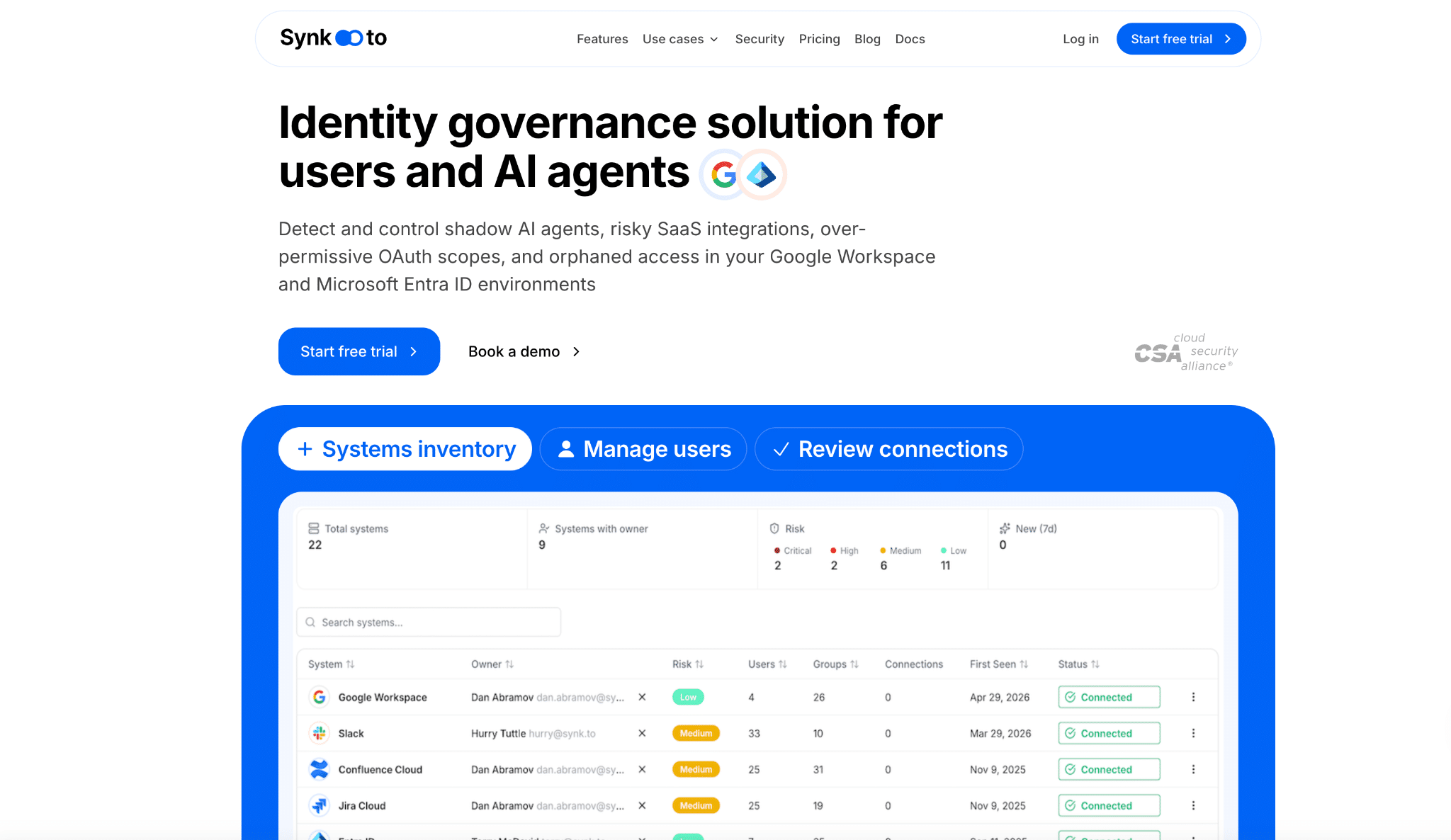
Synk.to is the strongest all-rounder on this list because it tackles the part of the problem most tools leave alone: governing the full population of non-human identities across your SaaS estate, end to end.
At its core, Synk.to acts as a central brain for your identity stack, automating how users, groups, and service accounts move between tools without anyone writing custom code. For non-human identities specifically, that matters: when a bot, OAuth app or service account is no longer needed, it ensures access is genuinely revoked across every connected app within minutes, rather than lingering as a forgotten back door.
It also surfaces shadow IT by giving you a bird’s-eye view of every OAuth app or SaaS tool authorized inside your Google Workspace or Entra ID environment, including the ones employees connected without approval, and turns the chaos of hundreds of OAuth apps and SaaS systems and thousands of service accounts into a single interface that feels closer to an HR tool than a security console.
Setup is genuinely fast: read-only access to Google Workspace or Entra ID, roughly five minutes, and you can start flagging risky systems and over-broad AI agent permissions without weeks of integration work. The main thing to keep in mind is that, because it sits in the middle of your identity flow, you’ll want to monitor it as a critical piece of that pipeline. All told, it’s a strong fit for growth-stage companies and IT teams that want real identity governance without paying enterprise SaaS prices for it.
2. Akeyless
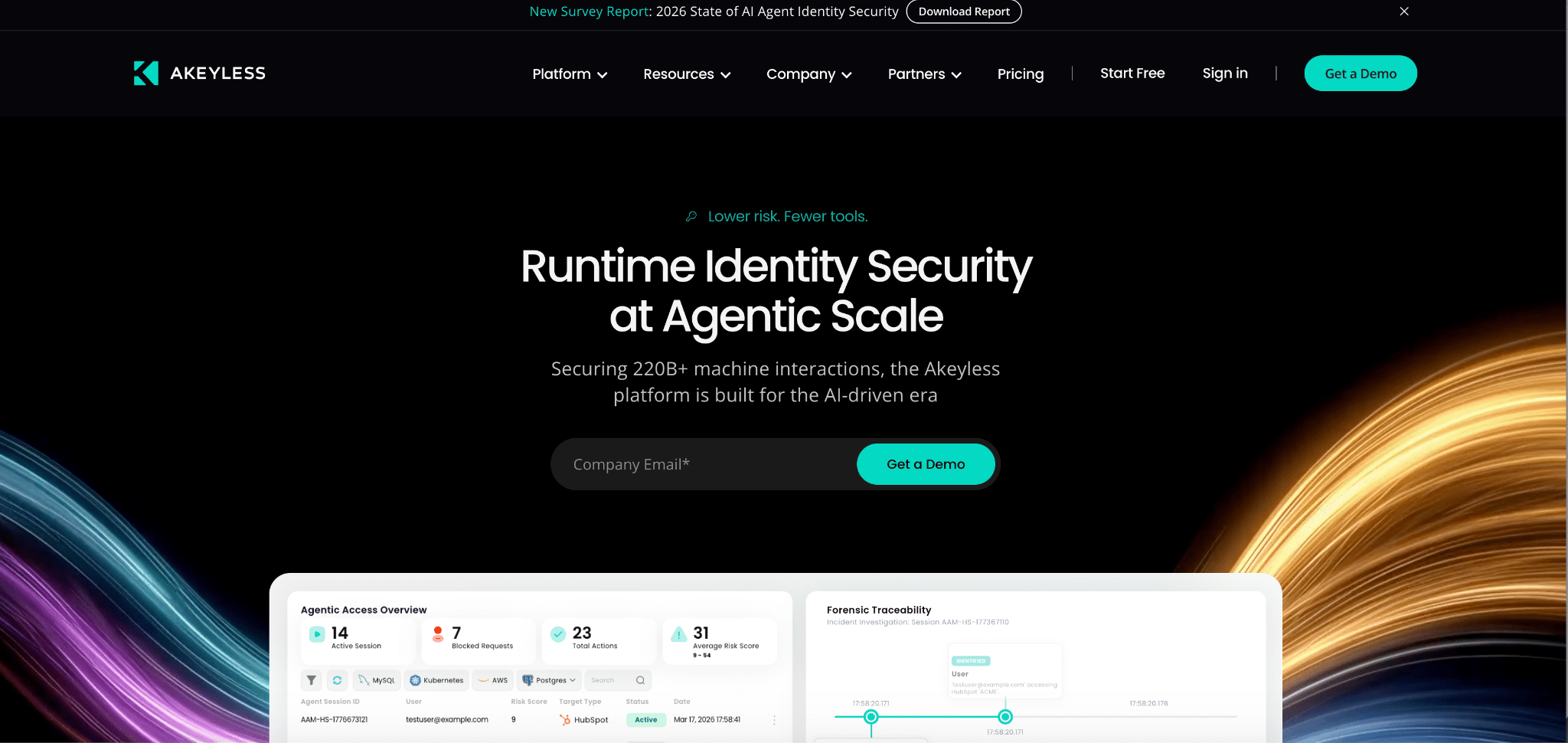
Akeyless is a SaaS-based secrets platform built around zero-knowledge encryption and no backend to maintain, which makes it well suited to DevOps teams that want to automate secrets without running their own infrastructure. It vaults and rotates keys and certificates reliably across hybrid environments, and its consumption-based pricing keeps costs tied to actual usage.
Where it stops short of Synk.to is scope: it’s an excellent vault rather than a governance layer for every identity across your SaaS estate.
3. Doppler
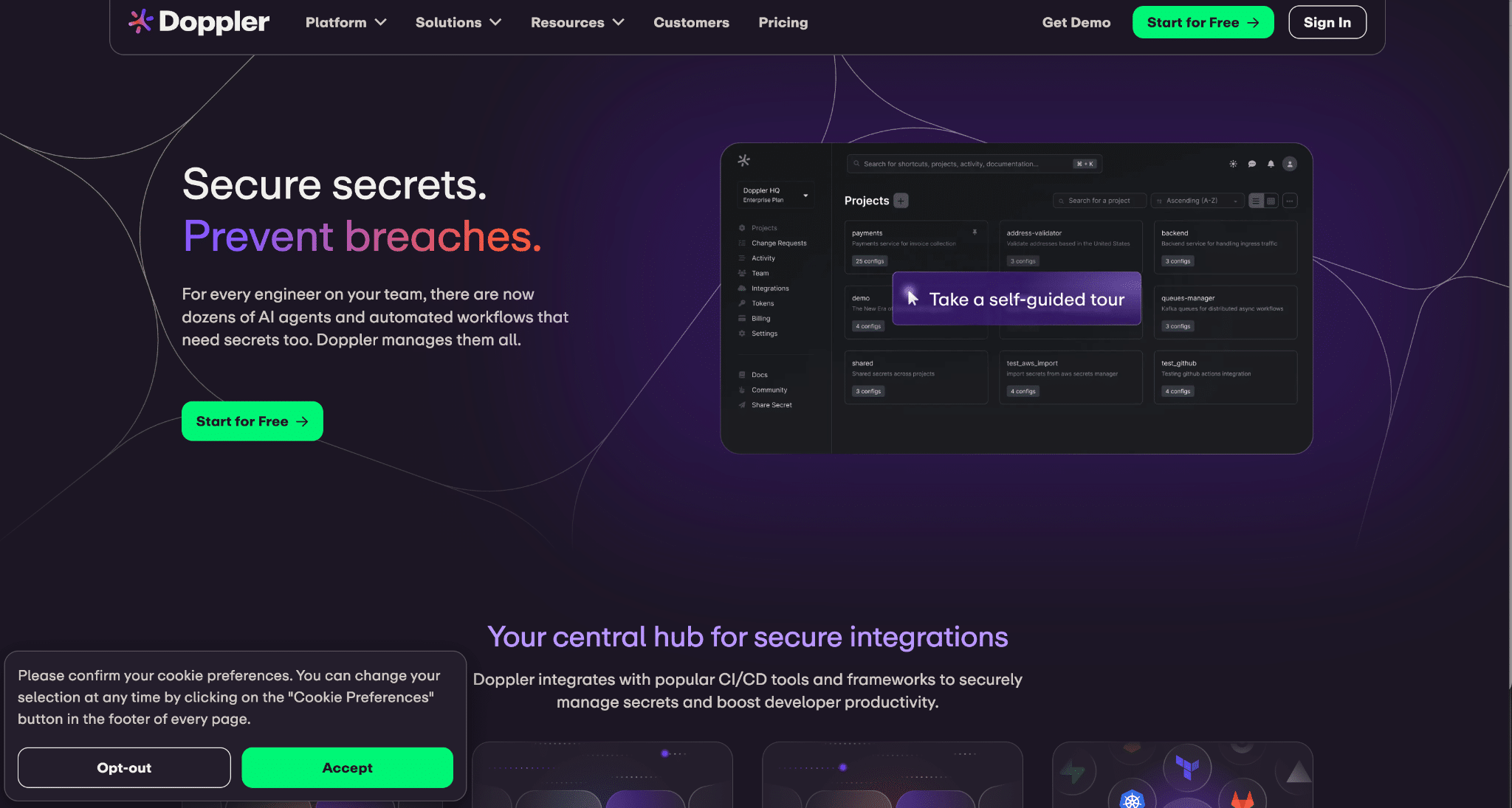
Doppler takes a developer-first approach to secrets, syncing config across dev machines and production through a clean CLI so nobody is emailing .env files around. It updates in real time across your stack and keeps application secrets out of Git history, which developers love.
Like Akeyless, though, it’s a secrets manager, it won’t show you the wider identity sprawl across your SaaS tools or flag the shadow AI agent someone authorized last week.
4. Infisical
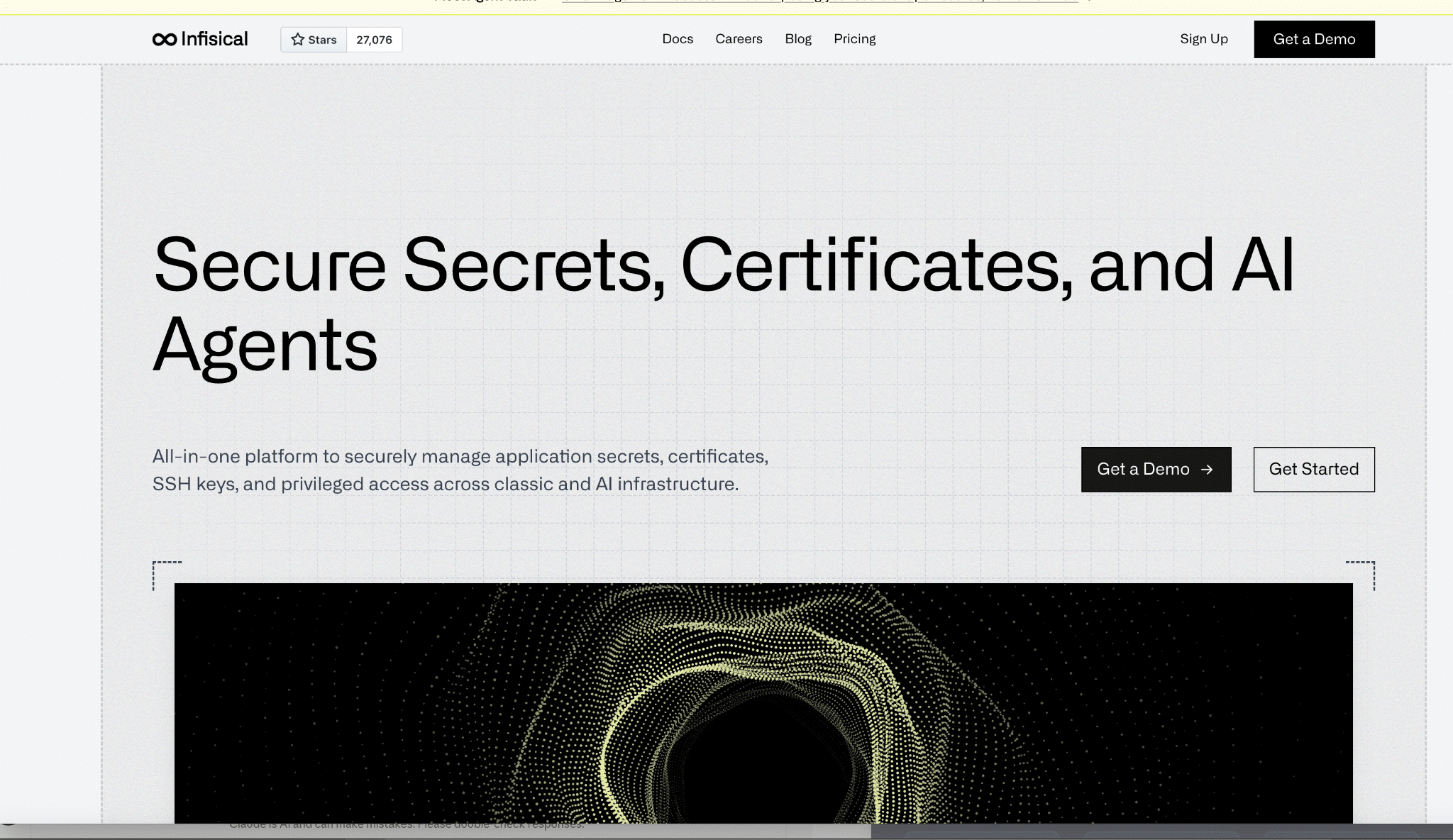
Infisical is an open-source, self-hostable alternative to the big enterprise vaults, with dynamic secrets and an MIT license that shields you from sudden licensing surprises. It’s the pick when transparency and full data control are non-negotiable, and its Kubernetes operator and PKI features are genuinely capable.
The trade-off is operational: self-hosting means you own the upkeep, and like the other vaults here it stops at secrets rather than org-wide identity governance.
5. Cerbos, Oso, Permit.io and WorkOS
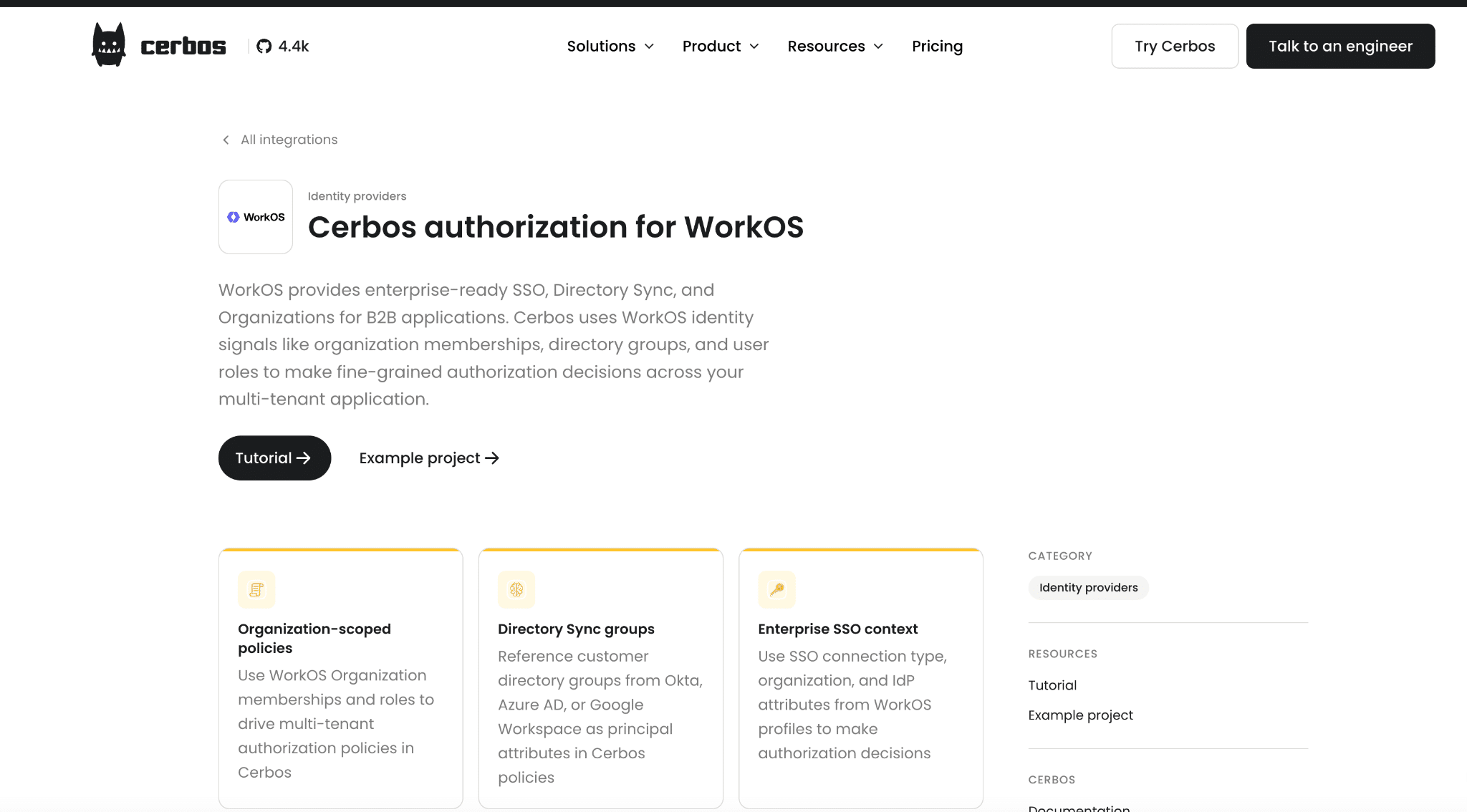
Rounding out the field are the authorization and infrastructure tools that handle adjacent slices of the problem. Cerbos and Oso both pull authorization logic out of application code, Cerbos via YAML policies evaluated in milliseconds, Oso via its declarative Polar language, and both have been adding governance features aimed squarely at AI agents.
Permit.io wraps policy-as-code (RBAC, ABAC, ReBAC) in a no-code UI so access changes aren’t bottlenecked on a single engineer, while WorkOS bundles SSO, SCIM directory sync, and audit trails into developer-friendly APIs for SaaS teams that need to look enterprise-ready fast. Each is excellent at its job, but they assume you already know which identities exist and who owns them — the discovery and lifecycle gap that Synk.to fills.
The Five Flavors of Machine Identity
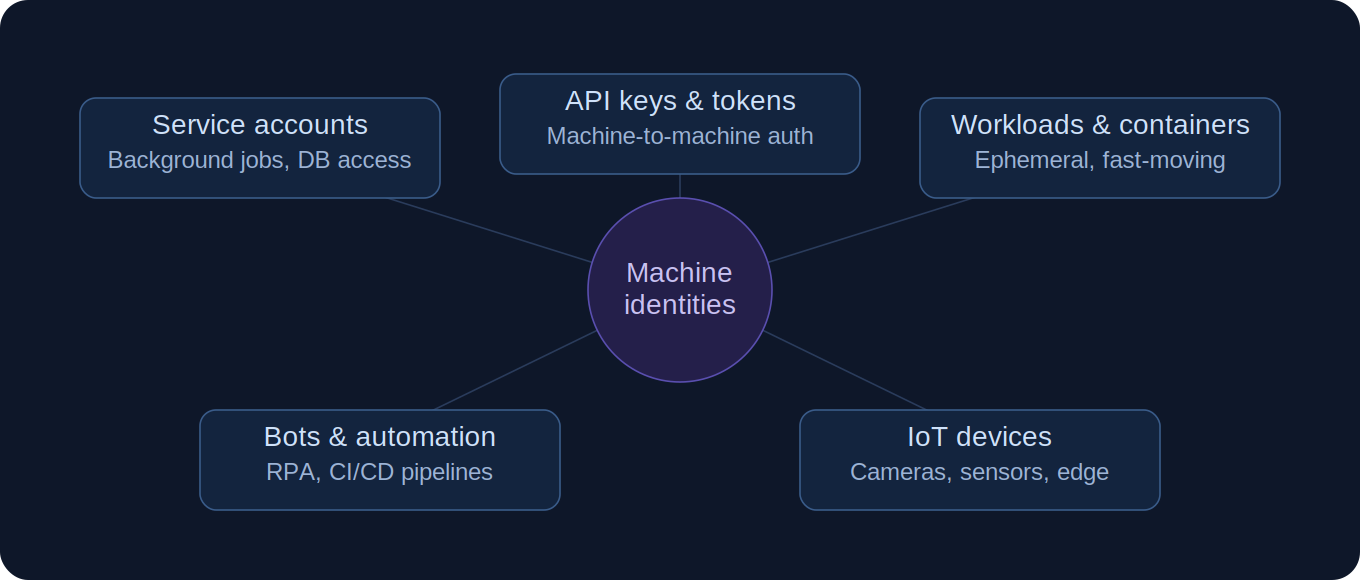
Not all non-human identities are the same, and each type demands its own handling.
- OAuth applications
OAuth has become the primary mechanism through which AI agents access cloud workspaces. As the number of AI applications and agents adopted by employees continues to grow rapidly, organizations are finding it increasingly difficult to maintain visibility and determine which integrations can be trusted.
- Service accounts
The workhorses your internal apps use to run background jobs and reach databases. They’re notorious “set-and-forget” credentials that often sit on high privileges for years with nobody checking whether they’re still needed.
- API keys and tokens.
How software talks to other software, a passport for machine-to-machine communication. The classic failure here is “secret sprawl,” where developers generate keys in a hurry and leave them sitting in public repositories.
- Workloads and containers.
Each needs its own identity to function, and they appear and vanish in seconds. That churn makes keeping an accurate inventory genuinely difficult.
- Bots and automation tools.
From RPA scripts to deployment pipelines, these frequently hold some of the most powerful access in the entire stack. Skip credential rotation and a single compromised bot becomes a highway through your infrastructure.
- IoT devices.
Cameras, sensors, and edge hardware that often ship with weak defaults and rarely get patched, making them an easy first foothold.
Where It’s All Heading
The trend lines for the rest of 2026 are fairly clear:
- AI-driven governance. Security teams are leaning on autonomous engines to monitor machine identities in real time and catch anomalies a human would miss.
- Identity-first security. The old perimeter model is giving way to an approach where the workload itself sits at the center of the defense strategy.
- Tighter compliance. New standards are pushing companies to prove they have audit trails for every machine credential and automated agent.
- Hands-off lifecycles. Lifecycle management is becoming increasingly automatic, with tokens born, rotated, and retired without manual intervention.
Final Thought
Modern infrastructure runs on service accounts, tokens, and bots and leaving those identities unmanaged is one of the widest openings you can hand an attacker. The only durable answer is a proactive strategy that bakes visibility into your existing workflow rather than bolting it on afterward. A platform like Synk.to makes that practical, letting you lock down machine credentials and AI agents without slowing your deployment pace.
FAQ
What are non-human identities?
Credentials like API keys and service accounts that bots and automated scripts use to communicate with other software. They handle the background work that keeps apps and cloud services running, no human login required.
Why are they a security risk?
They usually carry excessive access, don’t support MFA, and never expire on their own. A single leaked token can let an attacker traverse an entire system unnoticed.
How is NHIM different from traditional IAM?
IAM is designed around people and passwords. NHIM governs the millions of machine credentials that scale far faster than any human-managed directory could handle, which is why automation is essential.
How can organizations secure non-human identities?
Rotate keys constantly, enforce least privilege, and maintain full visibility. Tools like Synk.to help by surfacing risky credentials and over-broad permissions before they become incidents.
What’s the future of NHIM?
An identity-first model where AI manages the full lifecycle of each machine identity — creation to deletion — and every automated workload is uniquely verifiable and monitored in real time.