

I love the idea of a Minimum Viable Product.
On paper, it’s elegant: build the smallest version that can test your riskiest assumptions, learn fast, then improve.
In practice, what I see in a lot of startups is something else entirely: rushed prototypes passed off as “MVPs,” vibe-coded apps using AI coding tools, then force-scaled into production until they collapse under their own tech debt.
The concept isn’t broken. The execution is.
The Data: MVPs Are Failing Loudly (And Expensively)
We’ve all heard the “around 90% of startups fail (a figure that’s been debated, but roughly in line across studies)” stat so often that it’s become background noise. What’s more interesting is why.
According to CB Insights’ analysis of startup post-mortems, roughly 43% of failed startups cited “no market need” as the main reason, and another ~17% blamed poor product.
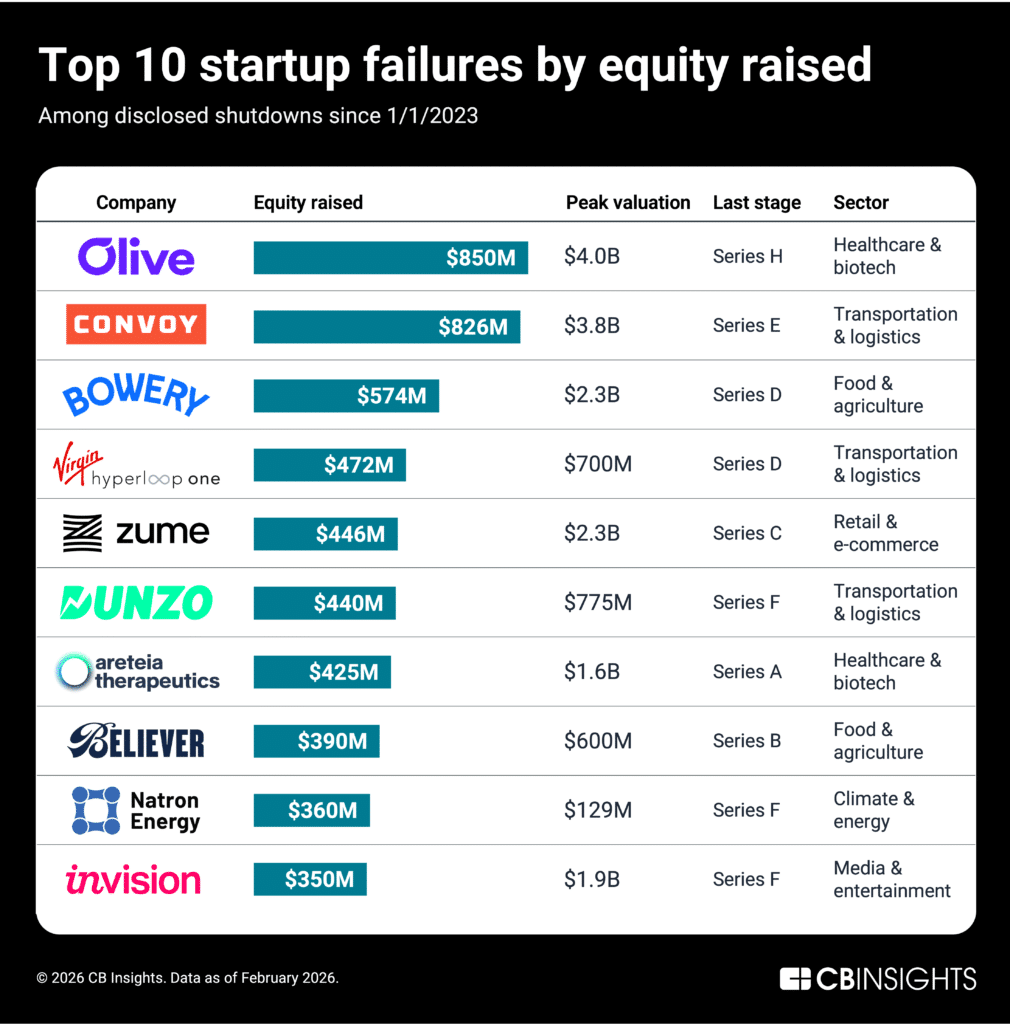
Here’s a sneak peek at the top 10 startup failures by equity raise.
Source: CBInsights
Those are both execution problems. Building the wrong thing. Or building the right thing badly.
At the same time, technical debt quietly eats teams from the inside.
A Stripe-cited developer survey estimates that developers spend up to 42% of their time dealing with tech debt and bad code, costing companies billions of dollars a year in lost work hours.
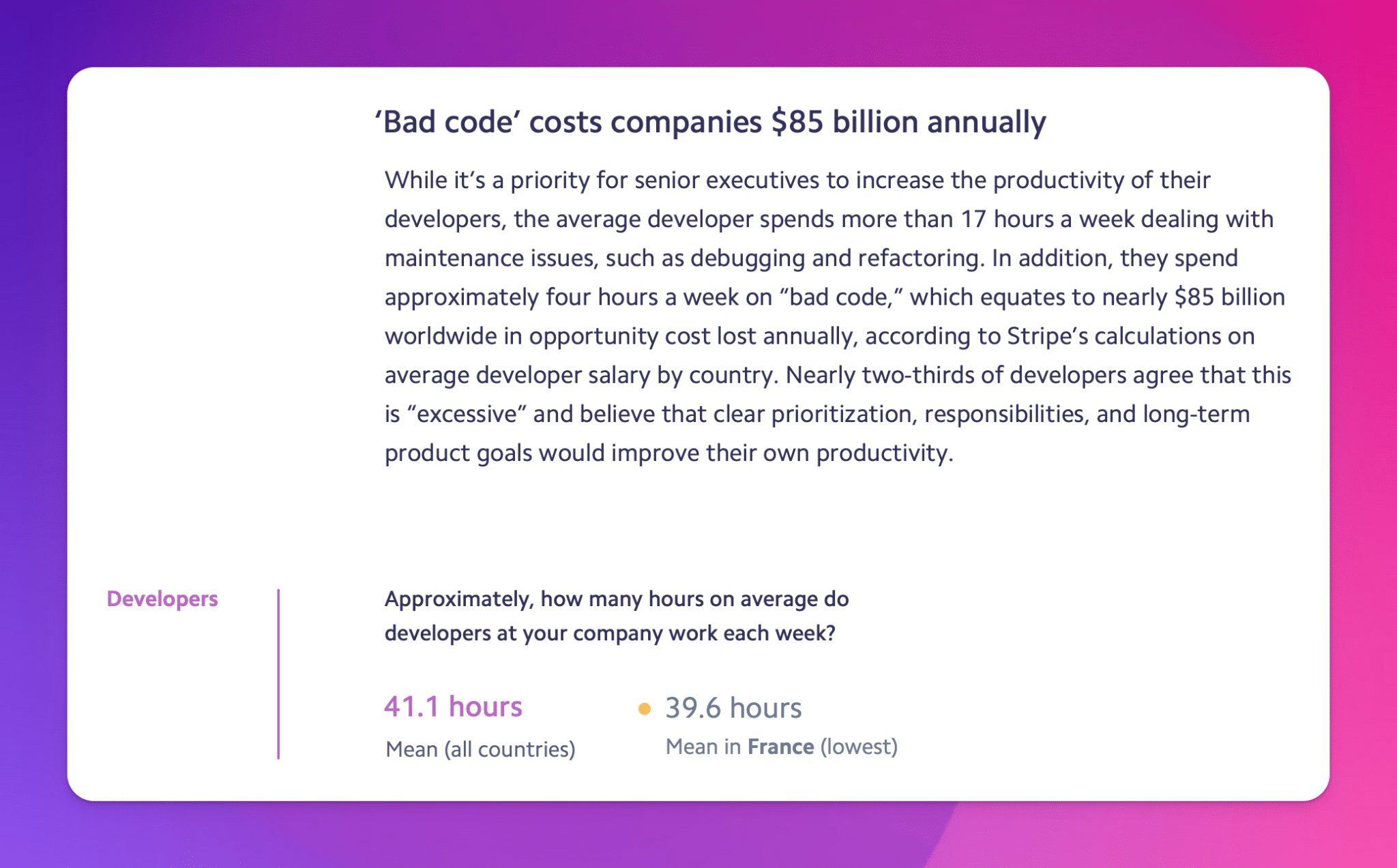
Source: Stripe – The Developer Coefficient
That’s not a rounding error. That’s almost half the week.
Then there’s the rebuild tax. Toimi’s breakdown of U.S. startup budgets shows that a “cheap” $50k MVP often leads to a later rebuild or heavy refactor that ends up costing another MVP‑sized budget, plus several months of lost roadmap time.
And that’s the optimistic version, where the company survives long enough to rebuild.
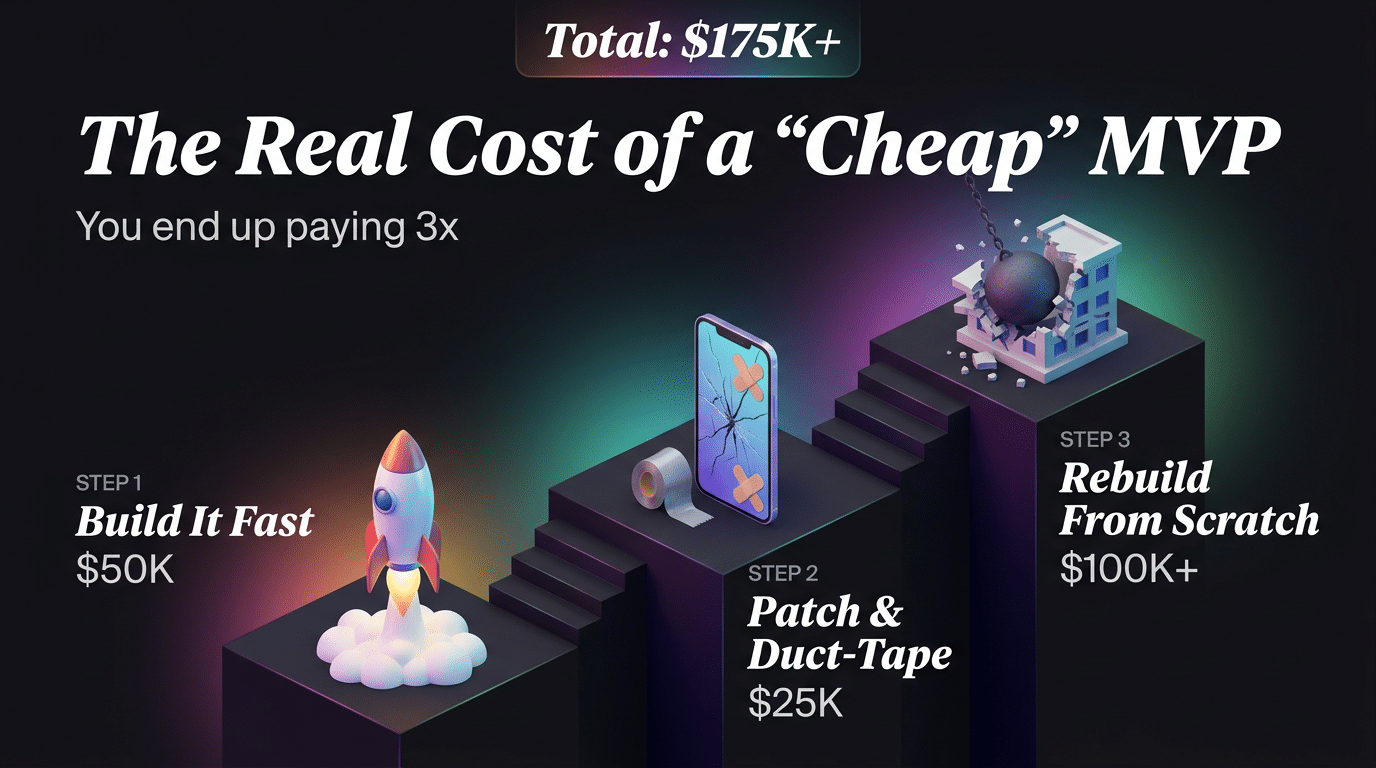
This is for illustration purposes only. The numbers are just estimates.
As a founder or product leader, that means you’re often paying for your MVP three times:
- Once to build it fast.
- Again, to patch and duct‑tape it.
- Then a third time to rebuild what you wish you’d built the first time.
That’s not lean. That’s a loan shark.
Three Patterns I See in MVPs That Don’t Survive
When I talk to founders and content teams about their products, the same three patterns keep showing up.
1. No clear hypothesis, just “build and see what happens”
An MVP is supposed to test a hypothesis. Too often, what ships is a bundle of features that felt important in the room.
When I ask founders and operators in different industries wanting to launch an app, “What’s the specific question this version is answering?” I get answers like “We want to see if people like it” or “We want traction.” Those aren’t hypotheses. They’re hopes.
The result: teams burn precious dev cycles on easy-to-build things instead of necessary-to-learn ones.
Then they’re surprised when retention is flat, and they don’t know why.
2. Treating the MVP as permanent architecture
This is where most MVPs quietly break down.
The MVP was meant to be disposable; a learning tool. In reality, once it “sort of works,” it goes live, revenue starts flowing, and nobody wants to “waste time” rebuilding. So the prototype becomes the foundation.
Every new feature gets bolted onto that early code. Shortcuts from week two turn into load‑bearing walls by month twelve.
Onboarding a new engineer means explaining four different workarounds for things “we’ll fix later.”
By the time the team finally admits they need a rewrite, they’re staring at:
- A six‑figure rebuild estimate.
- A roadmap that has to pause or slow down for months.
- A user base that doesn’t care why features take so long — they just notice that competitors ship faster.
Technical debt works like compound interest. Ignore it, and it quietly takes over the whole balance sheet.
3. Confusing “minimally usable” with “minimally lovable”
The original MVP idea never said “ship garbage.” It said, “Ship the smallest thing that can deliver value.”
There’s a difference between:
- A product that is barely tolerable if a user has no other option.
- A product that is small but genuinely helpful, so users actually come back.
The first one validates nothing except your ability to launch. The second one validates that you’re solving a problem in a way that’s worth returning to.
Product retention and depth of engagement are widely recognized as among the strongest predictors of long-term survival for early-stage startups.
If your MVP doesn’t give you a clean read on retention because the experience is too rough to use twice, it’s not doing its job.
What a Well‑Built MVP Actually Looks Like
Here’s the version of MVP that I’ve seen work, the one that sets you up for compounding gains instead of compounding debt.
It starts with one sharp question
Before anyone opens Figma or spins up a repo, you should be able to answer:
“What is the single riskiest assumption we’re testing with this version?”
Not five assumptions. One.
Maybe it’s “Will people pay for this at all?” Maybe it’s “Will users trust us with this data?” Maybe it’s “Does this workflow fit how they already do their job?”
If your backlog doesn’t map clearly to that question, you’re already building too much.
The architecture assumes success, not failure
I don’t mean over‑engineering. I mean choosing a stack and structure that don’t trap you if things go well.
Toimi’s analysis of $50k MVP vs. $150k phased vs. $300k full build shows that teams who spend a little more upfront on a phased approach (MVP → iteration → scale) often save money over 18–24 months compared to teams who go “cheap first, rebuild later”.
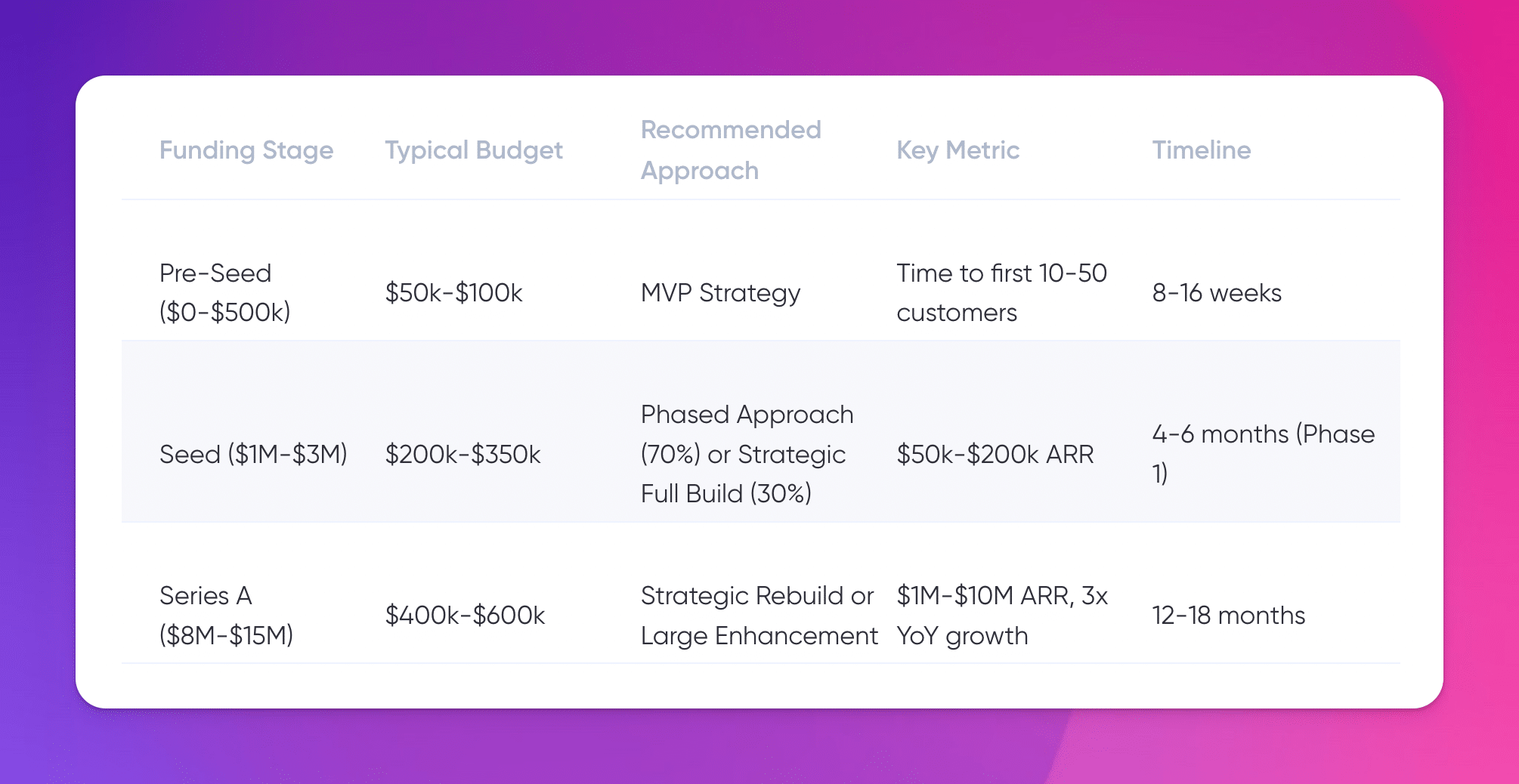
Source: Toimi’s
Not because the code is fancy, but because they don’t pay the rebuild tax.
In practice, this looks like:
- Clean separation between core logic and the UI, so you can iterate on both independently.
- Avoiding “just for now” decisions that you know will be impossible to unwind later (for example, single‑tenant when you really need multi‑tenant).
- Documenting constraints and trade‑offs so Future You doesn’t have to reverse‑engineer every choice.
The UX is small but respected
Users don’t care that something is an “MVP.” They care whether it helps them.
That means:
- One clear job to be done, not ten half‑finished ones.
- A path through the app that feels obvious without a Loom walkthrough.
- Enough polish that the experience feels safe and well-made, even if it’s not feature‑rich.
If you’re embarrassed to show screenshots to a potential customer, it’s probably not “viable” yet.
One example I keep coming back to is Vello, a social app whose founder knew more about sports than startups. Ben Dixon reached out to the Appetiser Apps for guidance on his journey.
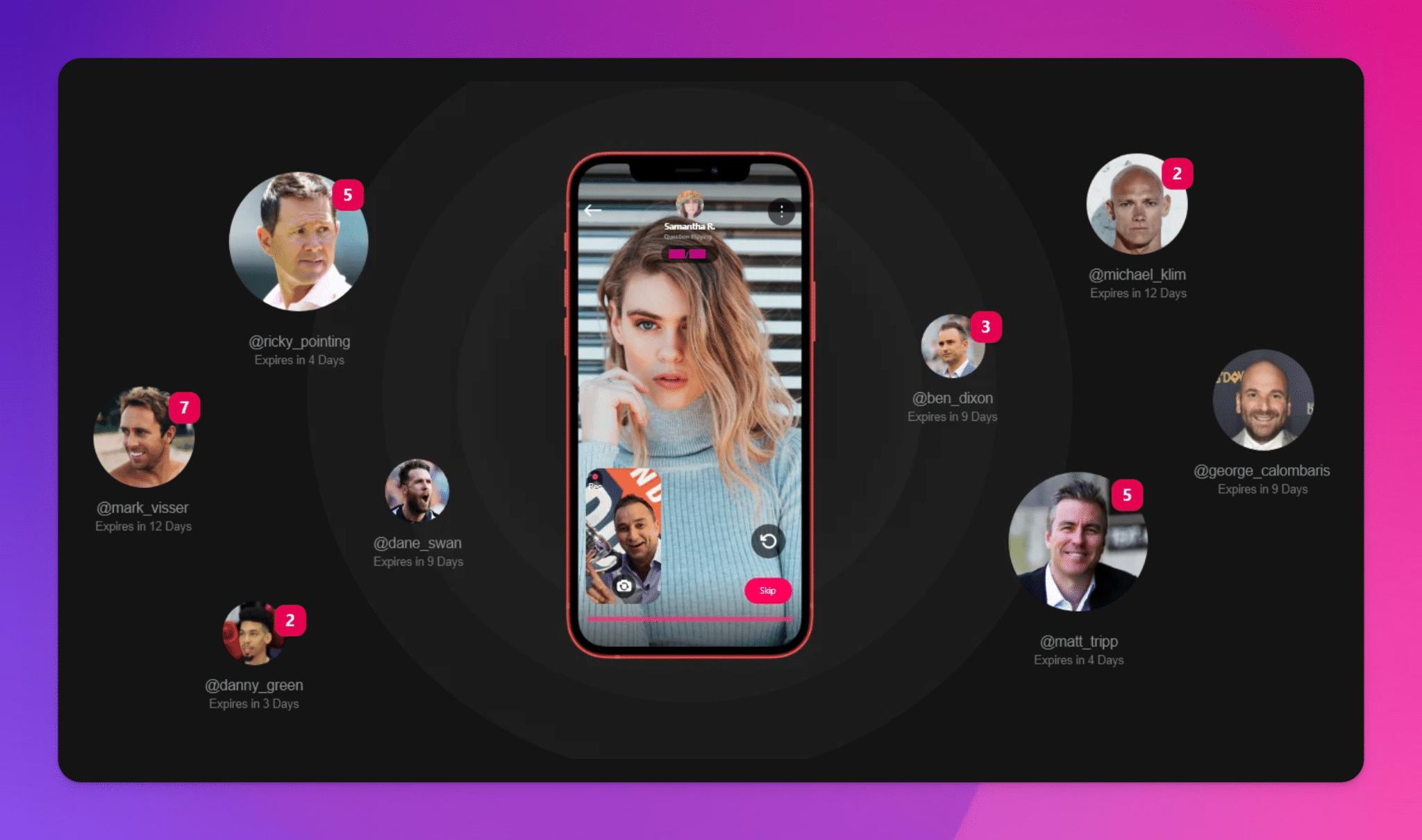
Vello earned a 4.8-star rating on the App Store, not by over-engineering, but by treating “version 1” as something worth keeping.
A Quick MVP Checklist for Serious Founders
If you’re about to green‑light an MVP build (or you’re living with one that feels more fragile by the week), here are a few questions I’d want answered:
- What is the single riskiest assumption this MVP is designed to test?
- If this version “works,” which parts of it are we willing to keep for 18–24 months?
- Where are we knowingly taking shortcuts — and do we have a plan and timeline to pay those back?
- What would make this version worth not rebuilding from scratch?
- How will we measure retention and depth of usage, not just sign‑ups and MQLs?
- If this app 10x’s in users in the next year, what breaks first — and are we OK with that?
The MVP idea is still one of the most useful tools in the startup toolkit.
The danger isn’t in building small. It’s in building small things without thinking about what happens if you succeed.
Build it like your users are already on their way.