

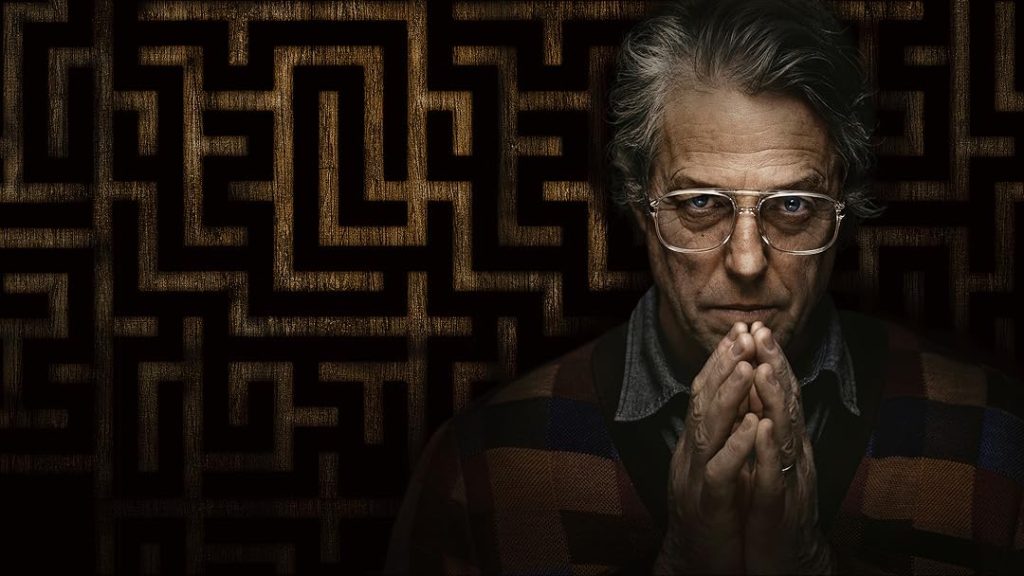
We all know the charming, stuttering Englishman from Notting Hill. Yet, his performance in Heretic marks a dark evolution of Hugh Grant’s acting career. In practice, directors use “star persona subversion” as a Trojan Horse; we naturally trust that iconic grin. Suddenly, his polite warmth becomes a trap, breaching our psychological safety. His famous bumbling charm is now weaponized to completely terrify you (Heretic).
Escaping the ‘Chamber Piece’: Why Two Missionaries and a Tea Kettle Create Maximum Tension
Most horror films rely on masked killers in the woods, but the latest thriller in the Scott Beck and Bryan Woods filmography turns a cozy, well-lit living room into a cage. The film’s narrative structure reveals a brilliant “chamber piece”—a movie confined to one primary location to deliberately restrict the audience’s breathing room. When two young missionaries step inside to escape the rain, they are locked into a psychological nightmare built on three specific tensions:
- A single, inescapable setting where the walls literally seem to close in.
- A massive power imbalance driven by a host who controls all the information.
- The “politeness trap”—that relatable, everyday social pressure that stops you from running away simply because you do not want to appear rude.
Instead of relying on jump scares, the film builds tension through philosophical arguments, where everyday items like a baked pie signal terrifying shifts in power. By weaponizing basic social grace, the movie’s creeping, realistic anxiety naturally makes audiences question their own boundaries in similar situations.
Is Heretic Based on a True Story? Understanding the Real-World Dread of Faith and Logic
When viewers ask whether the events are based on reality, they are reacting to the film’s terrifyingly grounded realism rather than historical fact. The story leans heavily on Mormon missionary tropes to instantly build sympathy. We instinctively view these young, earnest women—navigating a strange neighborhood simply to share their faith—as inherently vulnerable. By replacing a traditional masked-killer chase scene with a high-stakes living room debate, the movie seamlessly evolves into a gripping theological thriller where words are the deadliest weapons.
This psychological pivot perfectly captures the essence of slow-burn horror, trading the cheap shocks of popcorn flicks for the mounting intellectual dread often found in A24-style religious horror themes. Instead of relying on physical violence, the dialogue uses religious symbolism to systematically chip away at the missionaries’ sense of safety. Defending their doctrine becomes a desperate act of survival against a host who holds all the cards, ultimately leaving viewers to wonder if they should ever accept such a polite invitation.
Should You Accept Mr. Reed’s Invitation? A Final Verdict for the Mainstream Moviegoer
If slashers are too scary for you, this smart, dialogue-driven thriller offers a compelling alternative that favors psychological tension over bloody gore. Mr. Reed stands out as a fascinating character study and the peak of Hugh Grant’s evolution as an actor. Because he transforms his classic rom-com charm into a weapon of pure menace, you will never look at that famous grin the same way again.