

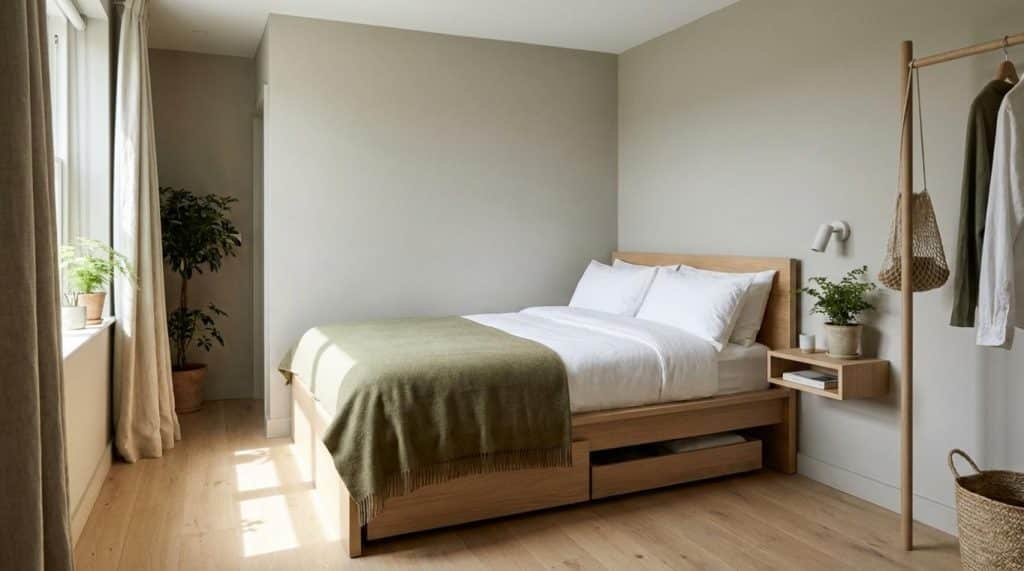
Your bedroom should be your own personal sanctuary — and a compact layout is no exception. In fact, modern interior experts agree that personality is becoming the single most important element in bedroom design. This means a small bedroom is actually the perfect place to go bold with colour, texture, and pattern.
Getting creative with your small bedroom design allows you to craft a functional layout that looks larger, feels more stylish, and remains entirely your own.
Whether you are dealing with a truly tiny floor plan or simply want to reclaim every spare inch of your master suite, these small bedroom ideas actually work.
Technical Layout Planning for Small Bedroom Spaces
Before moving a single piece of furniture, you need to map out your floor plan with absolute precision.
1. Map Out Your Clearance Arcs
Sketch out a quick floor plan that outlines the exact dimensions of your room, marking key architectural boundaries: windows, alcoves, radiators, and door swings.
The Door Swing Rule A standard UK bedroom door is 90 cm (36 inches) wide. This requires a full 90 cm clearance arc to swing open cleanly. Placing furniture within this arc is a mistake that causes daily physical friction. Always plot your clearance paths first.
2. Position the Bed for Maximum Flow
While placing your bed centrally against the primary wall creates textbook symmetry, small rooms require flexible thinking.
Tucking your bed frame directly into a corner is one of the most effective very small bedroom designs. It instantly frees up contiguous floor space, making the room feel open while creating a cosy, nest-like sleeping zone.
3. Allow for Proper Circulation Space
To move around comfortably without bumping into furniture, your layout needs a minimum of 60 cm to 75 cm (24 to 30 inches) of open walking clearance around the accessible sides and foot of the bed. If your room dimensions prevent you from having this perimeter, it is a clear sign that your bed frame is scaled too large for the room’s natural proportions.
Smart Furniture Selection and Arrangement Strategies
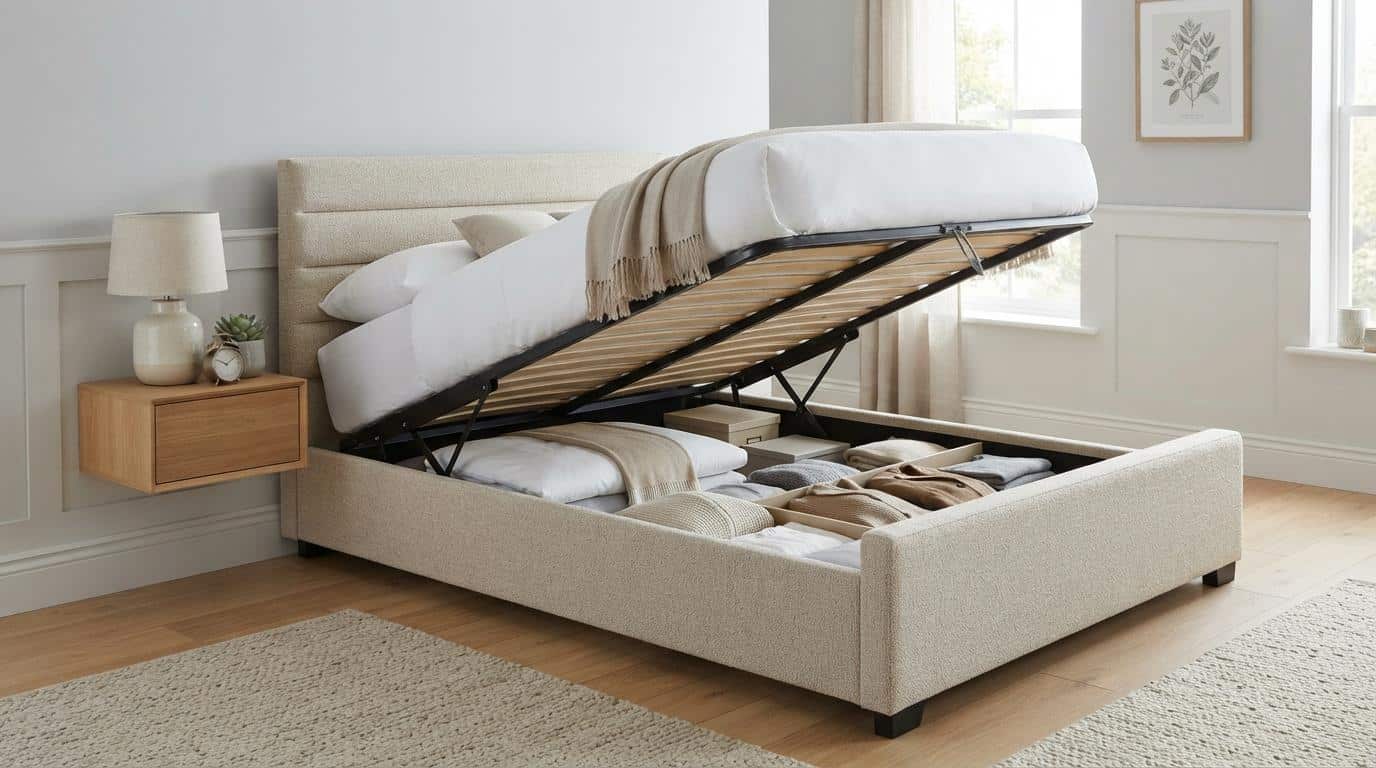
Pictured: A premium small double ottoman storage bed with a low foot-end, upholstered in a light beige textured fabric (Bedstar).
Too much bulky furniture is the fastest way to make a small bedroom feel suffocating. The right approach relies on choosing scaled-down, multi-purpose bedroom furniture.
Wall-Mounted and Floating Nightstands
Traditional bedside tables eat up valuable floor real estate. Instead, opt for wall-mounted floating nightstands. Because they attach directly to the wall and keep the floor completely visible underneath, they trick the brain into perceiving a much larger, uninterrupted room size.
🛏️ Bedstar Product Spotlight: Reclaim Space with Small Doubles & Ottoman Beds
When navigating a tight bedroom footprint, your choice of bed base represents your biggest opportunity to save space.
- The Small Double Bed (4ft): For many UK bedrooms, a small double hits the absolute sweet spot. It provides ample sleeping room for two adults yet saves 15 cm of critical floor width compared to a standard double.
- The Ottoman Lift Base: If built-in wardrobes aren’t an option, an Ottoman Bed is your ultimate storage solution. Because the entire mattress base lifts up vertically using gas-lift hydraulics, you can access massive under-bed storage without needing any side clearance for pulling out traditional drawers.
- Low Foot-End Frames: Choose a bed frame featuring a low foot-end. Eliminating a high footboard removes a major visual roadblock, giving your bedroom a seamless, airy appearance.
Maximising Storage: Look Up and Look Under
Once your core furniture is locked in, use clever interior design tricks to exploit hidden storage zones:
- Alcove Fitted Storage: If your small bedroom features structural alcoves, skip freestanding wardrobes. Fitted floor-to-ceiling wardrobes slot perfectly into these irregular niches, matching sloped ceilings precisely and giving you double the capacity of standalone units without encroaching on your walking space.
- Above-the-Bed Shelving: Reclaim the blank wall directly above your headboard. Installing slim, lightweight floating shelves allows you to display books, store reading glasses, and mount bedside task lights without taking up an inch of floor space.
- Hooks and Slim Rails: Mount sturdy metal hooks or a shallow hanging rail to the back of your bedroom door or empty wall zones. This prevents the classic “clothes chair” pileup, keeping garments organised and off the ground.
Design Tricks Using Colour, Light, and Mirrors
1. Harness Tonal Colour Palettes
While bright white reflects light, it can occasionally feel cold and clinical in a small room. Instead, lean into a tonal neutral scheme using soft creams, warm greiges, or light grey paint finishes. These shades bounce natural light beautifully while maintaining a cozy, enveloping atmosphere.
2. Expand Space with Strategic Mirrors
Mirrors sit at the absolute top of the interior designer’s toolkit. Placing a large mirror directly opposite or adjacent to a window captures incoming daylight and bounces it deep into darker corners, instantly doubling the perceived depth of your room.
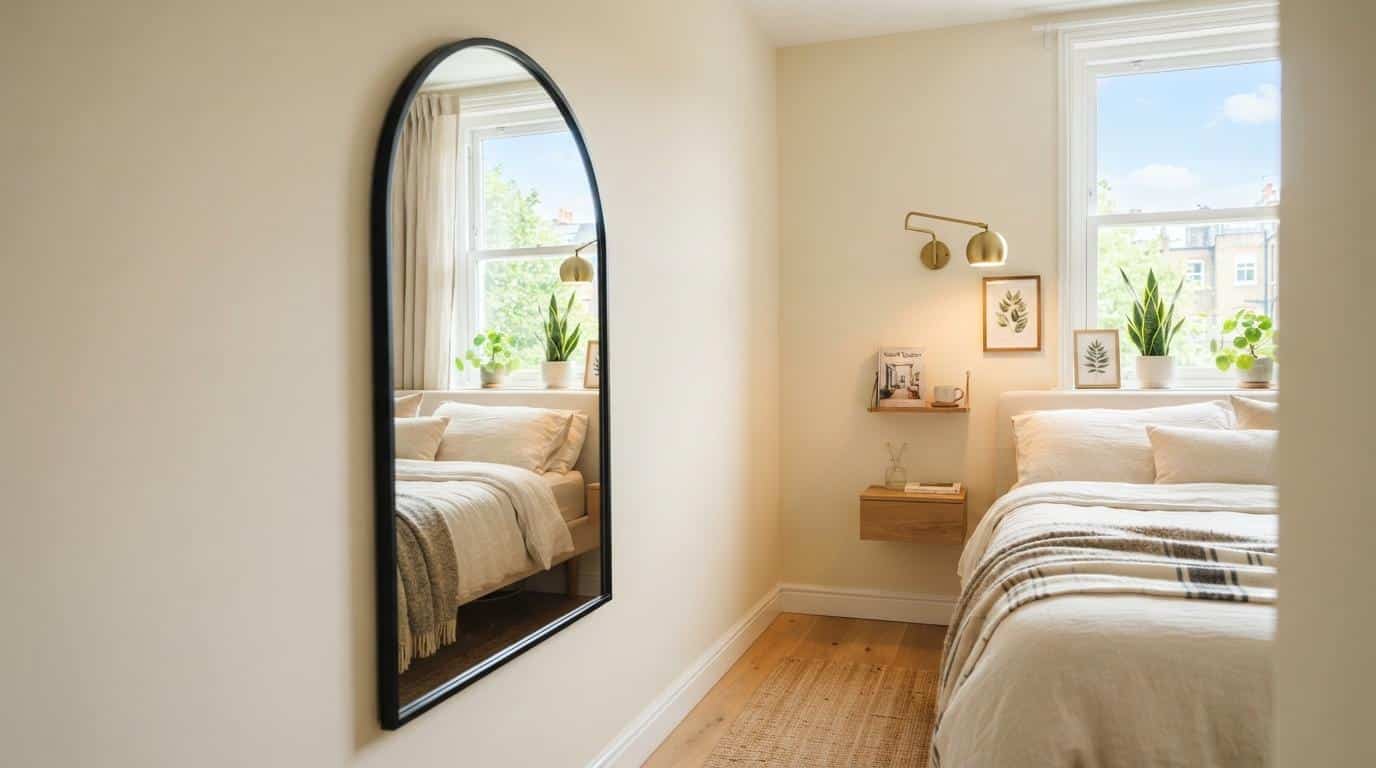
Pictured: A bright, compact bedroom utilising smart design tricks. A large, minimalist arched mirror with a thin black metal frame hangs on a warm cream wall directly opposite a sunny window.
3. Hang Curtains High and Wide
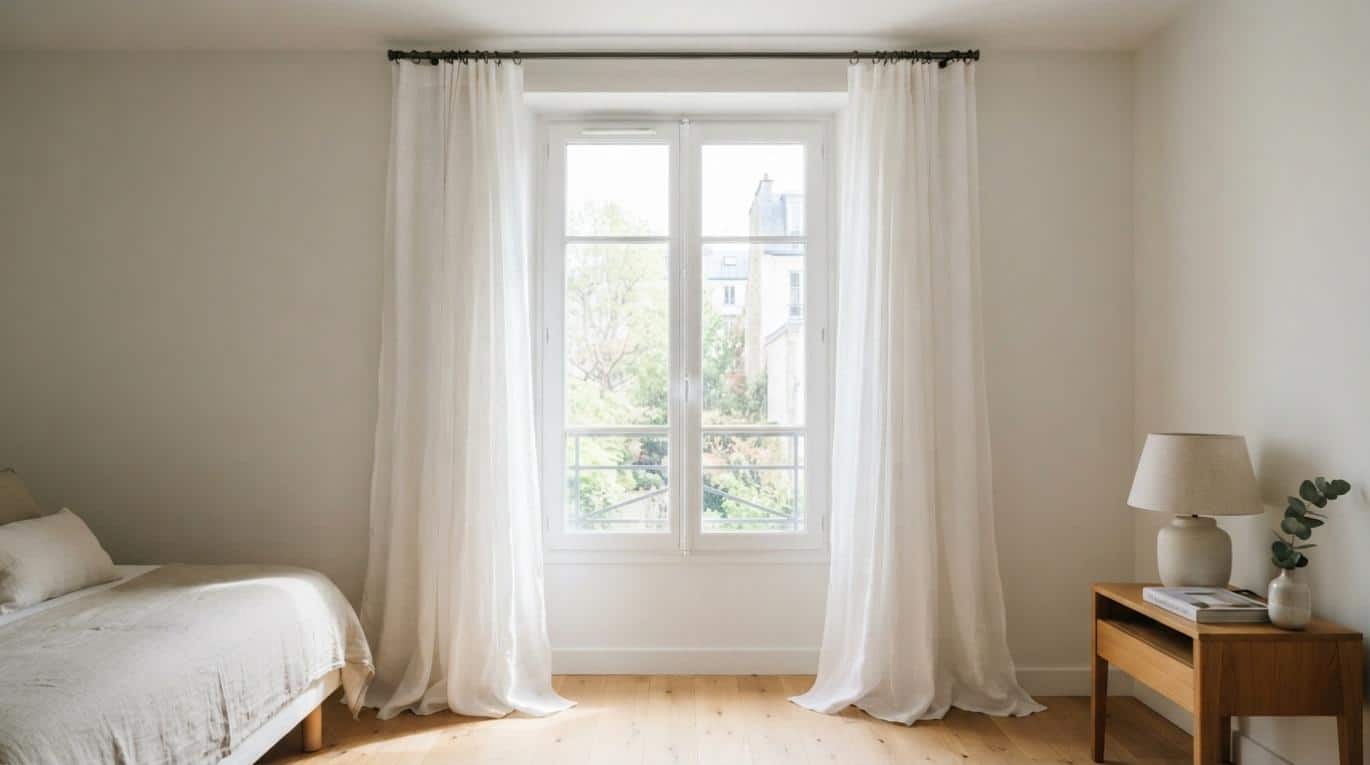
Pictured: A close-up architectural view of a bedroom window in a small room. The curtain pole is installed high up, halfway between the top of the window frame and the ceiling, with long, semi-sheer white linen curtains.
A classic visual trick: install your curtain pole halfway or two-thirds of the way between the window frame and the ceiling. This draws the eye upward, creating the illusion of soaring ceiling heights. Extend the rod 10 to 15 cm past the window frame on each side so that your curtains draw back completely onto the wall, maximising every ounce of incoming daylight.
4. Deploy Layered Lighting
Avoid relying on a single, harsh overhead ceiling pendant, which casts long shadows and makes a room feel instantly smaller. Instead, layer your lighting:
- Ambient: Dimmable overhead flush-mounts for soft, general light.
- Task: Wall-mounted reading sconces to keep nightstand surfaces clear.
- Accent: Low-profile LED strip lights tucked underneath floating shelves or bed bases to introduce soft dimension and visual depth.
Ready to Elevate Your Small Bedroom?
Small bedrooms never have to feel cramped, limiting, or compromised. By mapping out a scaled floor plan, prioritising multi-functional furniture like an ottoman bed, and maximising your vertical wall space, you can transform the most compact room into an airy, stylish retreat.
You don’t need to overhaul your entire layout this weekend to feel a difference. Start small: clear off your floor pathways, mount a single floating shelf above your bed, or try a fresh coat of light greige paint. With a little strategic intention, a smaller room can easily become the most comfortable room in your home.