

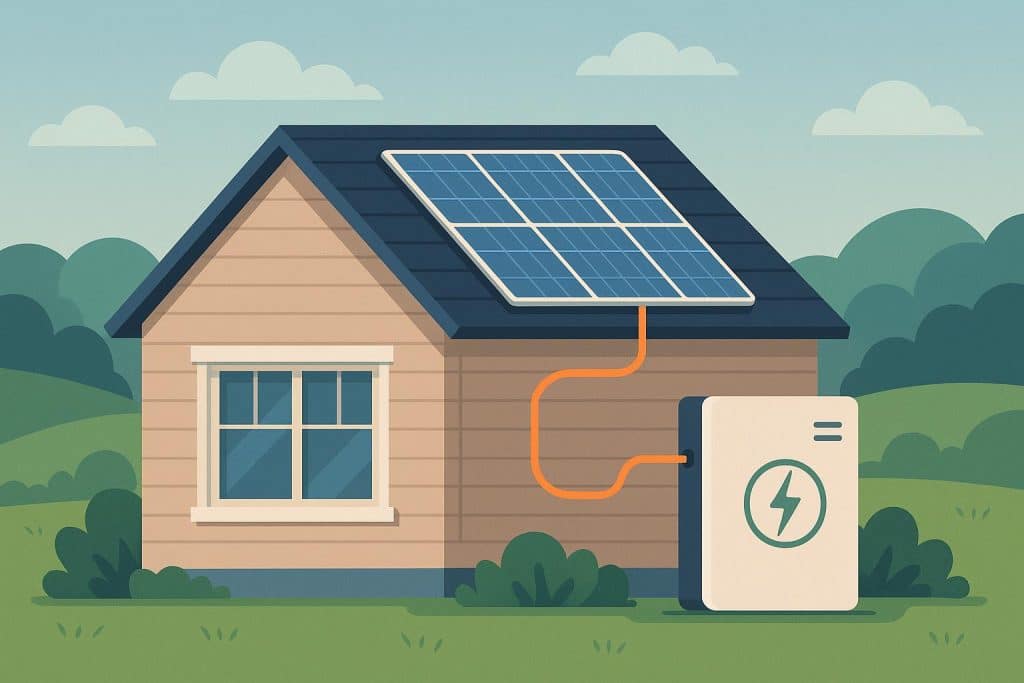
A home energy storage system is easy to misunderstand. It is not just a battery on a wall, and it is not only for people with rooftop solar. The better way to think about it is as a controllable layer between the home, the grid, solar panels, and major loads.
At its simplest, home energy storage stores electricity for later use. That electricity may come from solar panels during the day or from the grid during lower-cost hours. The stored power can then support the home at night, during peak rates, or when the grid goes down.
The Three Jobs Storage Usually Does
Most homeowners buy storage for one or more of three reasons: backup, savings, or control.
Backup is the most obvious. A battery can keep selected circuits running during an outage, such as refrigeration, lights, internet, medical equipment, a garage door, or a sump pump. It can also reduce generator use in homes that prefer quieter backup.
Savings depend on the local utility plan. If electricity is cheap at one time and expensive at another, a battery can shift usage. This is called load shifting, which simply means using stored energy when grid power costs more.
Control is the part buyers often notice later. Once solar, storage, EV charging, and monitoring work together, the home stops being a passive electricity consumer. It becomes a small energy system.
Solar Makes Storage More Useful
The U.S. Department of Energy says storage helps solar contribute to electricity supply when the sun is not shining. That is the core appeal for rooftop solar owners. A battery can store extra midday solar and release it after sunset, when cooking, cooling, entertainment, and device charging often rise.
This does not mean every home needs the largest battery. The U.S. Energy Information Administration says the average U.S. household consumes about 10,500 kWh of electricity per year, but battery sizing should start with the loads that matter, not with a national average.
For homeowners comparing a home energy storage solution, ESYsunhome frames the home as a combined system of solar, battery storage, EV charging, backup, and energy management. That is the right starting point because the battery is only one part of the design.
Who Should Look Closely?
Storage becomes more interesting when at least one of these is true:
- Outages are frequent or expensive
- Solar export credits are low
- Evening electricity rates are high
- The home is adding an EV or heat pump
- Noise, fuel, or maintenance makes generators unattractive
- The owner wants better visibility into energy flows
A basic home with flat electric rates, strong net metering, and rare outages may not need storage immediately. A home with time-of-use pricing, rooftop solar, and outage concerns may find that storage solves several problems at once.
The Best Design Starts With Priorities
The smart question is not, “How big is the battery?” It is, “What should stay powered, and when?” A home that wants essential backup needs a different setup than a home trying to run large loads through a storm. A home trying to reduce evening bills needs different control settings than one reserving energy for outages.
Home energy storage is most valuable when the system is sized around real habits, real rates, and real outage risk. The product matters, but the use case matters first.