

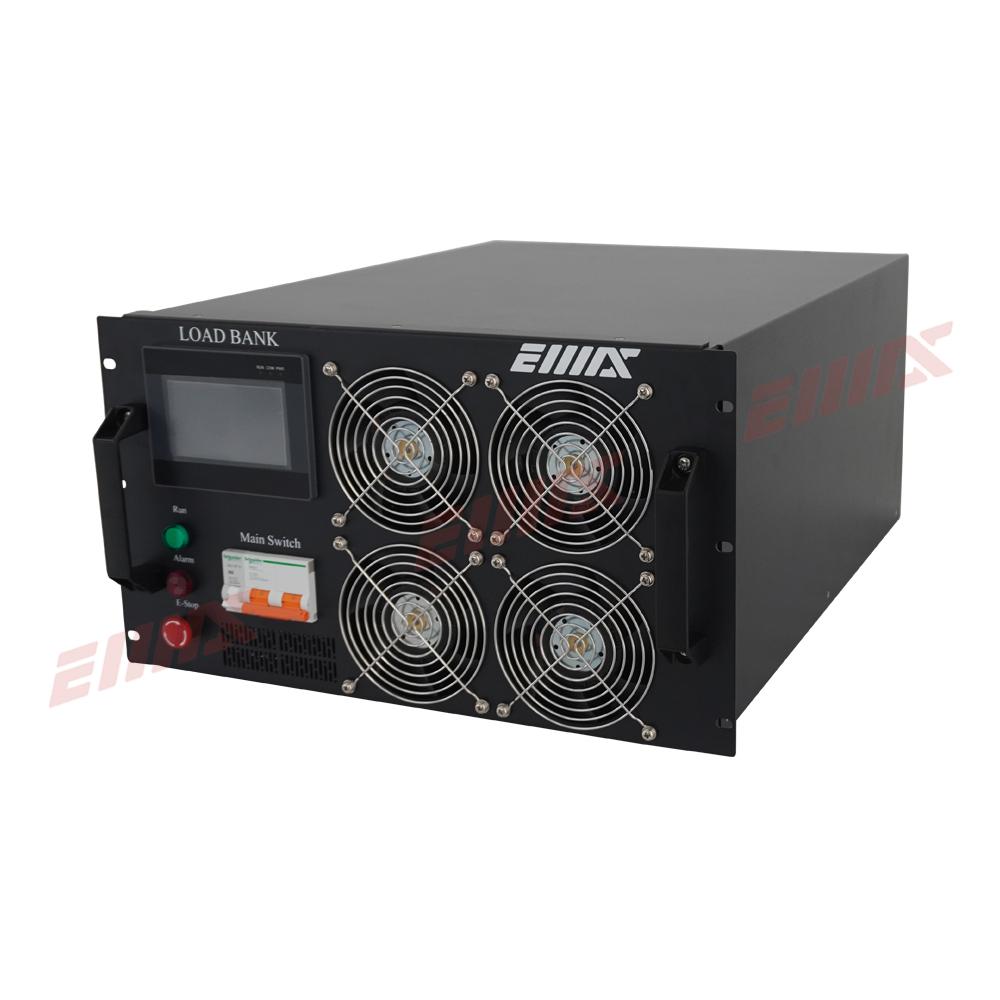
A load bank is a precision simulation device that converts electrical energy into controllable heat, acting as a substitute for real IT hardware during data center pre-acceptance commissioning. Before server deployment, load bank testing is an irreplaceable mandatory procedure for mission-critical digital infrastructure, addressing core risks that idle-site inspection cannot expose.
First, load bank testing eliminates catastrophic operational and financial risks. Unverified power and cooling systems often operate normally under no-load conditions but collapse under peak heat and power draw of AI GPU racks. Directly putting expensive servers online without load simulation may trigger voltage collapse, insufficient heat dissipation, or backup power failure, burning high-value computing hardware and causing millions in downtime losses. Second, compliance and operational reliability require full-load validation: global data center certification standards demand staged load tests to confirm all standby equipment can activate instantly during power outages. Third, load banks generate quantifiable performance data to optimize power distribution efficiency, cut long-term energy waste, and provide reliable parameters for future capacity expansion. Without standardized load bank acceptance, hidden defects in power distribution, liquid cooling and backup generators will only surface during peak business hours, leading to unplanned outages.
Modern data center load testing relies on two core categories: liquid-cooled load banks and air-cooled load banks, each targeting distinct infrastructure segments with unique testing workflows and power ranges.
Liquid-Cooled Load Banks for CDU Acceptance
Liquid cooling dominates high-density AI data centers, and liquid load banks simulate continuous heat output of GPU servers to validate Coolant Distribution Units (CDUs). They split into In Row CDU load banks and In Rack CDU load banks with clear power boundaries and testing logic.
- In Row CDU Testing Load Banks (300kW–2MW)
In Row CDUs stand alongside server aisles and supply coolant for an entire rack cluster, serving large-scale centralized liquid cooling loops. Corresponding high-power liquid load banks connect directly to CDU main pipelines to execute full-condition loop tests. During commissioning, technicians apply stepped loads from partial load to 100% full load and even 110% overload, monitoring coolant flow, supply-return temperature difference, pump pressure stability and heat exchange efficiency over sustained cycles. Its key feature is MW-level scalable heat simulation, matching the large-flow, high-pressure working parameters of aisle CDUs. This test verifies whether the CDU cluster can maintain stable heat dissipation for dozens of GPU racks simultaneously and identifies pipeline throttling, pump capacity shortages or heat exchanger efficiency decay before server installation.
- In Rack CDU Testing Load Banks (0–300kW)
In Rack CDUs are compact cooling units installed inside individual server racks, responsible for single-rack cold plates and rear-door heat exchangers. Matching rack-style liquid load banks adopt cold plate heat exchange structures with UQD quick liquid interfaces for hot-swap connection to rack CDU loops. Testing proceeds rack by rack in isolation: each load bank independently generates graded thermal loads to simulate single-rack high-density computing heat. Operators monitor real-time rack-level flow, pressure and temperature, while built-in multi-protection modules guard against low flow, over-temperature and leakage risks. Multiple units support parallel networking, enabling synchronous batch testing for hundreds of racks without damaging actual IT devices.
Air-Cooled Load Banks for Power & Air Cooling Validation
Air-cooled load banks require no water pipeline access, mainly used for backup generator and rack-level UPS/air conditioner acceptance, divided into large generator-specific air-cooled load banks and compact rack-mounted air-cooled load banks.
- Diesel Generator Air-Cooled Load Banks (100kW–5MW)Containerized high-power air-cooled load banks are dedicated to full-load testing of standby diesel generators. During acceptance, engineers implement 25%, 50%, 100% full-load and short-term overload tests to track generator voltage, frequency transient response, fuel supply stability and exhaust temperature. These units validate whether backup power can sustain rated output during mains power failure, exposing hidden faults in excitation systems, cooling fans and control circuits in a safe offline environment.
- Rack-Mounted Air-Cooled Load Banks (0–20kW per unit)Our latest EMAX rack air-cooled load bank achieves 20kW rated power within only 6U rack height, breaking the traditional bulky high-power rack load design. It meets strict 14K temperature rise standards under continuous full-load operation, equipped with variable-speed cooling fans to adjust airflow according to real-time heat output and reduce idle energy consumption. Supporting remote group control via DCIM networking, dozens of units can synchronously execute staged load testing for UPS, rack rear-door air conditioners and precision air handlers. Integrated over-current, over-temperature and EPO emergency unloading protections ensure safe unattended testing, ideal for small-batch rack-level acceptance and routine power system maintenance.
In summary, liquid-cooled and air-cooled load banks cover all core testing modules of modern data centers, from large cluster liquid cooling CDUs to rack-level power and air conditioning systems. Comprehensive load bank acceptance before server deployment turns potential online failures into controllable offline verification, securing stable, long-lifecycle and low-cost operation for AI and general data center facilities.
Link: