

Do you know that over 300 million[1] ECGs are performed every year worldwide? The sole purpose is to check the heart activity and identify if there are any cardiovascular or other health issues.
However, ECG testing is not possible if you don’t have the right ECG lead wires. These wires perform the most crucial task of transmitting electrical impulses from the heart to the ECG machine.
You might wonder how these wires work and why they are essential for ECG testing. To understand the role and various types of these ECG wires, let’s look at them in detail below.
What is the ECG Lead Wire?
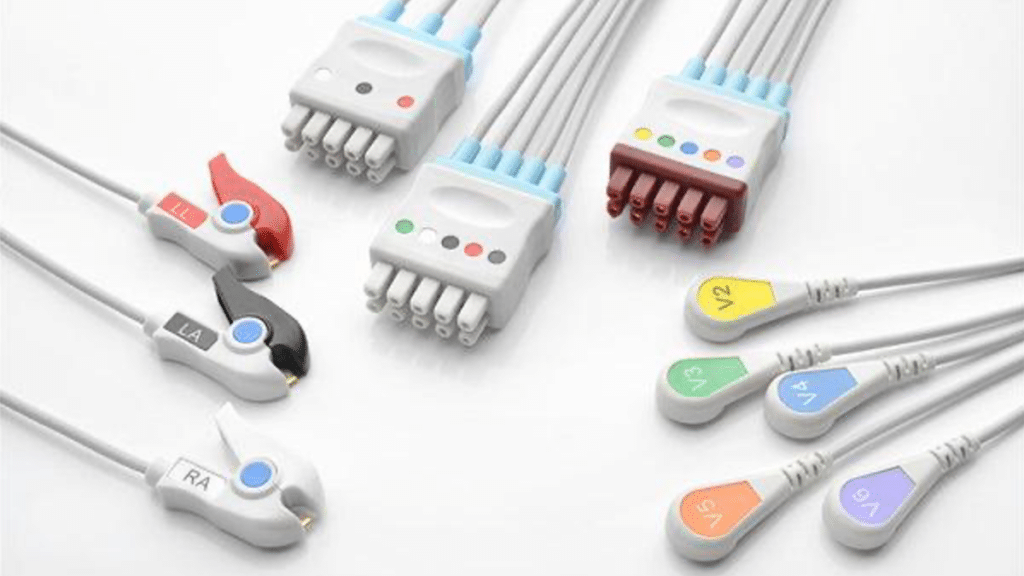
Before we jump into the details, you should have a basic understanding of ECG lead wires. These are the crucial components of an electrocardiogram system that transmit electrical impulses from the heart to the machine. They are connected to electrodes and capture electrical activity from various heart chambers.
Enlisted below are some critical roles of these lead wires:
- They are responsible for non-invasive monitoring of the heart’s activity.
- Healthcare experts can attach them to electrodes and get a comprehensive view of the cardiovascular system.
- Using these wires, you can view the heart’s electrical activity from different locations.
Basic Structures of the ECG Lead Wires
Generally, ECG lead wires are made of a list of varying components that help in the reliable transmission of electrical impulses. Almost all lead wires consist of a conductive core enclosed in an insulating material to prevent the loss of signals. The conductive core is often made of copper or silver and is connected to electrodes using adhesive pads.
The electrodes are then attached to the patient’s skin for heart evaluation. Moreover, each lead wire is color-coded and designed to withstand the electrodes’ continuous movement. Besides these main components of ECG machine, the lead wires come in varying lengths. Usually, appropriately sized wires are recommended for diagnostic procedures.
Types of ECG Lead Wires
ECG lead wires come in different types depending on the configuration, placement, and function. Enlisted below are some of the common types:
A. Classified by Number
Based on the number, ECG wires are classified into different types. These include the 3-lead ECG, 5-lead ECG, 6-lead ECG, 12-lead ECG, and 18-lead ECG. All of these are used in cardiac monitoring, especially during emergencies.
B. Classified by Placement
According to placement, ECG lead wires can have the following types:
● Limb leads that are attached to limbs
● Precordial leads that include V1 to V6 leads
● Modified leads such as MCL1 and MCL2
C. Classified by Purpose of Use
There is another category of lead wires based on their purpose and use case. This includes diagnostic lead wires, monitoring lead wires, Exercise Stress Testing, and ambulatory lead wires.
D. Classified by Nature of Use
ECG lead wires can be disposable and repeatable, depending on the nature of their use. Disposable wires are designed for single use and have a reduced risk of contamination or infection. In contrast, repeatable wires are highly durable and can withstand repeated cleaning and sterilization.
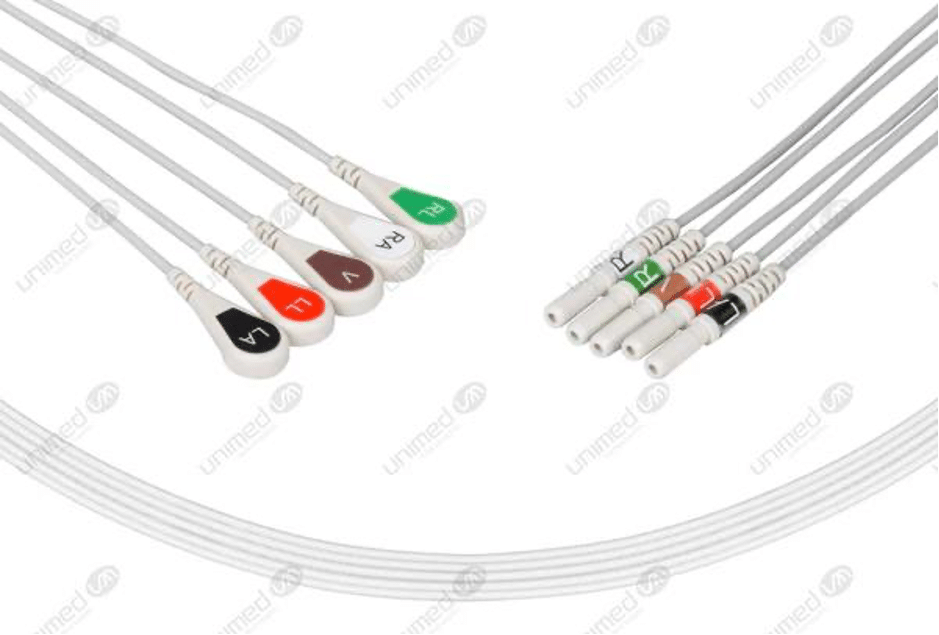
For your convenience, Unimed offers its GE/Marquette Compatible Disposable ECG Lead Wire to help healthcare experts and cardio workers. It is a 5-lead system that is latex-free and made of a PVC jacket.
Another type of reusable lead wire is the Din Compatible Reusable ECG Lead Wire. It has a cable length of 3ft and is made of a TPU jacket. The best thing is that these ECG lead wires have a 5-lead system with a snap end to connect the electrodes to the patient’s skin.
Steps to Use ECG Lead Wires
For accurate ECG cables placement and efficient monitoring of heart activity, it is crucial to know the steps involved in the use of ECG lead wires. Enlisted below are some basic steps to use these lead wires:
● Gather all the necessary equipment, including the ECG machine, electrodes, alcohol swabs, and lead wires.
● Check the lead wires so they can properly connect with the electrodes.
● Attach the electrodes for limb leads to the designated areas on the patient’s limbs.
● Attach the lead wires to the electrodes and turn on the ECG machine.
● Record the ECG and monitor the patient’s health.
More Suggestions
Proper cleaning and maintenance are also important for an efficient and error-free ECG test. For disposable ECG lead wires, they should be removed and discarded after recording the ECG to prevent cross-infection. On the other hand, reusable ECG lead wires should be cleaned and disinfected according to the instructions for reuse or disposal. You can use alcohol swabs for regular cleaning and maintenance.
Reference:
[1] Cardiologist-Level Arrhythmia Detection and Classification in Ambulatory Electrocardiograms Using a Deep Neural Network. Available at: https://www.ncbi.nlm.nih.gov/pmc/articles/PMC6784839/ (Accessed: 2 June 2024)