

Significant breakthroughs in various sectors, such as manufacturing or healthcare, have been facilitated by Artificial Intelligence (AI) and robotics. The robots require sophisticated hardware components for effectiveness since their intelligence continues to increase daily, enabling them to carry out intricate tasks with high precision. Specifically, robots rely on laser diodes for sensing, guidance, or control. These laser diodes, known for their precision and reliability, play a crucial role in precise locating, depth perception, and identifying objects using vision, among others.
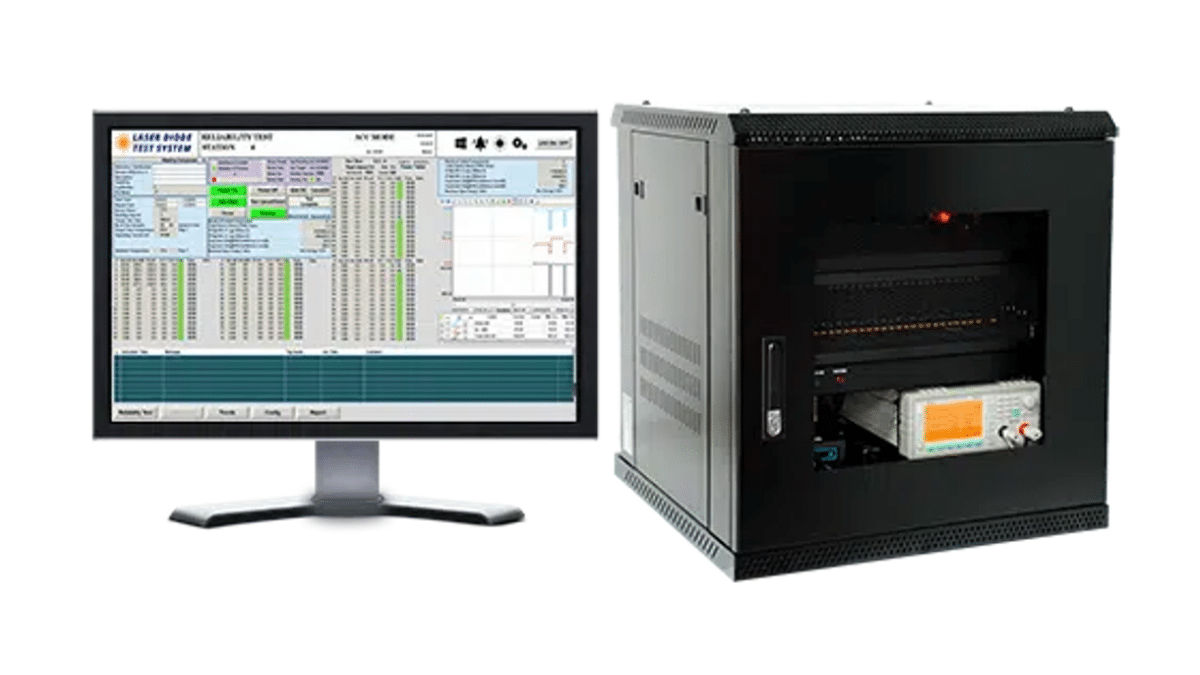
These artificial intelligence-based machines have to undergo testing with a laser diode test system to operate at extremely high levels of accuracy. Every diode should be checked thoroughly to ascertain whether it meets certain power, stability, and lifetime standards. This article explores how laser diode testing supports AI-driven robots’ overall performance.
AI Robots: Precision at the Core
Robotics have built AI robots whose work often entails carrying out highly complex tasks autonomously but also requires high degrees of accuracy, especially along those lines. These machines can acquire knowledge from their environment through AI-based algorithms to take quick and precise actions.
However, various sensors and actuators must be employed if they have to be able to do this successfully with high precision levels. Depth Sensing and Range Finding: These are provided for in Laser Diodes where they are used for accurate range finding in LiDAR(Light et al.) among other objects especially with respect to depth so that when robots are within the environment, they can perceive what different things exist around them.
Through laser-based imaging, shape recognition, and object positioning take place, enabling actions such as grasping or picking up things with a helping hand the same way humans would. These lasers allow AI robots to sense their surroundings by scanning them to produce extensively detailed maps, which are crucial for self-navigation.
These AI-powered systems, however, rely on the precision and reliability of their laser diodes. Without this, they would have struggled with inaccurate measurements, unreliable mapping, and even potential safety issues.
Laser Diode Testing: A Foundation for Reliable Robotics
Laser diodes must be tested to ensure they function correctly in robotic applications. A burn in test is crucial to ensure that each diode meets certain specifications regarding power level, wavelength range, stability under various conditions, and expected durability rates.
These include:
Optical Power and Wavelength: Consistent optical power and wavelength accuracy are essential for reliable sensor function, as even minor deviations can lead to inaccurate data.
Thermal Stability: As diodes generate heat, testing for thermal stability ensures that performance remains consistent under varying temperature conditions.
Longevity and Degradation: In AI robots, operation over long periods often necessitates using diodes that resist degradation. Considering longevity helps one understand how long the diode will last without failing abruptly.
How AI Enhances Laser Diode Testing for Robotics?
This paper describes how artificial intelligence can facilitate laser diode testing processes, making them more efficient and accurate than before. The AI system can monitor various parameters simultaneously in real-time, based on the pattern recognition model for prediction purposes. The AI system can also process and store all relevant information about such devices, which can be useful for subsequent tasks.
For instance, it can automate quality control by rapidly identifying deviations in diode performance levels for instant quality checks, thereby reducing errors.
Applications of Tested Laser Diodes in AI Robots
AI-controlled robots, equipped with tested laser diodes of high reliability, have many applications. With their ability to perform tasks with high precision and reliability, these robots are set to transform various domains. Here is how tested laser diodes enable robotic systems in different domains, inspiring a new era of technological possibilities:
Manufacturing: With laser diodes, robots can be used to precisely assemble products, detecting defects during production to ensure that only quality products reach consumers.
Healthcare: For instance, laser diodes assist with minimally invasive surgeries and guide the surgeon with high precision.
Autonomous Vehicles: Additionally, self-driving cars fitted with LiDAR require laser diodes to map their surrounding environments accurately and detect obstacles along the way, thereby enabling the safe movement of such vehicles from one place to another.
Logistics: AI robots use processes and methods embedded in software programs to locate particular objects in storage facilities or warehouses; this technology is based on sensors.
AI robots can perform better in reality and make secure decisions through these applications.
Future of Laser Diode Testing in AI Robotics
The development process of AI, together with robotics, has led to advancements in laser diode technology as well. Moreover, future methods of testing laser diodes will employ AI-driven automation systems coupled with blockchain technology to increase transparency within collected data.