

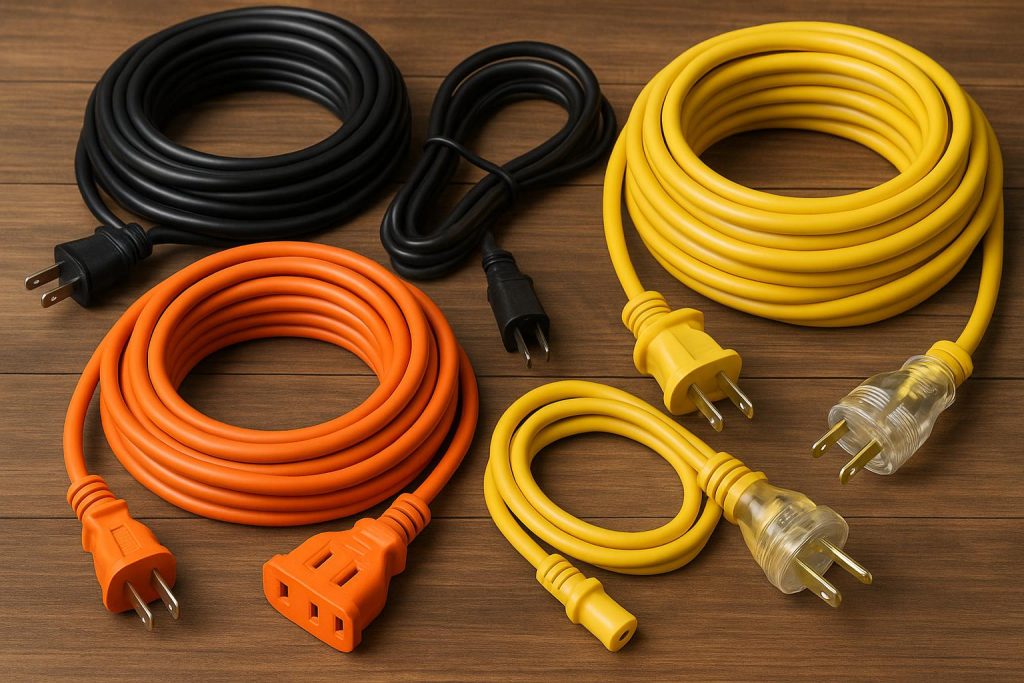
Extension cords look simple, but the wrong one can cause annoying tool problems, overheated plugs, or a breaker that trips at the worst time. Most buying mistakes come from guessing on gauge, ignoring distance, or assuming a “heavy-duty” label means the same thing across brands. A better approach is to treat an extension cord like a small piece of electrical infrastructure. Match it to the load, the environment, and the run length, then you get safer power and better performance.
This is especially important when outfitting a shop, jobsite, event setup, or facility, and when ordering bulk extension cords. Buying in quantity rewards standardization, but it also magnifies errors. If you choose a cord type that is too light, too long, or not rated for the environment, you repeat that mistake everywhere.
Understand Wire Gauge and What It Really Controls
Gauge is the first decision because it sets how much current the cord can carry without excessive heat and voltage drop. American Wire Gauge works backward. Lower numbers mean thicker wire. Thicker wire carries more current with less resistance, which usually means better tool performance and cooler operation.
People often think that gauge is only about safety. It is also about how your equipment runs. A thin cord feeding a high-demand tool can cause sluggish starts, overheating motors, or nuisance breaker trips. Even when nothing “fails,” the tool may run less efficiently, and the cord can get warmer than it should.
A reliable way to think about gauge is to treat it as the cord’s engine size. If you need to haul more load or you need to go farther, you want more copper. When in doubt, step up one gauge level, especially for power tools, heaters, and compressors.
Match Cord Types to the Job: Indoor, Outdoor, and Jobsite Use
Cord design is not one-size-fits-all. Indoor cords are often lighter, more flexible, and built for dry spaces. Outdoor cords use tougher jackets designed to handle moisture, temperature swings, and abrasion. Jobsite cords take that further with thicker jackets and strain relief because they get dragged, stepped on, and coiled daily.
If the cord will see water, dirt, or sunlight, pick an outdoor-rated cord and treat it like a safety item. Moisture plus damaged insulation is a bad combination. The jacket rating matters just as much as the gauge because it determines how well the cord holds up in harsh environments.
Also consider where the cord will sit. A cord under a rug or behind a couch needs flexibility and careful routing. A cord on a driveway needs abrasion resistance. A cord for a garage fridge may need cold-weather flexibility if it is in an unheated space. Use-case drives cord type more than any marketing label.
Choose the Right Length Without Creating Voltage Drop Problems
Length is where good cords get blamed for bad performance. As the run gets longer, resistance increases. That can reduce voltage at the tool, especially under load. The result can be a saw that feels weak, a heater that does not heat as expected, or a charger that runs hotter than normal.
A good rule is to buy the shortest cord that comfortably reaches the outlet with safe routing. “Comfortably” matters because tight cords get pinched in doors, pulled from receptacles, and stressed at the plug. Give yourself slack for strain relief and safe paths, but avoid buying a 100-foot cord when a 25-foot cord would do.
If you truly need long runs, plan for it. Step up to a thicker gauge.
Understand Amp Ratings, Wattage, and Real-World Load Planning
To pick the right cord, you need a basic handle on amps and watts. Many devices list watts, while cords and circuits are rated in amps. The quick conversion is watts divided by volts equals amps. In most U.S. residential settings, voltage is around 120 volts. That makes rough math easy. A 1,500-watt heater draws about 12.5 amps.
Once you know the expected current draw, you can choose a cord that is rated comfortably above it. Avoid riding the limit. Real life includes startup surges, warm environments, and coiled cords that trap heat. Tools like air compressors and some saws have higher startup demand, and that is where an underrated cord gets stressed.
Also consider what else is on the circuit. A cord can be rated for the load, but the breaker and the rest of the circuit may not be. If you plug a heater into the same circuit as a microwave, you may trip the breaker even with a perfect cord. Cord selection is part of the system, not the whole system.
Pick the Right Plug, Outlet Style, and Safety Features
Not all plugs and connectors are equal. A grounded three-prong plug is standard for many tools and appliances, and that ground matters for safety. If the device has a ground pin, use a cord that supports it. Avoid adapters that defeat grounding. They create risk and often violate best practice.
For higher-demand devices, look for robust molded plugs and strong strain relief at both ends. Loose connectors and thin plug blades can create heat at the contact point. Heat at the plug is a warning sign, not a normal feature. If a plug feels hot, stop using that cord and investigate.
If the cord will be used outdoors, consider connectors with weather-resistant covers or designs that shed moisture. For jobsites, bright jackets can reduce trip hazards and make damage easier to spot. These details sound small until you have a cord failure mid-project.
Use Extension Cords Safely and Make Them Last Longer
The safest cord is the one that stays cool, stays intact, and stays visible. Avoid running cords under carpets, through door hinges, or across sharp edges. Keep cords out of puddles. If you must cross a walkway, use cord covers or route overhead with proper support.
Coiling is another overlooked factor. A cord that is tightly coiled while carrying high current can heat up because the heat cannot dissipate. When powering equipment, always fully uncoil the cord.
Finally, inspect cords regularly. Look for nicks, crushed sections, loose blades, and damage near the strain relief. If insulation is compromised, replace the cord. Repairs with tape are not a real fix for power-carrying equipment. A good extension cord is cheaper than a damaged tool or an electrical incident.
Choosing an extension cord is mostly common sense with the right framework. Start with gauge, match the jacket to the environment, keep length under control, and plan load realistically. When you do those things, your equipment runs better and your power setup stays safer day after day.