

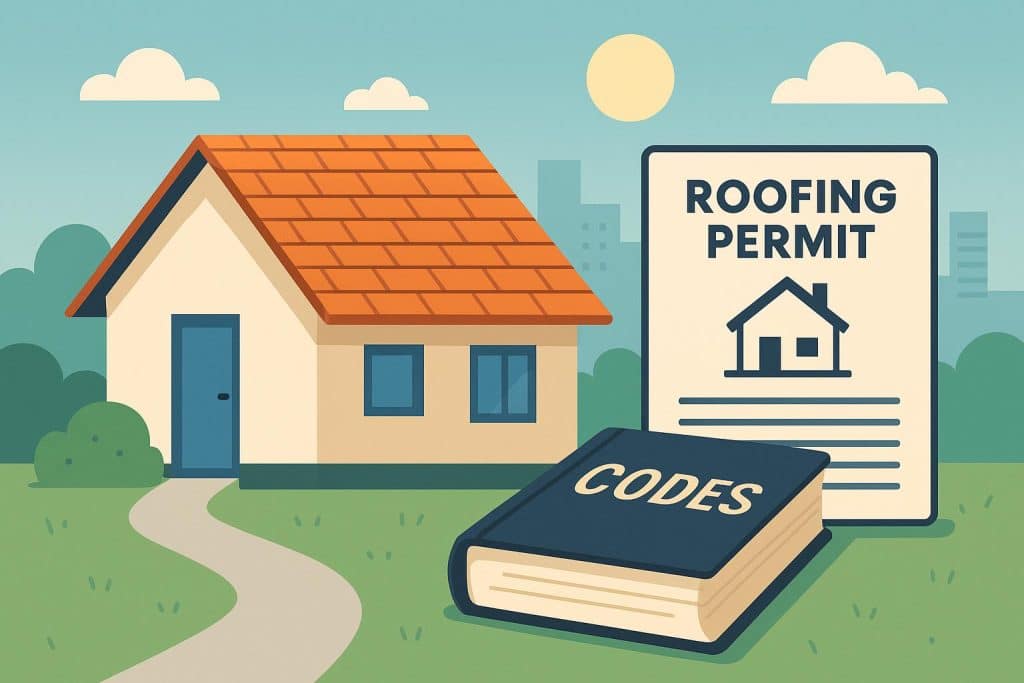
A roof replacement is far more than just laying down new shingles. It’s a complex construction project governed by a web of local building codes and legal permit requirements. For a homeowner, navigating this world can feel overwhelming, but understanding the process is the single most important thing you can do to protect your investment and your home. This guide will provide you with the essential knowledge to confidently work with your contractor, ask the right questions, and ensure your new roof is safe, fully compliant, and built to withstand the elements for decades to come.
Building codes are not arbitrary rules designed to create bureaucracy. They are the bedrock of modern construction safety, developed over decades to protect homeowners, and they represent the minimum legal standard for a job done right. A permit is simply the official record that you and your contractor intend to meet that standard. Skipping this crucial step can lead to disastrous consequences.
- Substantial Fines: Municipalities can levy significant fines for unpermitted work. They may even issue a “stop-work order,” halting your project midway through.
- Insurance Catastrophes: If your unpermitted roof fails and causes a leak, your homeowner’s insurance provider has grounds to deny your claim, leaving you responsible for thousands in repairs.
- Major Resale Problems: During a home sale, unpermitted work is a huge red flag for buyers and lenders. It can derail a sale or force you to accept a much lower price.
- The Ultimate Penalty: In the worst-case scenario, a building inspector can rule that the work is not up to code and legally require you to tear the entire new roof off and start over, all at your own expense.
Your contractor should be your expert guide through the code and permitting maze. A true professional views this as a standard part of their service, not an optional add-on. It’s critical to hire someone who will protect your interests.
- Verify Licensing and Insurance: Ask for the contractor’s state or local license number and a certificate of insurance for both general liability and worker’s compensation. Don’t just take their word for it—verify the license with the local building department and call the insurance company to confirm the policy is active.
- Demand a Detailed Contract: The contract should be itemized and explicitly state that the contractor is responsible for obtaining all necessary permits and scheduling all required inspections. The total cost of the permit should be listed as a line item.
- Discuss Codes Specifically: Ask potential contractors about specific code requirements in your area. A knowledgeable pro will be able to discuss ventilation calculations, underlayment requirements, and nailing patterns without hesitation.
- Be Wary of Red Flags: Run from any contractor who suggests you don’t need a permit, offers a significant discount for paying in cash, or pressures you to sign a contract on the spot.
While codes are hyper-local, a set of common requirements has emerged as best practice across the country. An inspector will be looking closely at these elements, as they are critical for the longevity of your roof.
- Roof Decking (Sheathing): This is the wooden base, usually plywood or OSB, that the roof is built upon. Codes dictate minimum thickness and require that any rotted or damaged sections be replaced, not just covered up. A weak deck is a failed roof waiting to happen.
- Underlayment: This is a water-resistant barrier installed over the decking. Modern synthetic underlayment’s offer superior tear resistance and water protection compared to traditional felt paper. The code will specify the type and how it must be overlapped.
- Ice and Water Shield: This is a specialized, self-adhering membrane installed at the most vulnerable parts of the roof—the eaves, valleys, and around chimneys or skylights. It provides crucial, final-line-of-defense protection against leaks from ice dams and wind-driven rain.
- Proper Nailing: This is a critical factor for wind resistance. Codes specify not just the number of nails per shingle (typically 4-6) but also their exact placement. Improperly placed nails can void a shingle’s warranty and lead to blow-offs.
- Flashing & Drip Edge: Flashing is the metal work that directs water away from joints, like where the roof meets a wall or chimney. The drip edge is a piece of flashing at the roof’s edge that protects your fascia. These are the most common sources of leaks, and inspectors scrutinize them.
- Ventilation: A balanced system of intake (at the soffits) and exhaust (at the ridge) vents is crucial. It prevents heat and moisture buildup in your attic, which can destroy shingles from the inside out and lead to mold. Codes often have specific formulas to calculate the required ventilation based on attic size.
The contractor is responsible for scheduling inspections, but you should know the steps. There may be in-progress inspections, where an inspector checks the roof deck after the old roof is torn off but before the new one is installed.
The final inspection happens after the project is complete. A municipal building inspector will visit and get on the roof to check for compliance with all the items listed above. They will verify that the materials used match the permit application and that the workmanship is sound.
If the work passes, the permit is “closed,” and you have an official record of a compliant project. If it fails, the inspector will issue a “correction notice” detailing the violations. The contractor must fix the issues and schedule a re-inspection. You should not make the final payment to your contractor until you have proof of a passed final inspection.
Data With Mr Remodel
At Mr Remodel, our entire philosophy is built on a dedication to empowering homeowners by providing clear, data-backed guidance for their most significant investment. We serve as a vital bridge, connecting you with a network of thoroughly screened and licensed local contractors who are proficient in managing the specific codes and permit requirements in your area. Our primary role is to facilitate the process of receiving genuine, detailed quotes from these qualified professionals for your project. To be clear, we are not a construction company and do not perform the physical work, nor are we a service for minor handyman jobs. We stand apart from platforms that might tempt you to cut corners, as we champion a process that fully embraces quality, safety, and all necessary legal steps like permits and insurance. If you are ready to approach your renovation with a team that values this level of transparency, visit MrRemodel.com to apply for your free, no-obligation quote.