

Based in Nashville, Tennessee, Andrew Fleming is a former basketball player and an entrepreneur who founded Pro Performance Basketball, a personal player development program. His background includes three consecutive high school state championships at Ensworth High School and a senior season at Oak Hill Academy, where he finished among the school’s top long-range shooters. He later played collegiately at the University of Iowa and at Lipscomb University, appearing in three straight A-SUN Conference Championship games, along with multiple National Invitational Tournament and NCAA Tournament appearances. Through his training business, he has worked with players from elementary school through professional levels, including NBA and overseas athletes, and he is also an affiliate broker with Compass Real Estate. He studied sports management at Lipscomb.
Basketball Roles Explained
Basketball teams use five main positions: point guard, shooting guard, small forward, power forward, and center. A player’s size and their ability to dribble, shoot, or pass determine their assigned position. Notably, everyone plays both offense and defense, requiring players to switch roles quickly during the game. For a team to work cohesively, players abandon hierarchy when necessary.
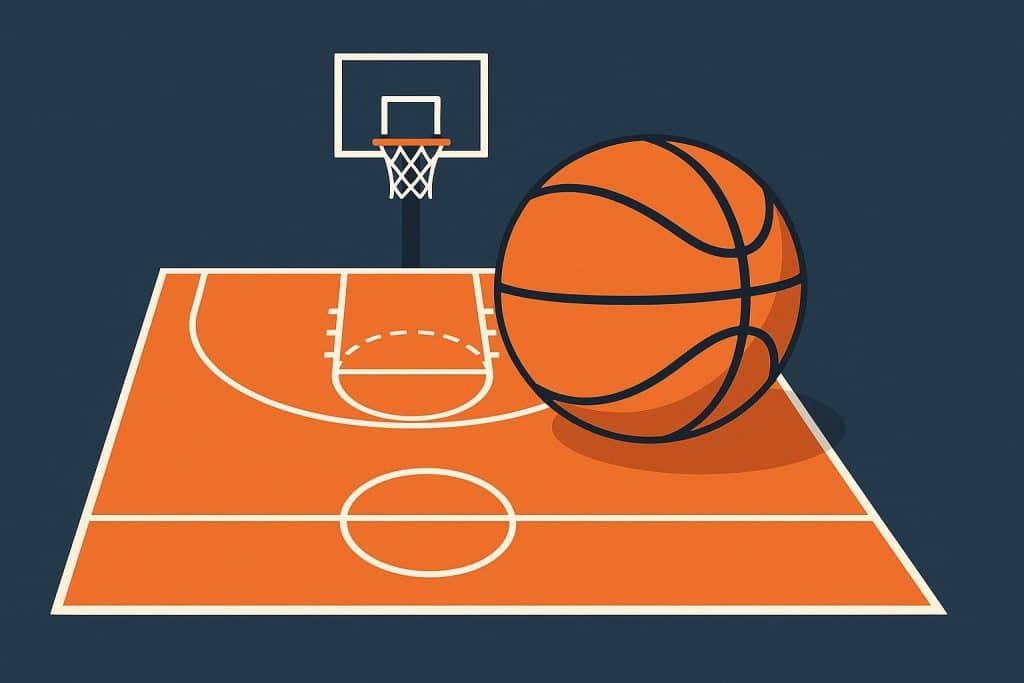
To keep things simple, people often refer to these positions by numbers: 1 for point guard, 2 for shooting guard, 3 for small forward, 4 for power forward, and 5 for center. The playing field is divided into the backcourt, center, and frontcourt. Positions 1 and 2 play in the backcourt, positions 3 and 4 are frontcourt players, while position five plays at the center.
A point guard leads the team on the floor, bringing the ball up, calling plays, and keeping the offense organized. Their main goal is to create scoring opportunities through smart decisions, quick opponent defense analysis, and accurate passing. They rely on strong ball-handling, speed, agility, and a solid understanding of team strategies. Although often the smallest players, they compensate for this through leadership and skill. Defensively, they pressure the opponent’s primary ball-handler, try to force mistakes, and work to regain possession.
A shooting guard is usually the team’s top scorer and most reliable shooter, often starting plays from the wing. They need to score from long range, midrange, and near the basket, using smart movement to find open spots. Besides scoring, they often help handle the ball when the point guard is pressured. Important skills include accurate shooting, solid dribbling, quickness, and dependable defense. On defense, shooting guards work to disrupt passes, secure rebounds, and guard opponents with quickness and agility.
A small forward is the team’s most adaptable player, able to contribute both inside and on the perimeter. They score in many ways, such as hitting outside shots, attacking the basket, and working near the rim. They also help with ball movement, set screens, and create space for teammates. This position requires solid ball-handling, good passing, agility, and quickness. During defense, small forwards catch rebounds, defend multiple positions, and guard the opponent’s top scorer.
One of the strongest and tallest players, a power forward, takes on a physical role. They battle for rebounds, protect the post, and help control possession. On offense, they score with moves near the basket, set solid screens, and increasingly use midrange or three-point shots. Shots with a reliable range are called “stretch fours.” A power forward’s size and strength make them key defenders, responsible for contesting shots, guarding the post, and grabbing important rebounds.
As with the power forward, the center takes on a physical role. The center forward is typically the tallest and strongest player, operating near the basket in the low post, and is often viewed as the final line of defense. A center uses their height and strength to double down on rebounds and block opponents. They protect the rim, block shots, and grab key rebounds on defense. Offensively, they focus on scoring close to the basket, finishing layups, and putting back missed shots. Centers also post up confidently and set strong screens to free teammates.
While these five positions are what most people know about, there are evolving roles and specialized players. Modern basketball has shifted toward “positionless” play, where athletes are expected to handle multiple roles and guard different positions, creating hybrid roles such as combo guard, point forward, stretch four, and sixth man.
A combo guard blends a point guard’s playmaking with a shooting guard’s scoring ability. A point forward is a frontcourt player who can run the offense due to their strong ball-handling and passing. A stretch four is a power forward who pulls defenders outside with reliable three-point shooting. Lastly, a sixth man is a highly-skilled, energetic, and versatile player who comes off the bench and instantly impacts the game in any role needed.
About Andrew Fleming
He is a former basketball player and the founder and CEO of Pro Performance Basketball, a training business described as supporting more than 300 youth athletes and assisting over 400 players across levels. His biographies note three state championships at Ensworth High School, a senior year at Oak Hill Academy, and college play at the University of Iowa and Lipscomb University, including A-SUN title game appearances and postseason tournaments. He studied sports management at Lipscomb and works as an affiliate broker with Compass Real Estate.