

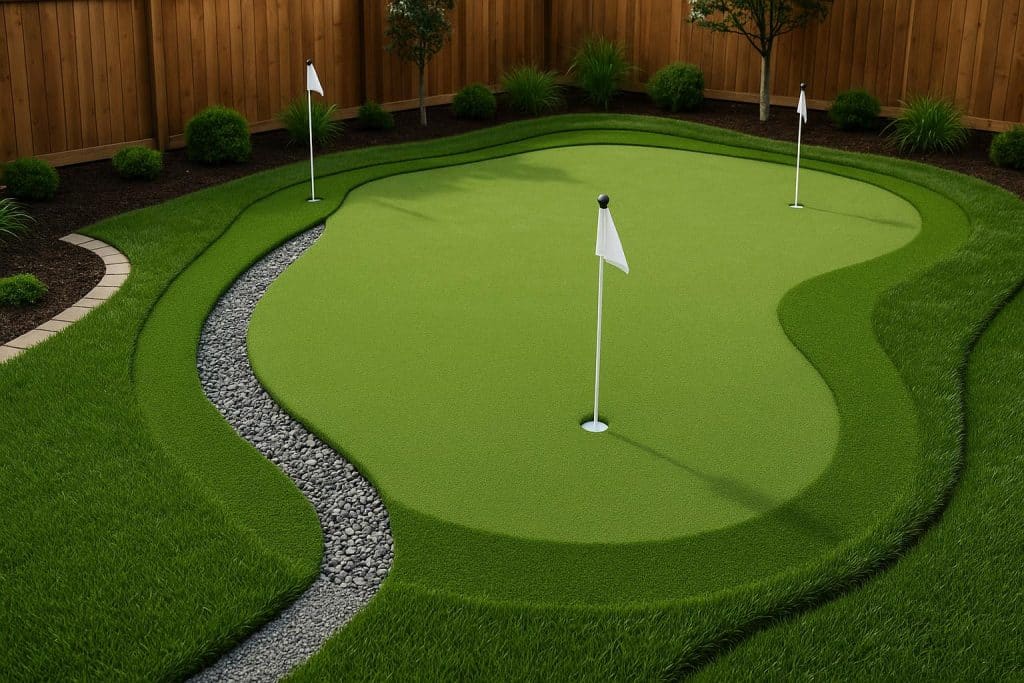
A backyard putting green can improve short-game practice and make outdoor space more useful, yet performance starts long before turf is rolled out. Drainage, pile height, and layout govern ball pace, surface firmness, and day-to-day upkeep. Yards built without that groundwork often develop standing water, irregular breaks, or worn traffic lanes. Careful planning reviews soil, runoff paths, sunlight, and foot use, then fits the surface to how the household will actually play.
Drainage Starts Below Grade
Drainage usually decides whether a green stays usable after rain or irrigation. Moisture needs a clear route through turf, base stone, and nearby ground without collecting on top. Installers often shape a compacted aggregate layer with mild pitch. That contour moves water away while preserving a fair roll. Weak grading can leave soft pockets, lifted edges, and mineral staining that reduces service life.
Regional Conditions Matter
Dry climates can mislead homeowners into treating water control as a minor issue. Brief storms, dense soil, and patio runoff can load a green rapidly. Many households reviewing putting green installation in Las Vegas options focus first on speed and appearance, yet sub-base depth, exit routes, and border height usually decide how the surface holds up. Those unseen details limit puddling, keep seams flatter, and support steadier roll through changing weather.
Base Depth and Stone Choice
Base depth has a direct effect on firmness and drainage rate. Shallow stone layers often settle after repeated foot traffic, which leaves low spots and subtle wobble. Crushed aggregate, compacted in lifts, creates a stable platform that sheds water efficiently. A finer top course can improve finish quality. Installers should also inspect downspouts, planter beds, and deck edges, because concentrated runoff can overwhelm sound construction.
Pile Height Shapes Ball Roll
Pile height affects speed, trueness, and how the surface receives short chips. Short fibers usually create a faster roll because less blade contact slows the ball. Slightly taller yarn can soften impact and help hold a lofted shot. The right selection depends on intended use. A practice green built for straight putting needs different behavior than one planned for mixed short-game work and casual family use.
Infill Controls Speed and Stability
Infill has a larger role than many buyers expect. That material supports each blade, adds ballast, and influences how the ball releases across the face. Sparse fill can leave fibers loose and make pace inconsistent. Excess material may slow putts and blunt contact. Skilled crews adjust volume after brushing, then test several lines. That final tuning step helps keep movement more even across the entire area.
Layout Should Match Real Practice
A strong layout reflects the shots people plan to hit most often. Small, decorative shapes may suit a sketch, yet they can limit stance width and reduce useful putt distance. Curves, tiers, and fringe should support real drills rather than appearance alone. Most households benefit from space for straight putts, gentle breakers, and one longer track that teaches distance control without forcing awkward foot placement.
Cup Placement Needs Restraint
More cups do not always improve practice quality. Every hole needs enough level ground nearby for fair finishes and sound drainage. When targets sit too close together, turf wear increases and putts begin to feel crowded. A simpler plan with two or three strong locations often performs better than a busy pattern. Clear spacing also gives each read more meaning and makes the green easier to maintain.
Fringe and Edging Affect Function
Fringe serves a practical purpose beyond appearance. Slightly taller turf around the main putting area can receive chipped balls and create a clearer visual boundary. Edging matters for similar reasons. Secure borders hold the base in place and reduce spillover from rock, bark, or gravel beds. Stable perimeter materials also help the outline resist movement after irrigation cycles, heat expansion, and repeated crossing at entry points.
Sun, Shade, and Traffic Count
Daily exposure changes how a green wears over time. Intense sun can raise surface temperature, while deep shade may keep nearby ground damp for longer periods. Repeated traffic at one access point can compress infill and flatten fibers on a single side. A careful plan studies walking paths, furniture placement, and nearby trees before the final outline is set. That review helps spread wear more evenly.
Maintenance Should Stay Simple
Artificial greens need less care than natural grass, though routine attention still matters. Brushing lifts fibers and redistributes infill so pace stays more uniform. Leaf removal keeps drainage paths open and reduces organic buildup. Occasional rinsing can clear dust, pollen, and pet residue from the surface. Homeowners should ask how quickly the area can be cleaned after a storm, because simple upkeep supports more reliable ball behavior.
Conclusion
A backyard green performs best when construction choices support play, drainage, and durability from the start. Water management protects the base, pile height shapes pace, and layout determines whether practice feels useful or forced. Households that review those factors early tend to avoid costly corrections later. The strongest projects balance ball roll, structural stability, and yard circulation in one clear plan, creating a surface that looks polished and plays consistently for years.