

Renovating the exterior of a home feels permanent because it often is. Paint colors, roofing materials, and architectural features are expensive to reverse. Yet many homeowners still renovate based on what looks good right now rather than what will still work years from today.
Exterior trends move fast. Social media accelerates that speed. What looks bold and modern in 2025 can look tired by 2028. This article breaks down exterior home improvement trends that are likely to age poorly after 2026 and explains what to consider instead before you commit.
Renovating for the Future, Not for Visual Hype
Exterior design is not fashion. It cannot be swapped out every season. Once a trend hits mass adoption, its decline usually follows quickly.
Many exterior renovations today are driven by short-term aesthetics. The goal is visual impact, not longevity. That approach often ignores climate, maintenance, resale value, and architectural consistency.
A thoughtful renovation does not reject modern ideas. It filters them. The goal is to invest in choices that still make sense when trends fade, and algorithms move on.
Overly Trend-Driven Color Palettes
Color is one of the fastest-aging elements of any exterior.
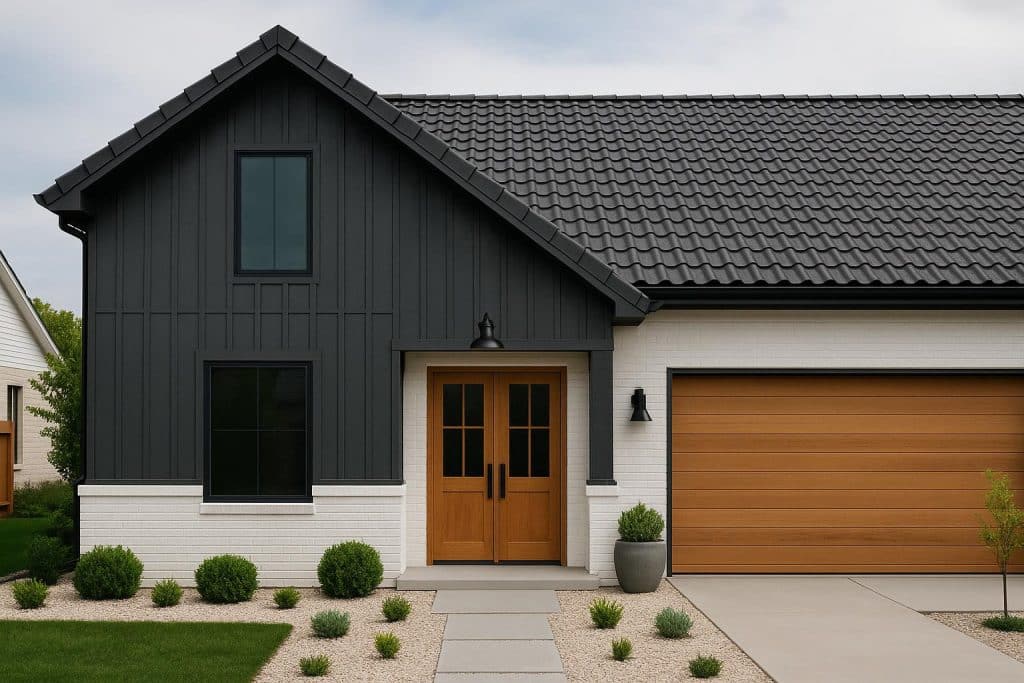
Ultra-dark homes, mainly all-black or deep charcoal facades, are a good example. They photograph well. They stand out online. But they absorb heat, fade unevenly, and show dirt and wear faster than expected. In many neighborhoods, they also clash with surrounding homes, which can hurt resale appeal.
At the other extreme, stark white exteriors are beginning to show their limitations.
White-on-white designs require constant maintenance. They highlight stains, algae, and weather damage. Over time, they can feel sterile rather than refined.
High-contrast color schemes also tend to date quickly. Strong black trim on bright white siding is already nearing saturation.
More durable options exist. Soft neutrals, muted earth tones, and regionally appropriate colors age more gracefully. They adapt to changes in landscaping and architectural updates without forcing a full repaint.
Decorative Features With No Functional Value
Purely decorative exterior elements rarely age well.
Faux shutters that do not match the window proportions are one example. They add visual noise without purpose. Over time, they feel artificial rather than architectural.
The same applies to fake beams, non-functional pergolas, and excessive trim. These features are often added to mimic high-end homes but lack the structure or scale to feel authentic.
Buyers and appraisers notice this. Non-functional features can signal cost-cutting rather than craftsmanship.
Function matters. If an exterior element does not improve protection, shade, ventilation, or usability, it is more likely to feel dated as tastes evolve.
Roofing Trends That Will Not Age Well After 2026
Roofing is where trend-driven decisions become especially costly, and experienced professionals like E&E contracting see the consequences of short-term choices all the time.
Unconventional roof colors are becoming more common. Light gray, pale metal tones, or high-contrast roofs may look modern now, but they often clash with traditional architecture and surrounding homes over time. They also wear faster and are harder to match during repairs.
Low-slope or flat roofs applied to homes not designed for them are another risk. In climates with heavy rain, snow, or extreme temperature swings, these roofs create drainage and maintenance problems. What looks sleek can turn into a long-term liability.
Some trendy roofing materials prioritize appearance over durability. Thin metals, experimental composites, or novelty finishes may not age well under real-world conditions.
A future-proof roof balances material quality, appropriate pitch, and a color that complements the home rather than dominates it. Roofing should feel invisible in the best way. When it blends in, it lasts stylistically.
Overdesigned Mixed-Material Exteriors
Mixing materials can add depth. Overdoing it does the opposite.
Stone veneer combined with metal panels, wood accents, and multiple siding types often creates visual confusion. What begins as a luxury statement becomes cluttered as materials age at different rates.
Maintenance also becomes complicated. Each material has different cleaning, sealing, and repair requirements. Over time, inconsistency shows.
Restraint matters here. One primary material, supported by one secondary accent, usually holds up far better than layered combinations chasing visual drama.
Trendy Outdoor Living Add-Ons That Age Fast
Outdoor living spaces are popular, but permanence is often underestimated.
Built-in outdoor kitchens with trendy finishes lock homeowners into a specific style. When tastes shift, those features become expensive obstacles rather than assets.
Prominent statement fire features face the same issue. Oversized designs that dominate the yard limit future layout changes and can feel excessive as minimal outdoor design regains favor.
Flexibility is the safer choice. Modular seating, movable features, and adaptable layouts allow outdoor spaces to evolve without demolition.
Sustainability Trends Done the Wrong Way
Sustainability is not the problem. Execution is.
Eco-friendly upgrades that ignore architectural coherence tend to age poorly. Solar panels installed without consideration for roof lines or visibility can feel intrusive. Poorly integrated systems stand out for the wrong reasons.
Greenwashing also plays a role. Materials marketed as sustainable but lacking durability often fail early, creating waste instead of reducing it.
True sustainability focuses on efficiency, longevity, and integration. Well-planned insulation, durable materials, and thoughtful energy solutions age better than trend-driven eco features.
How to Renovate for Longevity, Not Trends
Before committing to any exterior change, ask practical questions.
Will this still look appropriate in ten years? Does it suit the home's architecture? Is it common in your region for a reason? Can it be repaired easily?
Trends are not always bad. They work best in reversible elements like lighting, landscaping, or paint accents. Permanent features should lean conservative.
The most enduring exteriors often feel understated. They do not chase attention. They quietly hold their value.
Build for Endurance, Not Applause
Exterior renovations should serve the home first. Not the algorithm.
Trendy choices often feel exciting at first but disappointing later. Durable choices feel boring at first and satisfying over time.
Before you renovate, step back. Look beyond what is popular now. Invest in materials, colors, and designs that will still make sense long after 2026 passes.