

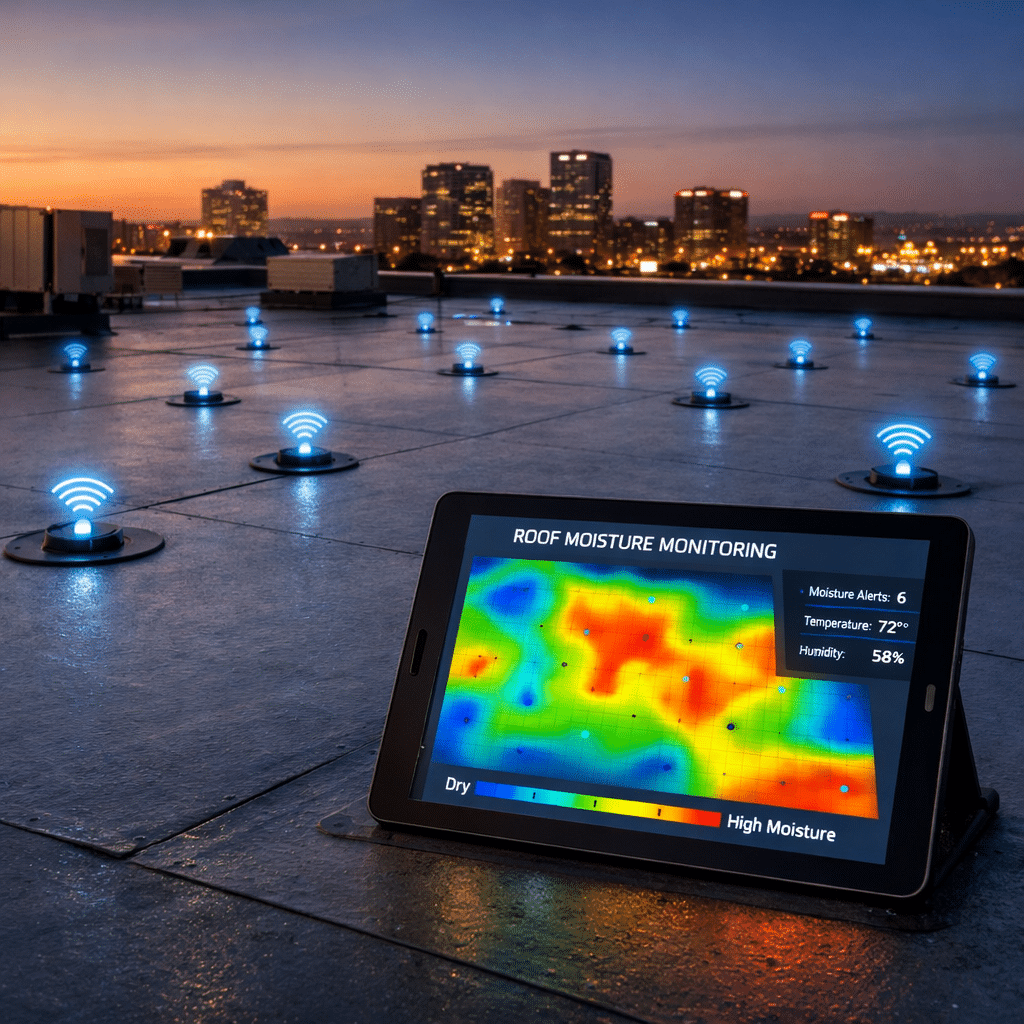
Remember when flat roof repair meant waiting until water was literally dripping through your ceiling before calling someone? Those days are vanishing faster than your patience during a Netflix buffering screen. The landscape of flat roof repair has transformed from reactive crisis management into proactive, data-driven maintenance that predicts problems before they become expensive disasters. We're living in an era where your roof can essentially text you when it's feeling under the weather, giving you weeks or months of warning instead of that heart-stopping moment when you discover a puddle forming around your expensive electronics.
The integration of Internet of Things (IoT) sensors and predictive analytics into commercial and residential flat roofing represents one of those quiet revolutions that fundamentally changes how we think about building maintenance. Instead of playing whack-a-mole with leaks, property owners now monitor their roofs like cardiologists monitor heart patients, watching for subtle changes that indicate trouble brewing long before symptoms become visible. How modern design transforms maintenance challenges into opportunities rather than crises demonstrates this philosophical shift in building management. Meanwhile, the business implications extend far beyond simple cost savings, as strategic facility management turns overhead into competitive advantage by leveraging technology to optimize every aspect of building performance.
The Sensor Revolution: Your Roof's Early Warning System
Modern flat roofs can now be equipped with moisture sensors, thermal imaging arrays, and structural stress monitors that create a comprehensive health profile. These aren't your grandfather's leak detectors that only scream when water's already present. We're talking about systems that detect microscopic moisture infiltration, temperature anomalies indicating insulation breakdown, and even membrane degradation before it becomes visible to the human eye.
Think of it like having a fitness tracker for your building. Just as your smartwatch warns you about irregular heart rhythms before you feel symptoms, roof sensors identify problem areas while they're still in the "this could become an issue" phase rather than the "call emergency services" phase. The data streams directly to building management systems or specialized monitoring services that analyze patterns and flag anomalies.
The Predictive Algorithm Advantage
Here's where things get interesting. Machine learning algorithms now process years of roof performance data across thousands of buildings, identifying failure patterns that human inspectors might miss. These systems consider weather patterns, building usage, maintenance history, and material specifications to generate probability scores for various failure modes.
Your roof monitoring system might alert you that Section 3B has a 73% probability of developing a leak within the next 45 days based on moisture accumulation patterns and an approaching weather system. This specificity allows for targeted repairs during optimal conditions rather than emergency patches during rainstorms at triple the cost.
Real-Time Monitoring Transforms Emergency Response
The days of discovering roof damage during your next scheduled inspection (which might be months away) are ending. Continuous monitoring means problems get flagged immediately. A membrane puncture from debris during a windstorm? You know about it within hours, not months. Unusual pooling water indicating drainage issues? Detected before it saturates insulation and creates structural concerns.
This immediacy changes the entire repair equation. Small interventions cost hundreds instead of thousands. Scheduled repairs happen during contractor downtime when rates are lower. Insurance claims become simpler when you have timestamped data showing exactly when and how damage occurred.
The Cost-Benefit Analysis That Actually Makes Sense
Installing IoT monitoring systems on flat roofs typically costs $2,000 to $8,000 depending on building size and sensor density. Annual monitoring services add another $500 to $2,000. Compare this to the average commercial flat roof leak repair, which runs $3,000 to $15,000 for moderate damage, or complete roof replacement at $5 to $15 per square foot.
The math becomes compelling quickly. Catching one major leak early pays for years of monitoring. Extending roof lifespan by just 2-3 years through optimal maintenance timing delivers returns that dwarf the technology investment. For property portfolios with multiple buildings, the savings multiply dramatically.
Insurance Companies Are Paying Attention
Progressive insurers now offer premium discounts for buildings with monitored roofs, recognizing that predictive maintenance significantly reduces claim frequency and severity. Some are even requiring monitoring systems for high-value properties or as conditions for coverage renewal. The technology has moved from "nice to have" to "industry standard" faster than most predicted.
Integration with Building Management Systems
Modern roof monitoring doesn't exist in isolation. It integrates seamlessly with comprehensive building management platforms that coordinate HVAC, security, energy management, and maintenance scheduling. Your roof sensors communicate with weather forecasts, adjusting alerts based on approaching storms. They coordinate with HVAC systems that might be contributing to condensation issues. They populate maintenance ticketing systems automatically.
This holistic approach transforms building operations from reactive firefighting into strategic asset management. Facility managers make decisions based on comprehensive data rather than gut feelings or outdated inspection schedules.
The Adoption Curve and What's Next
Currently, IoT-enabled roof monitoring sees highest adoption in commercial properties, data centers, hospitals, and large residential complexes where roof failures create significant operational or financial consequences. But prices are dropping and systems are simplifying, making the technology increasingly accessible for smaller buildings.
The next frontier involves drone integration for automated visual inspections coordinated with sensor data, augmented reality systems that overlay sensor readings onto live roof views during repairs, and blockchain-verified maintenance records that travel with properties during sales.
Making the Transition to Smart Roofing
For property owners considering this upgrade, the transition typically happens during scheduled maintenance or re-roofing projects. Modern roofing materials often come with embedded sensor compatibility, making installation straightforward. Retrofitting existing roofs remains possible, though it requires careful planning to ensure sensor placement captures representative data without compromising membrane integrity.
The key is working with contractors who understand both traditional roofing and modern monitoring technology. This hybrid expertise ensures systems deliver actionable intelligence rather than just generating noise.