


Photonic integrated circuits (PICs) have entered a transformative era. For decades, silicon photonics (SiPh) dominated the field, leveraging CMOS compatibility and an established manufacturing ecosystem. However, the industry is now confronting fundamental physical limits.
To overcome critical bottlenecks in speed and power efficiency, thin-film lithium niobate (TFLN) has emerged as a superior alternative, offering the high-performance material properties essential for the next generation of optical communications.
Silicon Photonics and TFLN: A Comparative Analysis
For years, silicon photonics has served as the workhorse of the optical interconnect industry. Its primary advantage lies in its ability to leverage mature CMOS fabrication facilities, enabling high-density integration and cost-effective mass production.
However, silicon possesses a critical flaw: it lacks the Pockels effect (a second-order nonlinearity). Consequently, silicon-based modulators must rely on the free-carrier plasma dispersion effect, which inherently forces a trade-off between modulation speed, optical loss, and device footprint.
In contrast, TFLN chips offer the “best of both worlds.” They combine the exceptional electro-optic properties of lithium niobate—a material long used in high-end discrete modulators—with the compact, high-index-contrast structure of a thin-film platform.

By bonding a sub-micron layer of lithium niobate onto a silicon-on-insulator (SOI) or quartz substrate, engineers achieve tight light confinement. This architectural shift enables significantly smaller devices that outperform silicon across every critical performance metric.
Key Advantages: Why Move to a TFLN Photonic Chip?
The industry is gravitating toward TFLN photonic chips because they resolve the “power-speed” paradox currently plaguing data centers and telecom networks.
Ultra-High Modulation Bandwidth
Traditional silicon modulators typically operate within a bandwidth limit of approximately 60 GHz. While recent research has demonstrated silicon modulators exceeding 110 GHz using techniques like slow-light resonant cavities or tunable time-frequency equalization, these approaches incur significant trade-offs, including increased optical loss, added design complexity, and higher power consumption.
In contrast, TFLN modulators leverage superior electro-optic properties to efficiently achieve modulation bandwidths of 110 GHz and beyond. This capability provides the critical technological foundation for single-lane 400G/800G transmission and paves the way for system evolution toward 1.6T and 3.2T total throughput.
Lower Drive Voltage (Vπ) and Energy Per Bit
Energy efficiency is the new currency of the data center. Modern TFLN modulators can achieve sub-1-V, CMOS-friendly drive levels, eliminating the need for high-power drivers and reducing energy per bit by multiple times compared to carrier-depletion silicon modulators.
Minimal Modulation Loss and Superior Linearity
Because TFLN utilizes Pockels-effect modulation instead of carrier injection, its insertion loss during modulation is lower (below 2 dB) than that of silicon modulators, and its linearity is preserved—critical for high-order QAM and dense WDM systems.
Thermal Stability and Robustness
TFLN’s intrinsic material properties minimize thermal drift, potentially relaxing or even eliminating the need for active thermoelectric coolers (TECs) in many modules. This enhances reliability in fielded systems and simplifies module thermal design.
Heterogeneous Integration Potential
Rather than replacing existing infrastructure, TFLN can be seamlessly integrated via wafer-level bonding or micro-transfer printing (μTP) with silicon or silicon nitride (SiN) backbones. This hybrid approach allows designers to combine silicon’s high-density passive routing with TFLN’s ultra-fast active functions.
From an engineering perspective, these advantages translate into two immediate commercial benefits: higher per-lane throughput with reduced DSP/compensation burdens, and lower system power for hyperscale optical switching—delivering both performance gains and deployment cost efficiencies for telecom and cloud networks.
Core Application of TFLN Chips
The versatility of TFLN establishes it as a foundational technology for four critical high-tech sectors:
AI and Data Centers
TFLN is a critical solution for the bandwidth and power bottlenecks in artificial intelligence and high-performance computing. It enables ultra-high-speed interconnects, supporting next-generation 1.6T and 3.2T switches.
By facilitating lane rates up to 400 Gb/s, TFLN chips can achieve speeds up to 8 times faster than conventional optical components while potentially consuming 10 times less energy. They are also integral to photonic-based computing machines, where they minimize heat generation and maximize computational density.
Quantum Photonics
As a transformative platform for quantum networks, TFLN enables ultra-efficient Quantum Frequency Conversion (QFC). For instance, it can connect disparate quantum nodes by converting visible photons to telecom wavelengths with high efficiency. Its high-speed modulation and low loss also make it ideal for Quantum Key Distribution (QKD) and scalable quantum computing architectures.
6G and Microwave Photonics
TFLN plays a pivotal role in the development of 6G wireless networks. These chips act as photonic engines that support ultrabroadband communication across a massive frequency range (e.g., 0.5 GHz to 115 GHz). They enable “intelligent radio” systems capable of real-time frequency reconfigurability and the generation of high-fidelity millimeter-wave waveforms for advanced radar and signal processing.
Sensing and LiDAR
In the realm of autonomous systems, TFLN enables high-performance sensing, such as Adaptive Bionic LiDAR. These systems achieve “dynamic gazing,” allocating sensing resources to specific regions of interest with extreme precision (down to 0.012°). Furthermore, TFLN-based integrated photonic radars can achieve centimeter-level ranging resolution, which is vital for drone navigation and autonomous driving.
Leading TFLN Photonic Chip Manufacturer
Given the significant potential of TFLN across various sectors, partnering with a provider that offers dependable, large-scale manufacturing capabilities is essential. Liobate stands as a premier integrated device manufacturer (IDM) at the forefront of the TFLN chip revolution. Led by world-renowned expert Prof. Cai Xinlun, the team specializes in the full lifecycle of TFLN photonic integrated circuits—from proprietary design to mass production.
Why Liobate stands out in the TFLN industry:
- Technical Breakthroughs: Liobate developed the world’s first TFLN IQ modulator chip and holds over 22 patents. Its core technologies have been consistently recognized among China’s Top 10 Breakthroughs in Optics.
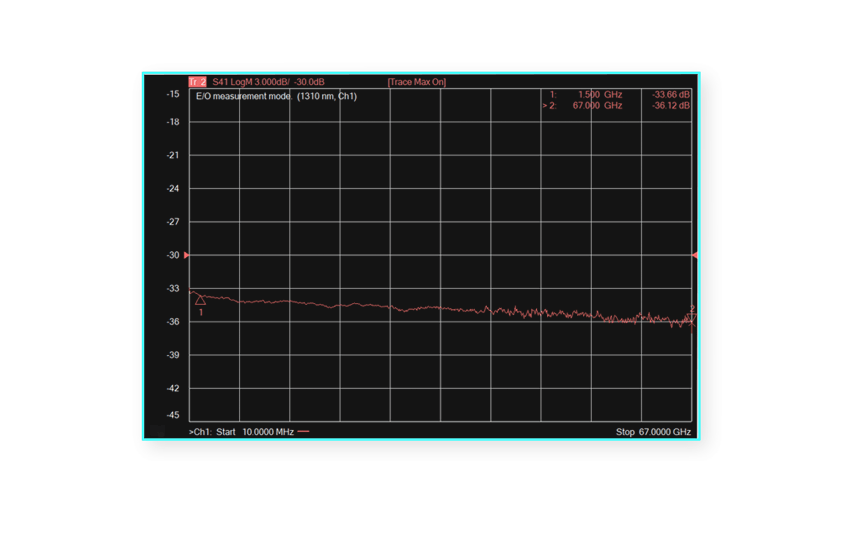
- Proprietary Reliability: The company has developed unique technologies that successfully eliminate “bias drift,” ensuring highly stable and repeatable performance. Its TFLN modulators uniquely combine sub-1-volt drive voltages with bandwidths exceeding 100 GHz.
- Scalable Solutions: Liobate provides production-ready 800G/1.6T/3.2T IMDD chips for AI compute clusters and ultra-compact modulators specifically designed for autopilot and LiDAR systems.
- IDM Capability: From its Nanjing headquarters, the company operates a complete mass-production line covering design, fabrication, and packaging, delivering comprehensive solutions for data centers, communication networks, scientific instruments, and autonomous driving.
Conclusion
The transition from silicon to TFLN represents a paradigm shift. By eliminating the inherent trade-offs of silicon, TFLN platforms deliver the bandwidth, energy efficiency, and linearity required for the 3.2 Tbps era and beyond. Moreover, the trend toward heterogeneous integration of TFLN with silicon photonics enables designers to merge high-density routing with ultra-fast modulation, yielding both performance gains and cost-effective upgrades to existing infrastructure.
As the demand for faster and cooler optoelectronics intensifies, leading TFLN chip manufacturers like Liobate are setting the pace with production-ready solutions. Whether enabling next-generation AI clusters or providing high-precision sensing for autonomous systems, Liobate is a trusted partner, offering a clear performance advantage and deep TFLN expertise.