

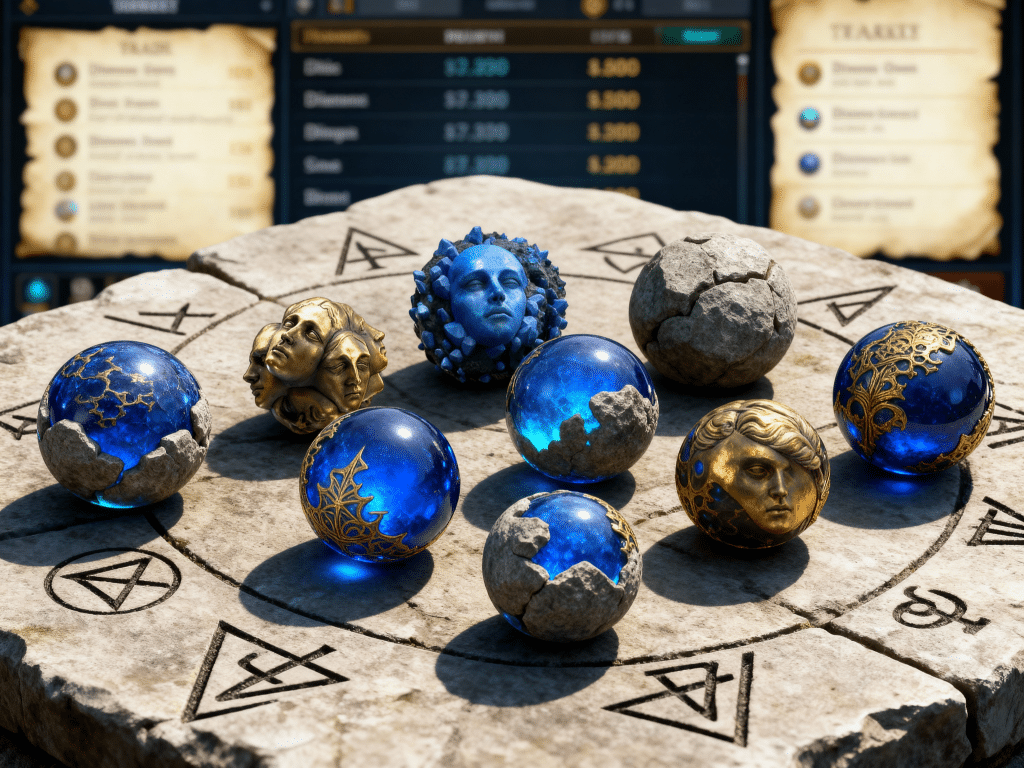
Divine Orbs are one of those currencies that quietly take over your attention in Path of Exile 2. At first, they sit in the background. Later, they start popping up everywhere. In trade listings. In crafting plans. In conversations about whether an item is done or just almost there. They do not create new gear or unlock new content, but they shape how finished a character feels.
Because demand stays high and prices move constantly, many players eventually decide to buy divine orbs PoE 2 instead of waiting for drops to align. This guide focuses on that moment. Where to buy Divine Orbs, how prices behave, how to read the market, and what the buying process looks like in practice, from payment to in-game delivery.
No theory. No scare tactics. Just the mechanics and habits players actually rely on.
What Is a Divine Orb in Path of Exile 2 and Why It Matters
A Divine Orb rerolls the numeric values of modifiers on an item. The modifiers stay. The tiers stay. Only the numbers change, within their allowed ranges.
That small change carries a lot of weight. In Path of Exile 2, many items reach a point where replacement is expensive or impractical. At that stage, improvement comes from tightening what is already there. Divine Orbs serve exactly that purpose. They turn acceptable rolls into reliable ones and smooth out the rough edges of otherwise solid gear.
Because better rolls usually translate into better performance and higher resale value, Divine Orbs sit close to item valuation. Over time, players have internalized this relationship. Items with similar modifiers are often judged by how close their values are to the top end of the range, and Divine Orbs are the tool that pushes them there.
This is why Divine Orbs appear so frequently in trade discussions and bulk exchanges. They are not flashy, but they are foundational.
How PoE 2 Divine Orb Prices Work
There is no fixed price for a Divine Orb. The game does not define one. Players do, collectively, through constant trading.
Prices are expressed in Chaos Orbs, which act as the shared reference currency. Almost every listing uses a Chaos-equivalent rate. This keeps the market readable and allows players to compare offers quickly without doing mental conversions.
That rate moves all the time. Sometimes slowly, sometimes abruptly.
Several factors shape it:
- League timing, which affects how fast supply enters circulation
- Server population, which determines how many listings compete at once
- Market activity, which affects how sensitive prices are to short-term demand
The important thing to remember is that a Divine Orb price is not a judgment. It is a snapshot. It reflects what people are paying at that moment, under those conditions.
 What Makes Divine Orb Prices Fluctuate
Prices move because player behavior changes.
Patches are a common trigger. When crafting mechanics or modifier scaling shift, players revisit existing items. Gear that was good yesterday suddenly looks improvable. Rerolling picks up, and Divine Orbs start moving faster through the economy.
League progression plays a quieter but constant role. As more content is farmed, more currency enters the market. At the same time, trading and crafting activity increase. Supply and demand grow together, which keeps prices responsive rather than flat.
Build trends add another layer. When certain item bases or modifier combinations become popular, refinement spreads quickly. Divine Orbs disappear into upgrades without any change to drop rates or mechanics.
These forces overlap continuously. That overlap is what keeps Divine Orb prices in motion for the entire league.
Where to Check Live Divine Orb Prices
If you want to know what Divine Orbs cost right now, there are a few places players consistently check.
The official Path of Exile trade site is the baseline. It shows live listings and reflects what sellers are actively asking for.
Community price trackers provide context. They aggregate data over time, making it easier to see trends and spot unusual spikes, even if they lag slightly behind live trades.
In-game signals help with short-term interpretation. Bulk listings thinning out or trade chat shifting tone often hints at movement before averages update.
A simple habit works well:
- Check the trade site
- Confirm with one tracker
- Make sure league and region match your character
Best Places to Buy PoE 2 Divine Orbs Online
There are three common ways players buy Divine Orbs outside the game. All of them work. The difference lies in structure and coordination.
- Marketplaces
Prices are visible upfront, payment happens on the site, and delivery follows clear steps. This option favors predictability and reduces decision fatigue. - Direct player sellers
Pricing can be competitive, but timing depends on availability. Coordination matters more, and the experience varies from seller to seller. - Community trades
These happen on forums or Discord servers and rely heavily on reputation, timing, and manual coordination.
Players who value consistency usually drift toward marketplaces over time. Fewer moving parts tend to mean fewer surprises.
How to Choose a Reliable Site
Reliable platforms tend to look unremarkable in a good way.
Things that matter:
- Prices clearly tied to league and region
- A straightforward explanation of how delivery works in game
- Visible support contact
- A reputation that shows up repeatedly across communities
None of this guarantees perfection. It simply removes avoidable friction from the process.
Step-by-Step: How to Buy Divine Orbs Safely
The buying flow itself is straightforward.
- Check the current Chaos-equivalent price.
- Choose a platform and select Divine Orbs.
- Pick the correct league and region.
- Complete payment.
- Receive the currency in game through a standard trade handoff.
Payment happens outside the game. Delivery happens inside the game. The trade window remains the handoff point.
Example of a Time-Tested Platform: Skycoach.gg
Skycoach.gg is often mentioned by Path of Exile players as a structured option for buying currency. Its appeal lies in repeatability rather than novelty.
The process is linear. Select Path of Exile 2. Choose Divine Orbs. Pick league and region. See pricing and delivery estimates before checkout.
After payment, Divine Orbs are delivered in game through a direct trade handoff using the standard trade window. No auctions. No hunting through chat. No uncertainty about what happens next.
Players tend to appreciate this setup because it removes common friction points:
- No searching for sellers
- No monitoring trade chat
- No adapting to individual schedules
The steps stay the same each time, which makes planning easier.
Red Flags and How to Protect Your Account
Some warning signs are consistent across the board.
Watch for:
- Prices far outside the current market range
- Missing league or region selection
- Vague delivery explanations
- No visible support contact
Platforms that are clear about these points tend to be easier to deal with.
Conclusion
Divine Orbs sit at the intersection of crafting, trading, and item value in Path of Exile 2. Understanding how their prices move and where to buy them makes the process feel intentional rather than reactive.
Buying Divine Orbs is about control. It allows players to decide when to engage with crafting and optimization instead of waiting on chance. When pricing is transparent and delivery follows familiar in-game mechanics, buying becomes just another tool, not a disruption.
It also creates flexibility. You can respond to market conditions, finish an item when it matters, or prepare for upcoming content without rearranging your entire play schedule. Used thoughtfully, buying Divine Orbs supports momentum rather than replacing gameplay.
For players who care about clarity, time, and predictable outcomes, structured marketplaces like Skycoach.gg offer a straightforward way to buy Divine Orbs and get back to playing. Over time, this approach turns Divine Orbs from a bottleneck into a planning resource, something you account for calmly rather than chase reactively.