


If you’ve been diagnosed with diabetes, one of your most concerns may be: “Can I still drive?” The short answer is yes. In the vast majority of cases, diabetes does not prevent you from holding a driving license. [1]
However, driving with diabetes carries specific responsibilities. Ensuring your safety, as well as the safety of other road users, requires a proactive approach to blood glucose management. You also need to be aware of how the disease affects your consciousness and physical abilities. Read on for more about driving with diabetes.
How Diabetes Can Affect Driving Ability?
Driving is a complex task demanding sharp vision, quick reflexes, good judgment, and physical coordination. Diabetes can potentially interfere with these abilities in several ways, making caution essential:
- Hypoglycemia (Low Blood Sugar)
This is the most immediate risk. Your brain’s energy comes from glucose. When blood glucose levels drop too low (below 4 mmol/L), your cognitive functions slow down. This can lead to confusion, slowed reaction times, and even loss of consciousness behind the wheel.
- Hypoglycemia Unawareness
Some individuals, particularly those who have lived with diabetes for a long time, may lose the ability to feel the warning signs of hypoglycemia. This condition makes driving with diabetes significantly more dangerous if a sudden collapse occurs.
- Long-term Complications
Chronic high blood sugar can lead to secondary health issues.
- Diabetic retinopathy affects vision.
- Peripheral neuropathy can reduce feeling in the feet or hands(making it hard to feel the pedals).
- Cardiovascular complications can increase the risk of sudden cardiac events while driving.
Hypoglycemia and Driving Risks
Hypoglycemia is widely considered the most significant threat to road safety for those on insulin or certain oral medications, mainly affecting cognitive functions.
Potential dangerous behaviors include drifting between lanes, failing to notice traffic signals, or struggling to maintain a consistent speed. Your ability to judge car distances and react to hazards is severely diminished, increasing the likelihood of unsafe driving with diabetes.
1. Warning Signs of Low Blood Sugar While Driving
Recognizing the early signs is critical, such as:
- Dizziness and lightheadedness.
- Sudden trembling.
- Excessive sweating or chills.
- Blurred or “tunnel” vision.
- A tingling sensation in the lips or tongue.
- Increased irritability or sudden mood changes.
2. What to Do If Blood Sugar Drops While Driving
If you suspect your blood sugar is dropping, you must take immediate action. Follow these steps: [1]
- Stop the vehicle safely: Pull over as soon as it is safe to do so.
- Turn off the engine: Remove the keys from the ignition and move to the passenger seat if possible to demonstrate you are not in “charge” of the vehicle now.
- Treat the hypo: Consume fast-acting carbohydrates, like glucose tablets or candies. Long-acting carbohydrates are also necessary, such as cakes and cookies.
- Wait and re-test: You should wait at least 45 minutes after your blood sugar has increased to a safe level (above 5.0 mmol/L or 90 mg/dL) before resuming your journey. This allows your brain time to fully recover its cognitive faculties.

Complications and Driving Risks
Beyond the acute risk of hypoglycemia, long-term complications can also lead to diabetic driving licence restrictions.
1. Retinopathy
Diabetes can affect vision. Retinopathy develops when high blood sugar damages the tiny blood vessels in the retina. This can cause “blind spots,” blurred vision, or difficulty seeing in low-light conditions.
Since driving relies on visual, any impairment in your sight must be reported to licensing authorities like the DVLA (in the UK).
2. Peripheral Neuropathy
This condition involves nerve damage, usually in the legs and feet. If you cannot feel the pressure of your foot on the brake or accelerator, your ability to control the vehicle is compromised.
In some cases, drivers with neuropathy may need to switch to vehicles with hand-controlled adaptations to deal with diabetic driving licence restrictions. This also needs to be consulted with your medical healthcare and local licensing authorities.
3. Heart Complications
Diabetes increases the stroke and heart disease risk, which may temporarily or permanently affect your driving license eligibility. Medical assessment is essential, and you must follow your doctor’s advice and any driving license medication restrictions related to heart conditions.
Driving Regulations for Diabetes During Therapy: Take the UK as an Example
The UK has specific legal frameworks to ensure road safety. According to the Driver and Vehicle Licensing Agency (DVLA), you must report any health condition that affects your driving to the DVLA. Failure to do so can result in a fine of up to £1,000 and prosecution if you are involved in an accident. [2]
Your driving ability depends heavily on your diabetes treatment plan:
1. Insulin Therapy
If you treat your diabetes with insulin, the following is the criteria for Group 1 and Group 2 vehicles: [3]
| Type | Group 1 vehicles (cars and motorcycles) | Group 2 vehicles (buses and lorries) |
| License period | 1, 2, or 3 years | 1 year (annual review) |
| Criteria | Possess sufficient hypoglycemia awareness (able to promptly recognize symptoms and safely pull over). Have not experienced 2 or more episodes of severe hypoglycemia while conscious within the past 12 months, with the most recent episode occurring at least 3 months ago.Monitor blood glucose levels at the start of the journey and at two-hour intervals thereafter. Pose no potential risk to the public while driving.Meet the visual acuity and field of vision standards. Have no disqualifying complications of diabetes. Undergo regular medical check-ups. | Full awareness of hypoglycemia and its risks. Have not experienced any severe hypoglycemic episodes in the past 12 months. Monitor blood glucose levels at the start of the journey and at two-hour intervals thereafter. Must use a blood glucose meter with sufficient memory to store readings for 4 weeks. Have no disqualifying diabetes complications that could lead to the refusal or revocation of a driving license, such as visual field defects. Undergo regular medical check-ups. |
2. Medication Management
For those on non-insulin medications (like Metformin), the rules vary. Under the diabetes mellitus nice guidelines, most oral medications that do not carry a risk of hypoglycemia do not require you to notify the DVLA, provided you haven’t developed complications like retinopathy. However, if you are on Sulfonylureas or Glinides, your blood glucose must be at least 5.0 mmol/L before you start the car.
For professional drivers (Group 2: Lorries and Buses), the DVLA driving license medication restrictions are much stricter. If managed with tablets that carry a risk of hypoglycemia, the driving requirements are the same as for insulin treatment. If managed with other medications, it is also mandatory to notify the DVLA, undergo regular medical examinations, and have no diabetes-related complications.
Safe Driving Tips for Diabetic Patients
Preparation is the key to safety. By integrating a few habits into your routine, driving with diabetes becomes a manageable part of your daily life.
1. Check Blood Sugar Before Driving
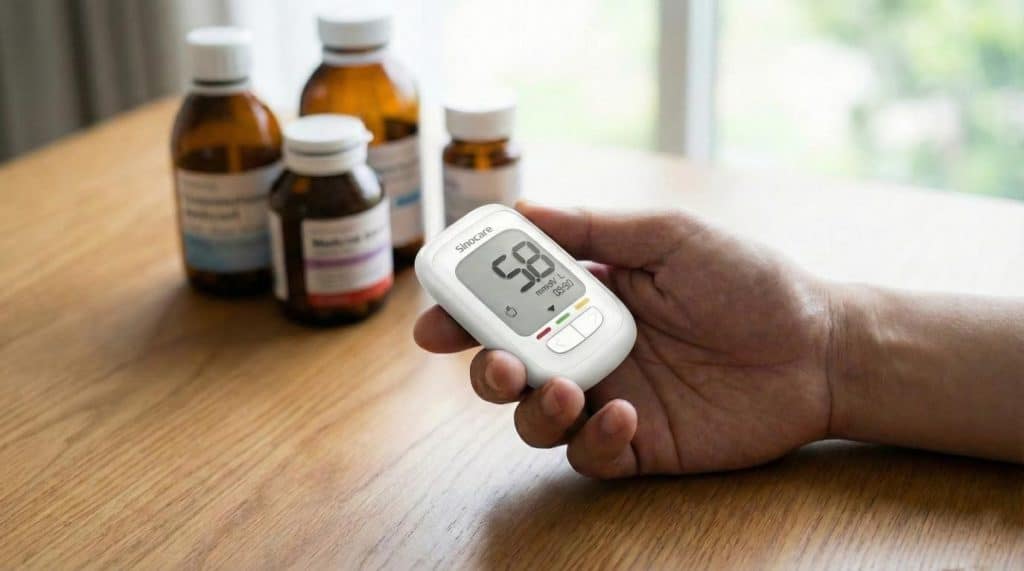
Before you even put your seatbelt on, you should check your glucose levels. Aim for a level above 5 mmol/L (about 90 mg/dL). If it’s between 4mmol/L and 5mmol/L, have a carbohydrate snack before setting off. Do not attempt to drive if your blood glucose level is below 4 mmol/L.
Traditional blood sugar monitors are recommended, such as Sinocare Safe AQ Pro Ⅰ. It uses fingertip blood for measurement, offering precision and ease of operation, making it suitable for both home and on‑the‑go use. With a 500 memory capacity, it also allows you to easily track your blood glucose trends at any time.
2. Plan Long Trips Carefully
On long journeys, the risk of blood sugar fluctuations increases.
- Test every 2 hours: Do not wait until you feel “off.” Stop at a service station every two hours to check your levels.
- Stick to your meal schedule: Do not skip meals while driving. If traffic delays your lunch, stop and eat.
- CGM Thresholds: If you use a continuous glucose monitor (CGM), it offers real-time alerts for high/low glucose levels. If your CGM shows you are trending low, pay attention and prepare for it.
3. Keep Emergency Snacks in the Car
Your vehicle should always be stocked with sugar sources. These should be kept in a place you can reach without unbuckling your seatbelt.
- Fast-acting: Glucose tablets, juice boxes, or candies.
- Long-acting: A granola bar or crackers to stabilize your levels after the initial treatment.
Conclusion
So, can you drive with diabetes? Absolutely. By staying informed about diabetes and driving laws and maintaining strict monitoring habits, you can stay safe. Always adhere to the diabetes mellitus nice guidelines and check your levels before every journey.
Additionally, an accurate blood glucose meter is indispensable. Visit the Sinocare website now to choose a suitable model!
References
- Driving and diabetes. Available at: https://www.diabetes.org.uk/living-with-diabetes/life-with-diabetes/driving (Accessed: 6 January 2026)
- Diabetes and driving. Available at: https://www.gov.uk/diabetes-driving (Accessed: 6 January 2026)
- Diabetes mellitus: assessing fitness to drive. Available at: https://www.gov.uk/guidance/diabetes-mellitus-assessing-fitness-to-drive (Accessed: 6 January 2026)