

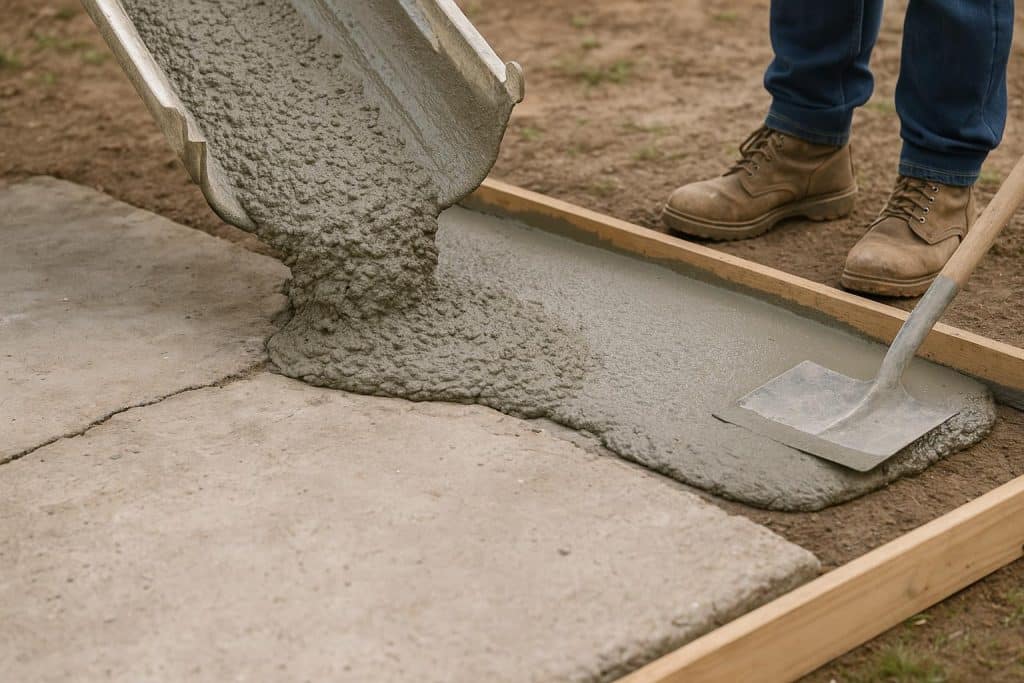
You have an old concrete patio showing its age with minor cracks and surface wear, but the slab itself remains structurally sound. Rather than the expense and disruption of complete removal and replacement, you wonder whether pouring new concrete over the existing slab might work. This question arises frequently in renovation projects where homeowners seek cost-effective solutions to refresh worn concrete surfaces.
The short answer is yes, you can pour concrete over existing concrete under the right conditions, but success depends on several critical factors. When done properly, overlay installations can provide excellent results at lower cost than complete replacement. However, improper overlay application leads to bonding failures, cracking, and delamination that create worse problems than the original worn surface.
Understanding when overlays work well versus when complete replacement is necessary requires knowledge of concrete bonding principles and structural requirements. Concrete contractors in Michigan with experience in overlay installations can evaluate your existing slab and recommend the most appropriate approach for your specific situation.
When Overlays Make Sense
The existing concrete must be structurally sound for overlay success. Surface wear, minor cracking, and cosmetic issues don’t prevent overlays, but structural problems do. If the existing slab has settled unevenly, broken into separate pieces, or shows significant cracking with vertical displacement, overlays won’t solve these fundamental problems.
Thickness considerations matter significantly. Adding even a thin overlay raises the surface height, which can create issues with door clearances, drainage patterns, and transitions to adjacent surfaces. You need adequate room to add the overlay thickness without creating problems elsewhere.
Cost savings drive many overlay decisions. Removing and disposing of existing concrete is expensive and labor-intensive. If the existing slab provides a suitable base, overlaying saves both demolition and disposal costs while providing a fresh surface.
Minimum Thickness Requirements
Concrete overlays typically require at least 2 inches of thickness to perform reliably. Thinner applications lack sufficient strength and are prone to cracking and delamination. The 2-inch minimum allows proper aggregate distribution and provides enough mass for durability.
Some specialized overlay products work at thinner applications, down to 1/4 inch in some cases. These modified concrete or polymer-based materials bond differently than standard concrete and might suit specific applications, but they cost substantially more than regular concrete.
For most residential applications, 2 to 3 inches provides the sweet spot, balancing cost, performance, and height increase. This thickness delivers good durability without excessive weight or material cost.
Surface Preparation: The Critical Factor
Proper bonding between old and new concrete depends entirely on surface preparation. The existing surface must be clean, sound, and profiled to accept the new concrete. This preparation requires significant effort but determines overlay success or failure.
Cleaning removes all dirt, oil, grease, curing compounds, and contaminants that prevent bonding. Power washing, degreasing chemicals, and scrubbing might all be necessary depending on the existing surface condition. Any substance that could interfere with bonding must be completely removed.
Surface profiling creates a texture that allows mechanical bonding. Smooth, hard concrete surfaces don’t provide the roughness new concrete needs to grip properly. Scarifying, sandblasting, or grinding creates this texture by exposing aggregate and creating a rough profile.
Crack repair in the existing slab prevents cracks from propagating through the overlay. While overlays can bridge minor hairline cracks, larger cracks should be routed and filled before overlay placement. Unrepaired cracks often telegraph through new concrete, creating weak points.
Bonding Agents and Their Importance
Bonding agents applied between old and new concrete dramatically improve adhesion. These materials come in various formulations including epoxy-based products for maximum strength, latex-modified slurries that provide good bonding at lower cost, and cement-based bonding slurries for standard applications.
Application timing matters critically. Most bonding agents must be tacky but not fully dry when new concrete is placed. Too wet, and they dilute the overlay mix. Too dry, and bonding effectiveness decreases. Following manufacturer instructions precisely ensures proper bonding.
Some contractors skip bonding agents to save cost or time, but this practice significantly increases delamination risk. The modest expense of quality bonding agents represents cheap insurance against overlay failure.
Reinforcement Considerations
Adding reinforcement to concrete overlays helps control cracking and holds the overlay to the substrate if bonding weakens over time. Wire mesh or fiber reinforcement provides this protection without significant cost increase.
Welded wire mesh installed at mid-depth in the overlay provides traditional reinforcement. Proper placement requires supporting the mesh so it doesn’t fall to the bottom during concrete placement, which would eliminate its effectiveness.
Fiber reinforcement mixed into the concrete provides multidirectional crack control without placement concerns. Synthetic fibers distribute throughout the mix and help control plastic shrinkage and minor cracking. They don’t replace structural reinforcement but supplement it effectively.
Drainage and Water Management
Overlays change surface elevations, which can affect drainage patterns. New concrete must slope away from buildings at appropriate grades to prevent water accumulation and foundation problems. Minimum slopes of 1/4 inch per foot maintain proper drainage.
If the existing slab has drainage issues, the overlay provides opportunity to correct them by building up low areas and establishing proper slopes. However, raising elevations might require adjusting downspouts, transitions to landscaping, or other drainage elements.
Water trapped between old and new concrete causes delamination problems. Proper surface preparation that allows bonding prevents water infiltration, but edges and penetrations require sealing to prevent moisture migration.
When Complete Removal Makes More Sense
Severely damaged existing concrete isn’t suitable for overlays. Extensive cracking, significant settlement, or structural failure requires complete removal and replacement. Overlaying damaged concrete simply transfers problems to the new surface.
Thickness limitations sometimes necessitate removal. If you need to add 4 or more inches of concrete but cannot raise surface elevations, removing existing concrete and replacing it at proper depth provides better results than thick overlays.
Subsurface drainage or utility work requires accessing beneath existing slabs. When these needs exist, removal makes sense because you’d need to disturb the slab anyway. Replacement during this work avoids future disruption.
Overlay Alternatives
Decorative concrete overlays using specialized materials can transform worn surfaces at 1/4 to 1/2 inch thickness. These products cost more than standard concrete but allow surface renewal without significant height increase.
Resurfacing products, including spray-applied toppings, microtoppings, and polymer-modified overlay,s provide options for specific applications. Each has advantages and limitations requiring professional evaluation.
Epoxy coatings or other surface treatments might address cosmetic issues without adding thickness. These solutions work when the existing concrete is sound, but its appearance needs improvement.
Cost Comparison Considerations
Overlay costs typically run 40% to 60% of complete replacement costs, depending on preparation requirements and overlay thickness. Savings come primarily from eliminating demolition and disposal expenses.
However, if extensive preparation, crack repair, or special bonding agents are needed, costs can approach replacement levels. Honest contractor evaluation determines whether overlays truly save money in your specific situation.
Long-term performance factors into cost analysis. Well-executed overlays last decades, but improper installation might fail within years, requiring complete redo. Investing in proper preparation and quality materials provides better long-term value than cutting corners.
Professional Installation Importance
Overlay success depends on proper execution of each step from preparation through finishing. Courtneys Construction recognizes that concrete overlays represent cost-effective solutions when existing slabs are structurally sound but cosmetically worn, yet require meticulous surface preparation, appropriate bonding methods, and quality materials to perform as intended rather than creating expensive failures that would have been avoided through complete replacement.
Pouring concrete over existing concrete works well when conditions are right and installation follows proven methods. The key is honest evaluation of whether your existing slab is suitable for overlay or whether underlying problems require complete replacement. Sometimes the cheapest initial option creates the most expensive long-term outcome, making professional assessment valuable before committing to either approach.