

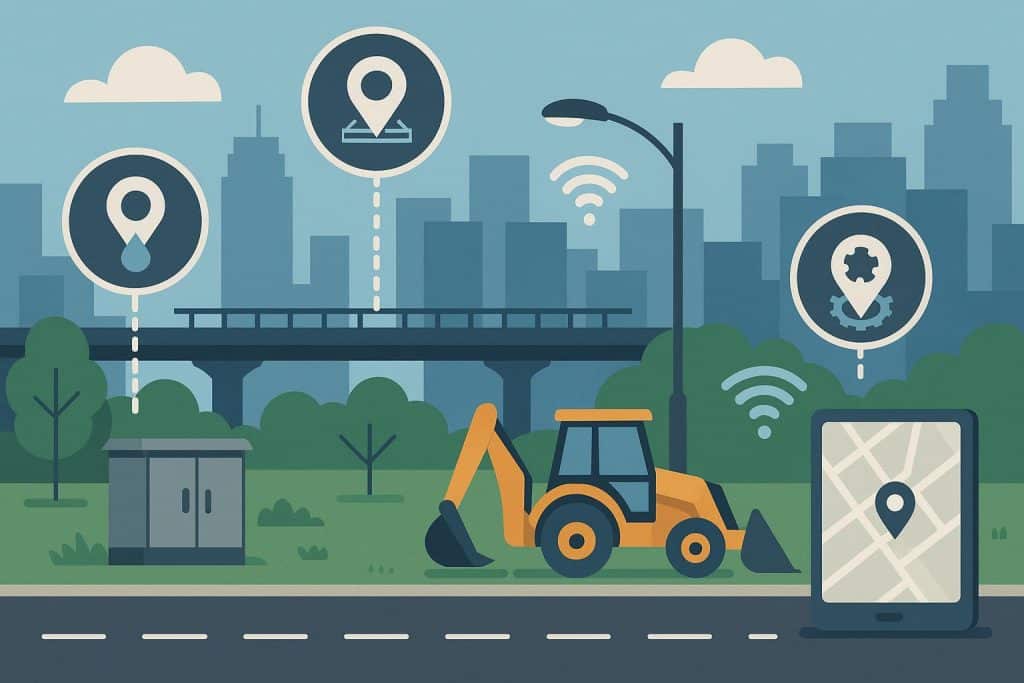
Ask a municipal public works director how many assets their department manages, and you’ll often get a range rather than a number. Somewhere between 8,000 and 12,000 pieces of equipment. Roughly 400 utility installations. Approximately 200 vehicles. For a city that’s deploying sensors, fiber optic networks, and real-time dashboards in the name of smart infrastructure, the inability to answer a basic inventory question with precision is a revealing gap.
Smart city monitoring systems are only as useful as the asset data feeding them. Before a city can track the performance of a pump station, schedule predictive maintenance on a traffic signal cabinet, or flag an overdue inspection on a public lift, it needs to know exactly what it has, where it is, and what condition it’s in. That requires a physical identification layer that holds up in the real world — not just a database entry.
The Foundation of Any Infrastructure Monitoring Program Is Physical Asset Identification
Digital monitoring systems — IoT sensors, SCADA networks, utility telemetry platforms — generate enormous amounts of operational data. But that data has to be anchored to specific physical assets to be actionable. When a pressure sensor reports an anomaly, the maintenance crew needs to locate the correct valve, access its service history, and confirm it’s the asset tied to the alert. If the physical asset isn’t clearly and permanently identified, that chain breaks.
This is why municipalities investing in smart infrastructure are paying closer attention to how assets are tagged at the point of installation. Durable metal asset tags designed for outdoor and industrial environments are a standard solution for equipment that lives in harsh conditions — embedded in concrete, mounted on electrical enclosures, exposed to weather and UV for decades. Unlike adhesive labels or plastic tags that degrade quickly, anodized aluminum and stainless steel tags maintain legibility and structural integrity through the kind of punishment that municipal assets routinely experience.
Utility Infrastructure Has Unique Monitoring Demands That Generic Systems Don’t Anticipate
Water, stormwater, electrical, and gas infrastructure each carry distinct monitoring requirements shaped by regulatory frameworks, safety standards, and operational realities. A water main valve requires different inspection intervals than a traffic control cabinet. A lift station has different telemetry needs than a streetlight network. The mistake many cities make in early smart infrastructure deployments is selecting a single monitoring platform and expecting it to serve every asset class equally.
A more durable approach involves tiered monitoring — matching the depth of sensor coverage and data collection to the criticality and failure consequences of each asset class. High-consequence assets like flood control infrastructure warrant real-time telemetry and automated alerts. Lower-risk assets like park benches or bike-share stations might only need periodic condition reporting through field inspection apps. What ties these tiers together is a unified asset registry where every item, regardless of monitoring depth, carries a consistent identifier and location record.
Predictive Maintenance Only Works When Historical Data Is Complete and Trustworthy
One of the most frequently cited benefits of smart city infrastructure programs is the shift from reactive to predictive maintenance. Instead of fixing equipment after it fails, cities want to intervene before failure based on performance trends and condition data. In practice, predictive maintenance models are only as good as the historical data they run on — and that data is often fragmented, inconsistently recorded, or tied to asset records that haven’t been reconciled in years.
The cities making real progress on predictive maintenance share a common starting point: they conducted thorough asset inventories before deploying monitoring technology. Field teams walked routes, scanned or installed asset tags, verified GPS coordinates, and reconciled physical assets against existing records. That groundwork is unglamorous, but it’s what allows sensor data, inspection logs, and maintenance histories to accumulate against a stable asset identity over time.
The Municipal Case for Getting Asset Tracking Right From the Start
Retrofitting asset identification onto an existing monitoring program is expensive and disruptive. Tags have to be installed in the field, records have to be manually reconciled, and the data quality problems that accumulated over years have to be unwound before the new system can function reliably. Cities that build physical identification into infrastructure projects from the beginning — as a standard step in asset commissioning — avoid that cycle entirely.
The long-term payoff is a monitoring ecosystem that actually serves its purpose: fewer emergency repairs, better capital planning, more defensible budget requests, and the kind of operational transparency that builds public trust in how city resources are managed. Smart city infrastructure isn’t just about the sensors — it’s about knowing precisely what those sensors are measuring, and why that matters.