

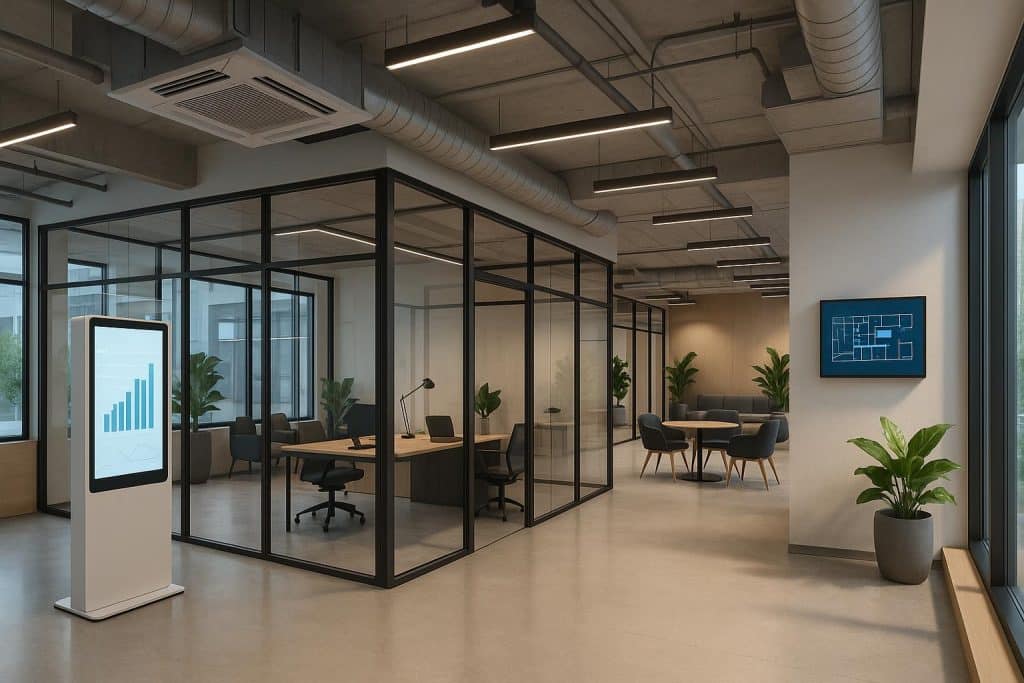
Commercial environments are evolving rapidly as businesses adapt to changing consumer expectations, workplace behavior, and operational demands. Offices, retail stores, hospitality venues, and mixed-use spaces are no longer designed only for functionality. They are now built to improve customer experience, operational efficiency, and long-term flexibility.
Technology integration, environmental design, and brand visibility are becoming central to commercial innovation strategies.
Businesses that modernize their physical environments effectively are often better positioned to improve engagement, productivity, and market competitiveness.
Flexible Space Design Is Becoming Standard
Commercial spaces are increasingly designed for adaptability instead of fixed long-term layouts.
Businesses now prioritize modular infrastructure that supports changing operational needs without requiring large-scale renovation projects.
Flexible environments improve:
- Space utilization efficiency
- Collaboration and workflow adaptability
- Faster reconfiguration for new business needs
This approach is especially important in hybrid work environments and multi-use commercial developments.
Visual Branding Influences Customer Engagement
Physical branding remains highly influential even in digitally driven markets.
Businesses increasingly use architecture, lighting, and signage as part of their overall brand strategy.
Strong visual identity improves both foot traffic and customer recognition in competitive commercial districts.
Commercial Branding Features Growing in Popularity
- Dynamic lighting systems
- Architectural storefront displays
- Large-format illuminated signage
Visual presentation now directly influences customer perception and retention.
Neon Signage Is Returning in Modern Retail
Modern commercial design has reintroduced neon-inspired branding as businesses seek more distinctive visual identity.
Retail stores, cafés, entertainment venues, and hospitality brands increasingly use store front neon signs to improve nighttime visibility and create memorable customer experiences.
These lighting systems work especially well in urban commercial corridors where visual competition is intense.
Businesses also benefit from increased social media exposure because visually distinctive storefronts are more likely to appear in customer-generated content.
Smart Building Technology Improves Operations
Commercial buildings now rely heavily on connected systems to manage energy use, occupancy, security, and environmental conditions.
Smart technologies allow businesses to monitor operations in real time while improving efficiency across multiple systems.
Examples include:
- Automated lighting and climate controls
- Occupancy-based energy management
- Integrated security and access systems
These technologies help reduce operational costs while improving workplace functionality.
Indoor Air Quality Is Becoming a Business Priority
Commercial property owners are placing greater focus on indoor environmental quality.
Air circulation, filtration, and ventilation now influence employee wellness, customer comfort, and regulatory compliance more directly than before.
Many businesses invest in systems and environmental solutions from companies such as Zehnder to improve air quality within industrial, retail, and office spaces.
Cleaner indoor environments can support productivity while reducing long-term operational health concerns.
Hybrid Work Models Influence Office Design
Office environments are changing because hybrid work structures remain common across many industries.
Traditional cubicle-heavy layouts are being replaced with:
- Collaborative meeting zones
- Flexible workstation systems
- Quiet focus rooms and wellness spaces
The goal is to create offices employees actively want to use rather than spaces built only for attendance requirements.
Commercial real estate strategies increasingly prioritize experience-driven workplace design.
Data Analytics Improve Commercial Decision-Making
Businesses now use analytics to optimize physical commercial environments.
Data systems track customer movement, occupancy patterns, and operational efficiency across retail and office spaces.
Data-Driven Commercial Strategies
- Foot traffic analysis for retail layouts
- Occupancy monitoring for workspace optimization
- Customer behavior tracking within commercial environments
Analytics allow businesses to make operational adjustments based on measurable usage patterns.
Sustainability Is Influencing Commercial Development
Environmental efficiency has become a major priority across commercial industries.
Developers and businesses now evaluate properties based on energy consumption, environmental certifications, and long-term operational sustainability.
This includes investments in:
- Efficient HVAC infrastructure
- Smart energy management systems
- Sustainable construction materials
Sustainability increasingly affects both operational costs and brand perception.
Experience-Based Retail Is Expanding
Retail environments are becoming more interactive and experience-focused.
Consumers expect more than product displays alone. Businesses now integrate digital experiences, event programming, and immersive design elements into physical retail spaces.
This trend helps physical stores compete against eCommerce by offering experiences that online shopping cannot replicate fully.
Commercial environments now function as both retail spaces and marketing platforms.
Hospitality-Inspired Design Is Crossing Industries
Hotels and hospitality brands have heavily influenced broader commercial design trends.
Comfort-oriented layouts, lounge areas, premium lighting, and social gathering spaces now appear in offices, retail stores, and mixed-use developments.
Businesses recognize that atmosphere directly affects customer behavior and employee satisfaction.
Commercial design increasingly focuses on emotional experience alongside operational efficiency.
Final Take
Commercial innovation trends are reshaping how businesses design and operate physical environments.
Technology integration, flexible layouts, environmental quality, and strong visual branding now play central roles in customer engagement and operational performance.
As commercial expectations continue evolving, businesses that invest in adaptive, experience-focused spaces will likely maintain stronger long-term competitiveness and customer retention.