

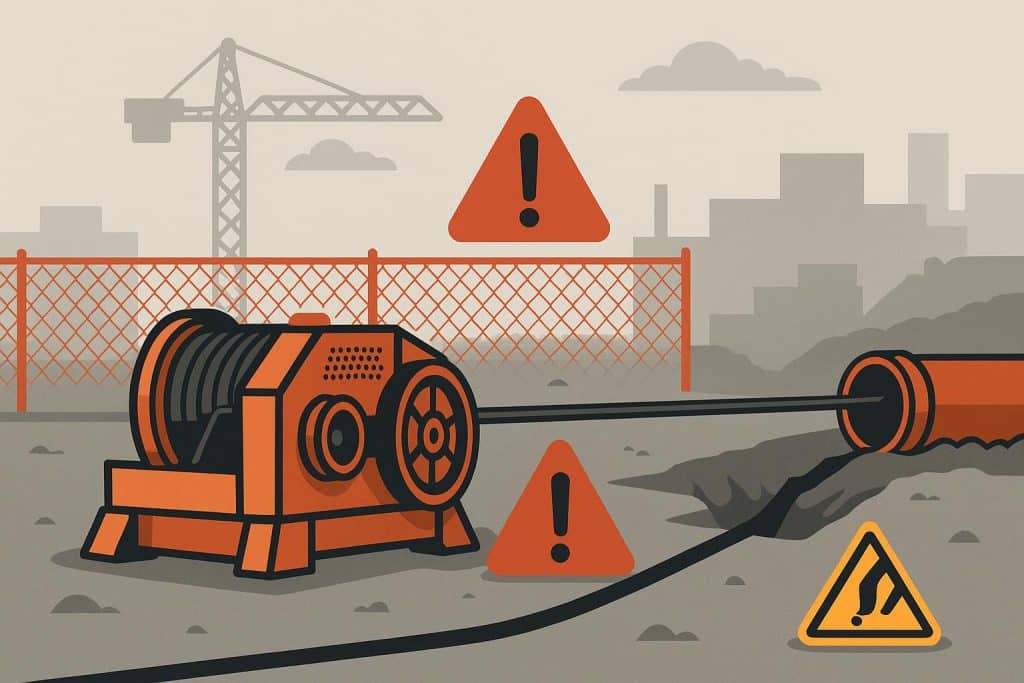
Cable hauling winches play a critical role in construction, utilities, mining, and infrastructure projects across Australia. They make moving heavy cables safer and more efficient—but only when used correctly. When hazards are overlooked, winch operations can quickly become dangerous, leading to equipment damage, costly downtime, or serious injury. Understanding the most common cable hauling winch hazards—and how to prevent them—helps keep worksites compliant, productive, and safe.
1. Overloading the Winch
One of the most common hazards is exceeding the winch’s rated capacity. This often happens when cable weight, friction, gradients, or resistance are underestimated. Risks include:
- Sudden cable failure
- Motor or gearbox damage
- Loss of load control
How to avoid it:
- Always confirm the winch’s rated pulling capacity
- Factor in cable length, bends, rollers, and incline angles
- Use load calculations rather than guesswork
- If unsure, upsize the winch or consult the hire provider
If you’re unsure which unit suits your application, it’s worth taking the time to check out reliable cable hauling winches for hire that are correctly specified for Australian site conditions.
2. Poor Anchoring and Inadequate Setup
A winch is only as safe as its anchor point. Improper anchoring can cause the winch to shift, tip, or fail under load. Common setup mistakes include:
- Anchoring to unstable structures
- Using incorrect mounting hardware
- Failing to secure the winch on uneven ground
How to avoid it:
- Anchor winches to engineered points or approved structures
- Ensure mounting surfaces are level and stable
- Use manufacturer-recommended bolts, frames, or skid bases
- Conduct a visual inspection before every pull
3. Snapback and Recoil Hazards
If a cable, rope, or attachment point fails under tension, the resulting snapback can be extremely dangerous. Why this is hazardous:
- Stored energy releases instantly
- Nearby workers can be struck without warning
- Serious injuries or fatalities may occur
How to avoid it:
- Never stand in line with a tensioned cable
- Establish exclusion zones around winch operations
- Use rated cables, shackles, and attachments
- Replace worn or damaged components immediately
4. Inadequate Training and Supervision
Winches may look straightforward, but incorrect operation is a leading cause of incidents on site. Common issues include:
- Incorrect speed selection
- Poor communication between operators
- Unauthorised personnel operating equipment
How to avoid it:
- Ensure operators are trained and competent
- Use clear hand signals or radio communication
- Appoint a dedicated spotter for complex pulls
- Follow site-specific Safe Work Method Statements (SWMS)
5. Electrical and Mechanical Failures
Cable hauling winches are exposed to dust, moisture, vibration, and heavy loads. Without proper maintenance, failures can occur mid-operation. Risks include:
- Sudden stoppages
- Loss of braking control
- Electrical faults in powered units
How to avoid it:
- Conduct pre-start inspections
- Check brakes, controls, and emergency stops
- Keep electrical components dry and protected
- Use well-maintained hire equipment rather than ageing assets
6. Poor Cable Management and Alignment
Incorrect cable spooling or misalignment increases wear and can cause the cable to jump, bind, or derail during hauling. How to avoid it:
- Ensure cables feed straight and evenly onto the drum
- Use rollers or fairleads to guide the cable
- Avoid sharp bends and edge contact
- Monitor spooling throughout the pull
7. Rushing the Job
Time pressure is a silent hazard. Rushing setup or skipping safety checks increases the likelihood of errors. How to avoid it:
- Allow sufficient time for planning and setup
- Stop work if conditions change
- Prioritise safety over speed—every time
Safer Cable Hauling Starts with the Right Equipment
Most cable hauling winch incidents are preventable. Correct load calculations, proper setup, trained operators, and reliable equipment make all the difference. Whether you’re hauling cables on a short urban project or a large-scale infrastructure site, choosing fit-for-purpose, well-maintained winches significantly reduces risk. By understanding these common hazards and applying practical controls, worksites can improve safety outcomes, protect workers, and keep projects moving efficiently—without unnecessary setbacks.