

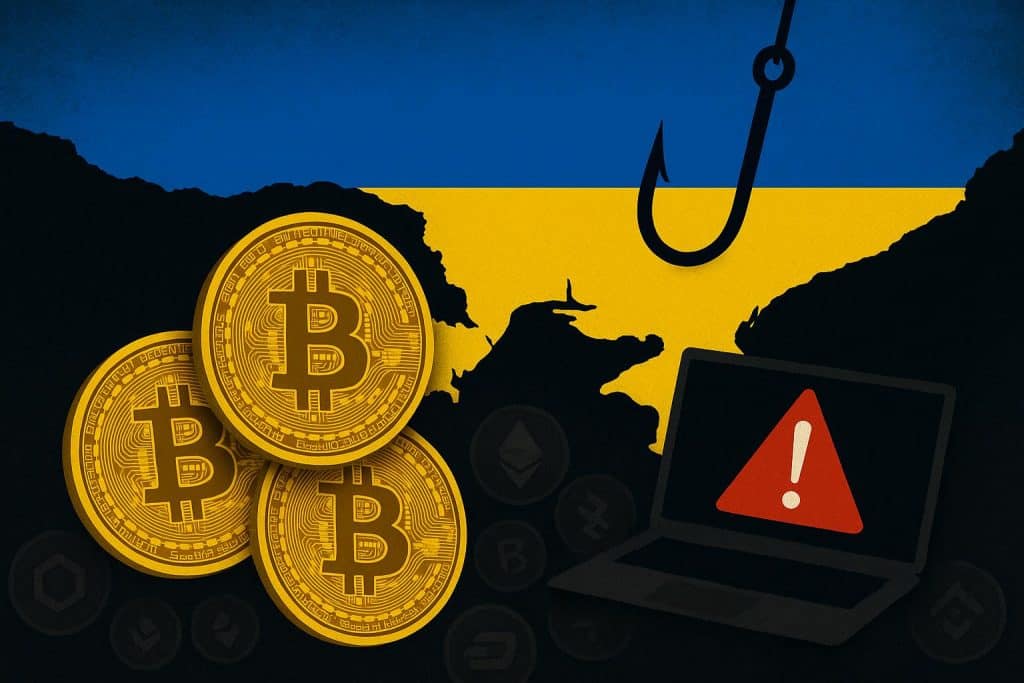
When Olha realized that something had gone wrong, the scam had already fulfilled its actual purpose: it had made muscle memory out of urgency. Sure, Olha is not real, but bear with me, she could be real.
It began the manner in which the contemporary Ukrainian life usually begins. In Telegram. A channel post, a forwarded message, a friend-of-a-friend link. Even the pitch was not crypto initially. It was relief: a fuel promo, a compensation form, a quick registration for a “government” service. Click here, log in there, confirm with a code. Sure, not all online claims are a fraud, my friend. But there IS a necessity to be careful.
There are video services that are fraudulent, and ones that are legit, and we have enough sense to tell them apart. If a browser extension, say, Clideo, says I’ll convert your audio to text, you know they mean business. When someone tells you to send over your wallet passcode for reward, you know you’ve got to be careful. And maybe call the authorities.
In Ukraine, cyberpolice has been urging victims to be cautious because scammers are actively creating fake pages of the state and also chatbots on which they direct victims to pay or surrender access credentials.
When your Telegram is stolen, the fake does not stop being a fake. Your account becomes a trusted loudspeaker. It writes to your contacts in your voice, at your hours, with your emojis. And since Ukraine is a country with a high crypto-use (Eastern Europe, and Ukraine in particular is always at the top of activity per capita), the next move is often financial.
So the message arrives from someone you actually know: “Hey, can you help? Quick transfer. I’m stuck. I’ll return it tonight.” Or the more expensive version: “Or the more costly: “We have a deal. In urgent need of USDT [Tether stablecoin]. Can you send to this wallet?”
Olha did not send money because she was a greedy lady. She forwarded it as she was congenial. That is the aspect that is being capitalized on: social trust tested.
And Telegram isn’t the only front door
The networking of dream-peddlers and call centers that have long existed in Ukraine selling their wares to foreigners and Ukrainians alike polished scripts, fake dashboards, forged profit charts, a voice on the phone that is so soothing that it could borrow your brain, all this has been an ecosystem.
The pattern is uniform in various cases reported either by Ukrainian law enforcement, or security experts: victims are convinced to invest in some sort of platform; initial gains are demonstrated; deposits are increased; withdrawals are presented as fees, taxes, verification, anti-money-laundering checks, and then no more.
One official case in the Ministry of Internal Affairs (MVS) of Ukraine involved a fraudulent investment scheme of large-scale losses with a well-built organization, in terms of recruitment, dealing with customers, and transfer of money, reported by the cyber police. That structure matters. It’s not a lone scammer in a hoodie. It’s a workflow.
Here’s why crypto fits these workflows so well:
- Crypto is fast.
- Crypto is cross-border.
- Crypto is irreversible when sent incorrectly.
- Stablecoins behave like digital dollars, which makes them psychologically easier for victims (It’s not ‘crypto’ per se, it’s basically USD.)
Pile in Ukraine reality, war, displacement, remittances, gig work, solicitation to use messaging apps at all times and the social surface area of scams becomes enormous.
TThen there is the aspect of a grey market: peer-to-peer (P2P) transactions. There is a large number of average citizens of Eastern Europe who are either buying or selling stablecoins through P2P. P2P is an ideal domain of scammers; it is a combination of normal business with antagonistic conduct. One of the trends: the buyer demonstrates that he has paid, forces the seller to send the USDT, and the exchange is returned or never hits. Binance has repeatedly cautioned its users against the P2P scam schemes of the false confirmations and coercion.
However, it is not only the financial evolution that is nasty. It’s identity-layer. After a criminal gets your Telegram, then he has your network. When they get your net they can go after your whales: friends in foreign lands, old friends, business clients, anybody who is apt to part with bigger checks without going through a ritual designed to last ten minutes.
A February 2026 Ukrainian case (reported by dev.ua) illustrates how high the stakes can get when a trusted Telegram identity is compromised: the story describes a victim transferring funds after a partner’s Telegram account was compromised, and a court process involving seizure/handling of a USDT wallet and recovery of a large amount. The specifics of any single case can vary, but the theme doesn’t: impersonation plus urgency beats rationality.
And that’s also where global trends collide with local reality
Chainalysis and other analytics groups have been documenting a sharp rise in scam volume and sophistication, including the industrialization of fraud and the way stablecoins are used as the settlement rail. Chainalysis’ 2026 scam-focused reporting frames crypto fraud as scaling in both professionalism and reach. TRM Labs similarly describes 2025 as a year where illicit activity remained highly adaptive, with scams and laundering mechanisms evolving alongside enforcement.
Enforcement does exist — and it’s getting more coordinated.
Europol announced a major international takedown of a cryptocurrency fraud network laundering hundreds of millions of euros, which is the direction you should expect more of: cross-border action, asset seizure, platform cooperation, and disruption rather than “one arrest fixes it.” Ukraine has also been involved in cross-border investigations around scam operations targeting foreign victims, including cases covered in regional reporting about call center raids and cooperation.
Still, the emotional math of scam victims rarely changes. It’s not “I believed in magic internet money.” It’s “I believed the person I trusted.” Or “I believed the official-looking page.” Or “I believed the app because it showed profits.” The crypto part is often just the exit door: the last step where money becomes hard to retrieve.
So, what would a Znayshov-style takeaway look like — practical, Ukrainian, and blunt?
A few rules that stop most crypto scams before they start:
- Treat Telegram like a public street, not your kitchen. If a “friend” asks for money, verify through a second channel (phone call, voice note with a specific phrase, or a known offline question). Cyberpolice warnings emphasize how often fake pages/chatbots and account theft are used as the entry point.
- Never trust screenshots as proof of payment. P2P scams frequently rely on fake receipts and urgency.
- If someone promises guaranteed returns, you’re not investing — you’re donating to crime. Fake investment platforms and “managers” are an old script with new UI.
- Assume “verification fees” are a trap. Real platforms don’t demand endless add-on payments to “unlock” withdrawals.
- Don’t hand over remote access to your phone/PC. Scam call centers often push remote tools to “help you secure funds” or “complete KYC.”
Olha’s story ends in an annoying place, not a cinematic one: paperwork, passwords, warnings to friends, and the slow rebuilding of trust. That’s the honest ending. Scams don’t just steal money — they tax your nervous system.