

If you’re planning a deck in Tacoma or anywhere else in Pierce County, you already know the drill: if it’s not raining right now, it probably will be in twenty minutes. While most homeowners spend their time interviewing deck installers to find the right fit for their vision, the most important decision actually happens underground before the first board is ever laid.
Between our famously “squishy” wet soil and those pesky glacial till layers, your foundation choice is the difference between a deck that stays level for decades and one that starts to lean after two seasons.
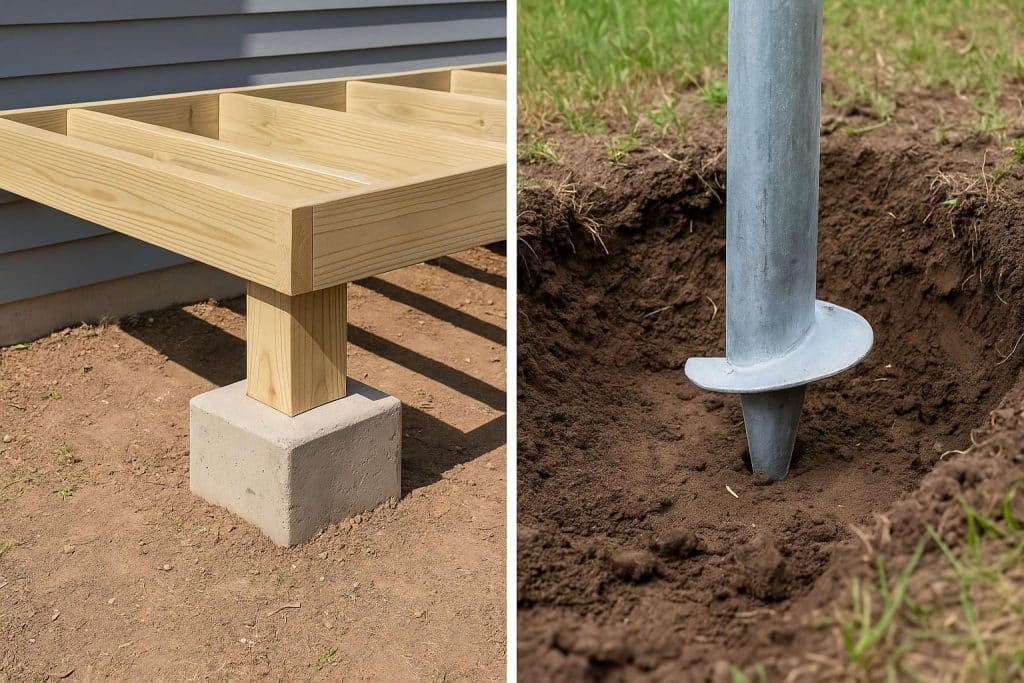
Here’s the “real talk” breakdown on the two heavy hitters: Traditional Concrete and Helical Piles.
1. The Old School Way: Concrete Footings
We’ve been pouring concrete into holes since… well, forever. It’s the method every contractor knows and every building inspector in Pierce County can sign off on in their sleep.
Why you’ll love it:
- The Price Tag: On a flat, dry lot, concrete is almost always the cheapest way to get started.
- DIY Friendly: If you’re a weekend warrior, you can rent an auger and buy bags of mix at the local Home Depot.
Why it might stress you out:
- The “Tacoma Mud” Factor: Digging a hole in February in Pierce County is a recipe for a mess. If it rains, your holes turn into soup, the sides cave in, and you’re stuck waiting for a “dry spell” that might not come until July.
- The Waiting Game: Once you pour, you’re stuck watching paint—er, concrete—dry. You can’t build on it for several days.
- The Mess: You’ll have piles of dirt sitting in your yard that you’ll eventually have to haul away or hide under the porch.
2. The Modern Move: Helical Piles
Think of these as giant, heavy-duty structural screws. A specialized machine literally “screws” them into the ground until they hit solid earth.
Why they’re a game-changer:
- Rain? What Rain?: You can install these in a literal downpour. There’s no digging and no mud.
- Instant Gratification: As soon as the pile is in the ground, you can start framing. No waiting for curing. You can save a week (or more) on your project timeline.
- Precision: The machine measures exactly how much “push back” the soil is giving. You know it’s solid before you even strike a nail.
- Save Your Landscaping: Because there’s no big excavation, your grass and garden stay mostly untouched.
The Trade-offs:
- The Upfront Cost: You’re paying for a specialized pro and high-grade steel. Per post, it’s more expensive than a bag of Quikrete.
- Rock Problems: If your backyard is basically a buried rock quarry, these can hit “refusal,” which gets complicated.
Which one is right for your backyard?
| If your yard is… | Go with… | Why? |
|---|---|---|
| Flat, dry, and easy to dig | Concrete | Keep your money for the fancy grill; concrete will work just fine here. |
| A “wetland” or stays muddy | Helical Piles | Concrete footings in muck are a nightmare to get right. |
| On a steep slope | Helical Piles | Lugging heavy concrete up a Tacoma hillside is back-breaking work. |
| Tucked in a tight spot | Helical Piles | Small machines can fit where a concrete truck or large excavator can’t. |
The Bottom Line
In our neck of the woods, concrete is the budget-friendly classic, but it requires Mother Nature to cooperate—and we all know how reliable she is in Pierce County.
If you want the peace of mind that your deck won’t budge (and you want to start building a new deck now), helical piles are worth the extra investment. They take the guesswork out of our unpredictable soil and keep your project moving, rain or shine.
Before you buy your lumber, have a pro take a look at your dirt. It’s not the most glamorous part of the job, but it’s the part that keeps your morning coffee from sliding off the table five years from now!