

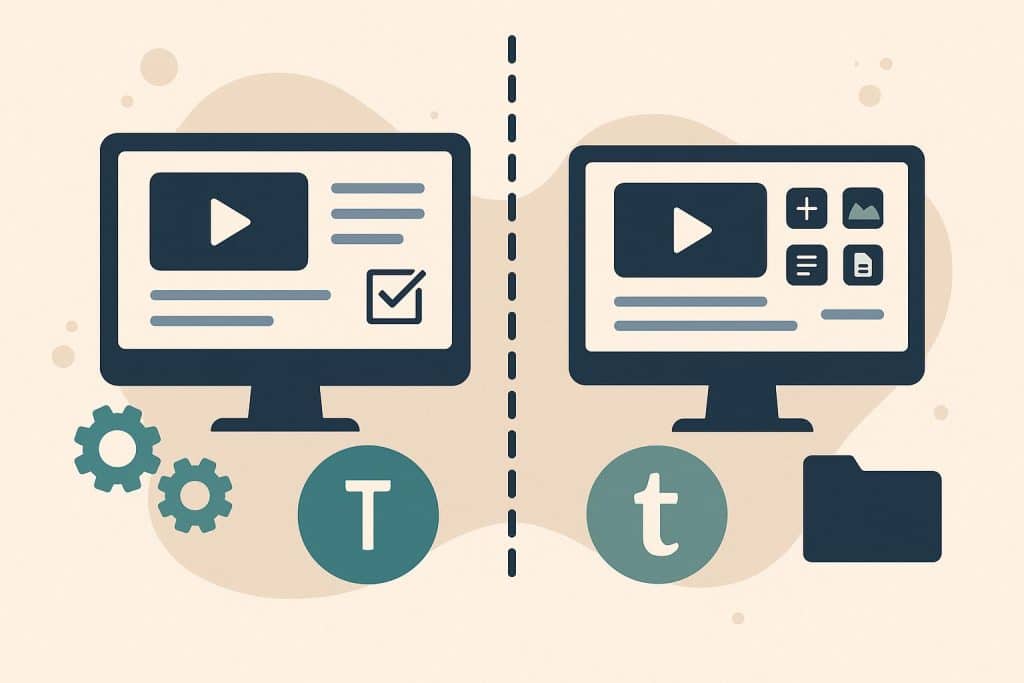
The learning websites have become hugely popular. Thinkific and Teachable are two of the more well-known options that provide features for creating and hosting digital courses. Both platforms share the intention to support educators in their course management, but differ in their approach. By looking into these variations, teachers can determine which one is the best fit for their own particular teaching style and objectives.
Course Creation Tools
Many people debate between Thinkific vs. Teachable; both of these platforms offer course-building tools. Thinkific makes it easy for instructors to organize their content using a simple drag-and-drop builder. Teachable has a built-in course builder as well, but the interface sticks closer to a step-by-step flow. Fans of Thinkific may enjoy the visual style of the platform. On the other hand, Teachable may entice users who appreciate a more guided approach. You can upload video, audio, and text to both platforms, but the layouts and organization features vary only slightly.
Content Organization Features
Well-organized course content is essential. Thinkific gives instructors the ability to structure content in chapters, subchapters, and lessons. With Teachable, however, the organization of content into sections and lectures comes first. Both platforms have different names with the same idea: guiding learners through the material. While Teachable supports a multi-level system, it tends to work well for simple content and may not be the best for creating more complex courses.
Student Engagement Options
Engaging learners is an integral part of any successful course. Thinkific implements quizzes, surveys, and assignments, enabling the assessment of progress and feedback collection from learners. Teachable also offers these options, but goes a step further with advanced features such as course compliance, which ensures students have to finish the lessons before moving on. While Thinkific is about creating fun quizzes and multimedia assignments, Teachable focuses on tracking learner progress and completion of the course over time.
Customization and Branding
For many educators, standing out with a unique brand identity matters. Thinkific provides extensive customization options, enabling users to personalize page colors, fonts, and layouts. It also provides custom domains and certificates. Although Teachable does have branding tools, it takes a premium plan or custom code skills to make certain design changes. If you prefer a personal touch, you may be inclined to choose Thinkific, whereas instructors looking for plug-and-play templates may prefer Teachable.
Student Management and Communication
Effective communication facilitates a healthy learning environment. Thinkific offers instructors tools for emailing, tracking, and enrolling students. Automatic notifications make sure that everyone knows about course updates. Teachable includes options for communication, such as course announcements and direct messages (some features are available only at certain levels of subscription). Both platforms support student groups but have different ways of managing communication.
Assessment and Certification
Assessments measure learner perception and support learning. The quiz builder from Thinkific allows you to create a variety of questions, including multiple-choice or short-answer. Upon finishing the course, the student will receive their certificates automatically. Teachable has quizzes too, but sticks to multiple-choice questions mostly. You can get certificates, but you will need to integrate them with a third-party app for more flexibility. Thinkific offers various assessment tools that accommodate different learning styles, while Teachable has a more straightforward assessment process.
Pricing and Access Management
Course control access is a significant aspect of course delivery. Creators can create free, paid, or subscription-based courses with Thinkific, and Thinkific also allows for flexible payment plans. With drip scheduling, instructors can issue content according to a timetable, allowing students time to digest the material. Teachable has similar pricing structures but also provides features like one-click upsells and bundles. Both use access controls to limit content; however, they vary in how they manage enrollment and payments.
Analytics and Reporting
Instructors can track performance in a course to improve teaching. Thinkific also presents insights into your students’ progress, quiz performances, and overall course completion rates. You have access to analytics dashboards on Teachable, which cover sales, student engagement, and revenue growth. Thinkific may appeal to instructors who desire more granular data, whereas Teachable caters to those who want a high-level overview at a glance.
To Sum Up
Selecting between Thinkific and Teachable comes down to personal choices of the instructor and their teaching methodologies. Meanwhile, Thinkific provides more freedom in content organization and branding, whereas Teachable is great for guided course creation and compliance features. These platforms enable interactive learning and ensure proper communication. Keeping these differences in mind will help educators choose the best solution for their specific courses and learners.