

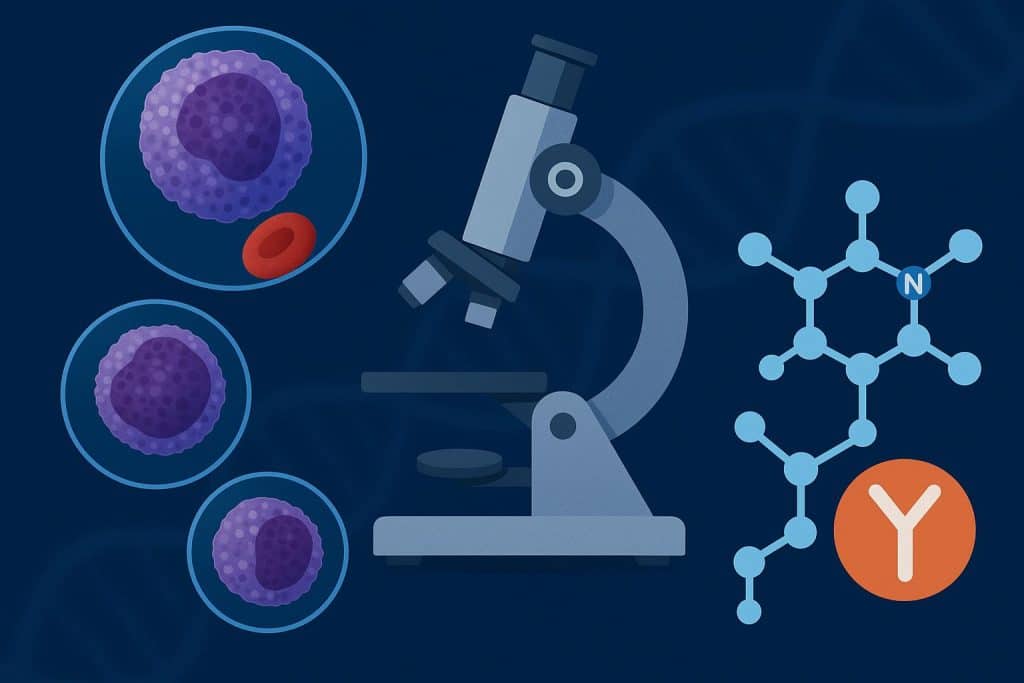
Waldenström macroglobulinemia, which is a rare form of non-Hodgkin lymphoma that grows slowly. This disease is characterized by the abnormal production of monoclonal immunoglobulin M antibodies. Originating in lymphoplasmacytic cells in the bone marrow, it may cause anemia, fatigue, neuropathy, bleeding problems, and hyperviscosity syndrome. While in most cases this disease has a very slow progression, there is no cure for WM, and instead lifelong management plans must be implemented.
Over the past ten years, there has been great change in WM treatments. Which was once dominated by chemoimmunotherapy combinations, which became the base of the treatment approach, there is now the introduction of targeted therapies, which are transforming the field. In this group of innovations, Bruton’s tyrosine kinase (BTK) inhibitors have stood out as an important therapeutic class in WM care due to their role in interference with the key signaling paths that support the survival of malignant B cells.
Researchers are examining newer BTK inhibitors with the aim of evaluating their efficacy, safety profiles, and activity in the setting of treatment resistance. Available clinical data have assessed these agents across multiple lines of therapy.
The Role of BTK Inhibition in WM Treatment
BTK is a central enzyme in B cell receptor signaling that supports the growth and also survival of malignant cells in WM. Through inhibition of BTK activity, targeted therapies are able to suppress abnormal signaling and reduce disease progression.
With the introduction of first‑generation BTK inhibitors, clinical studies observed treatment responses in patients with Waldenström macroglobulinemia, including those with relapsed or refractory disease. While there were very promising response rates seen early on, some issues presented themselves over time. There were reports of certain patients that had cardiac issues, bleeding complications, or could not tolerate the treatment, which in turn led to them stopping the therapy. Also, there was observed development of resistance mutations and great variation in how patients responded to the treatment, which in turn created a need for more selective therapies.
This increasing knowledge of BTK biology has brought about the development of new agents, which also improve on the tolerability profile.
Advances in Next-Generation BTK Inhibitors
Next‑generation BTK inhibitors are designed to be more selective for the BTK enzyme and to reduce off‑target effects, which may be associated with a lower incidence of adverse events. Also, these therapies are in growing use in both treatment-naive and previously treated WM patients.
Clinical studies have reported responses measured by overall response rate, progression‑free survival, and disease control over time. Additionally, newer BTK inhibitors have been evaluated for their safety profiles, including the incidence of cardiac‑related adverse events, in comparison with earlier therapies.
There is increasing focus on the use of more selective BTK inhibitors in patients who do not respond to first‑generation therapies. In this context, researchers are also evaluating BTK inhibitors in combination with monoclonal antibodies and other targeted agents to assess their effects on response depth and durability.
Emerging data suggests that targeted therapies are tailored to the individual patient’s characteristics, mutation profile, and past treatment.
Clinical Evidence Supporting Novel BTK Strategies
Clinical studies have reported treatment responses in both previously treated and newly diagnosed patient populations, supporting the ongoing investigation of BTK‑targeted therapies in current treatment approaches.
One of the key developments involves increasing interest in zanubrutinib waldenstroms, is seen where research is related to its selectivity and tolerability profile. In terms of clinical trials that have been conducted for this next-generation BTK inhibitor, they report strong response rates and also sustained disease control in several WM patient groups.
In clinical studies, some BTK inhibitors have demonstrated a lower incidence of certain adverse events compared with first‑generation agents, while maintaining comparable therapeutic activity. Also under investigation are results related to progression-free survival, degree of response, and patient quality-of-life.
Ongoing studies are examining how molecular features, such as MYD88 and CXCR4 mutations, are associated with treatment response. These findings may help inform more individualized treatment approaches and support therapy selection based on patient‑specific factors.
Safety Considerations and Long-Term Management
Given the chronic nature of the condition and the potential for prolonged treatment, long‑term safety remains an important consideration in clinical research. Also, physicians must balance disease control with issues of treatment-related side effects and quality of life.
Although the introduction of BTK inhibitors has expanded treatment options, attention to potential adverse events remains important. Reported adverse events include atrial fibrillation, hypertension, bleeding, infections, and gastrointestinal effects. Newer BTK inhibitors have been designed with greater selectivity, which may be associated with a reduced incidence of some of these complications.
Treatment choices are becoming a function of the patient’s age very much, coexisting health issues, past treatments, and also the overarching goal of care. For some patients what is put forth to maintain disease stability and reduce side effects may be as valuable as achieving large responses.
As the availability of multiple BTK-targeted agents grows, clinicians are presented with greater flexibility in the care of their patients, which in turn may see transitions between therapies as needed.
Future Directions in WM Research
Research in the field of WM is seeing great expansion at present with BTK inhibition, which is a primary area of that research. There are reports of combination therapies, noncovalent BTK inhibitors, and new immunotherapeutic approaches, which will perhaps also improve patient results.
The combination of BTK inhibitors with anti-CD20 monoclonal antibodies is an area of active study that is being seen to determine if there is a synergistic effect that in turn will enhance response durability. Also in the research space are treatments that aim to break through the resistance that has developed to present BTK inhibitors.
Beyond BTK‑targeted therapies, future research is expected to further explore genomic profiling and biomarker identification to support more individualized treatment approaches. As a deeper understanding of WM biology develops, it is thought that clinicians will be able to very precisely tailor therapies to the molecular makeup of each individual patient.
Conclusion
The field of Waldenström macroglobulinemia treatment has seen great change with the introduction of BTK-targeted therapies. Clinical studies have examined novel BTK inhibitors for their efficacy, safety, and role in long‑term disease management.
Recent clinical studies have examined selective BTK inhibition as a treatment approach in Waldenström macroglobulinemia. As ongoing research refines treatment strategies, future approaches to Waldenström macroglobulinemia are expected to further explore precision medicine concepts, combination therapies, and considerations related to patient quality of life.