

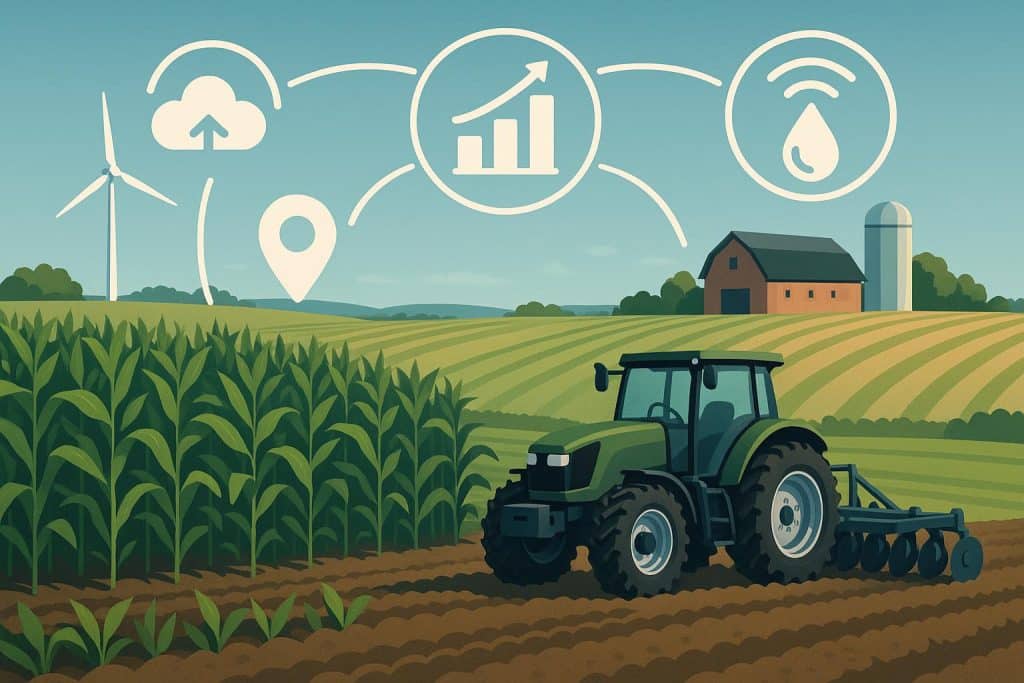
Farming has always been a complex and demanding activity, but in today’s world, farmers face unprecedented challenges. Increasing population demands, unpredictable weather patterns, soil degradation, pest invasions, and fluctuating market prices all contribute to a high-pressure environment. Traditional farming methods often struggle to keep up with these dynamics, leading to inefficiencies, reduced yields, and financial strain. In such a scenario, implementing a crop management system can be transformative.
Digital solutions for farming are not just tools; they are comprehensive platforms that provide actionable insights. From monitoring soil health to planning harvest schedules, technology equips farmers with precise information that reduces guesswork and improves overall farm management. With these tools, farming can evolve from a reactive process into a proactive and strategic operation, where challenges are anticipated and mitigated before they impact yield or quality.
Integrated Digital Solutions for Farm Management
Modern agriculture demands a holistic approach that brings multiple facets of farm operations together. A robust agriculture ERP serves as the backbone for this integration, connecting various modules such as crop planning, resource management, labor allocation, machinery tracking, and financial oversight. By consolidating these functions into a single platform, farmers gain a comprehensive view of their operations, allowing them to optimize processes and reduce inefficiencies.
Some of the key features of integrated farm management platforms include:
- Crop Planning and Scheduling: Enables farmers to choose crops based on soil type, seasonality, and market trends. This ensures better yield and reduces the risk of crop failure.
- Soil and Nutrient Management: Monitors soil conditions and recommends precise fertilization schedules, improving soil health while reducing unnecessary input costs.
- Irrigation Management: Automates watering schedules based on real-time soil moisture data, conserving water and optimizing plant growth.
- Pest and Disease Monitoring: Uses sensors and predictive models to detect early signs of infestation, preventing major crop losses.
- Harvest and Yield Tracking: Provides detailed reports on harvest progress and performance, facilitating better planning for storage, processing, and sales.
Integrating these features through a single platform ensures that every decision, from sowing to marketing, is data-driven. Farmers no longer have to rely solely on experience or intuition; instead, they have precise insights at their fingertips, enabling better outcomes and improved efficiency.
Data-Driven Decisions and Precision Agriculture
One of the most significant benefits of digital farm solutions is their ability to provide actionable insights through data analytics. Precision agriculture focuses on optimizing farm operations at a micro-level by analyzing variables such as soil conditions, weather forecasts, crop health, and growth patterns. With the integration of IoT-enabled sensors, drones, and satellite imagery, farmers can collect highly detailed data and feed it into their management system.
The results of such a data-driven approach are transformative:
- Resource Optimization: Accurate data on soil moisture and nutrient levels ensures that water, fertilizers, and pesticides are applied precisely where they are needed, reducing waste and costs.
- Yield Prediction: Advanced analytics provide estimates for crop output, enabling farmers to plan marketing and storage strategies effectively.
- Timely Interventions: Early detection of diseases or pests allows corrective measures to be taken before significant damage occurs.
- Financial Insights: Data-driven insights inform budgeting, expenditure control, and profitability analysis, helping farmers make informed financial decisions.
By combining precision agriculture with an agriculture ERP, farmers can manage their operations more strategically. Real-time monitoring and predictive analytics transform farming from a reactive process into a proactive system, where risks are minimized, and productivity is maximized.
Operational Efficiency and Market Readiness
Efficiency is crucial for any agricultural operation, particularly when it comes to labor management, machinery utilization, and supply chain coordination. Modern farm management systems facilitate seamless integration of these components, allowing farmers to assign tasks, monitor workforce performance, and track machinery usage. This level of control ensures that farm activities are completed on schedule and resources are utilized optimally. For instance, automated labor tracking helps in planning workforce allocation during peak seasons, ensuring that tasks such as planting, irrigation, and harvesting are executed efficiently.
Another key advantage of digital solutions is their impact on market readiness. Timely harvests and efficient supply chain management mean that crops reach the market at their optimal quality, reducing spoilage and maximizing revenue. Additionally, predictive analytics on crop performance and market trends help farmers make informed decisions about storage, pricing, and sales timing. Whether managing a small farm or a large agricultural enterprise, these tools level the playing field by enabling informed decision-making, reducing operational risks, and improving profitability.
Sustainability and Future Trends
Sustainability is no longer a peripheral concern in agriculture; it is a central requirement for long-term success. Digital farm solutions play a vital role in achieving sustainable practices by optimizing resource usage, minimizing chemical inputs, and reducing environmental impact. Automated irrigation, precise fertilization, and real-time monitoring of soil health contribute to responsible resource management while maintaining crop productivity. The future of agriculture lies in the integration of advanced technologies such as artificial intelligence, IoT, and blockchain. AI-powered analytics will allow for predictive disease control, accurate yield forecasting, and smarter crop rotation strategies.
Drones and satellite imagery will provide continuous monitoring of field conditions, while blockchain will ensure complete traceability of produce from farm to market, enhancing transparency and consumer trust. These advancements make a strong case for investing in an agriculture ERP that is scalable, adaptable, and capable of integrating with emerging technologies. By combining sustainability with technological efficiency, farmers can achieve better yields, reduced costs, and improved environmental stewardship.
Conclusion
In conclusion, modern farming is increasingly reliant on digital solutions to manage the complexities of agricultural operations effectively. Implementing a crop management system integrated with an agriculture ERP allows farmers to streamline operations, optimize resources, monitor crop health, and make data-driven decisions. From improved labor management to predictive analytics and market forecasting, these tools provide comprehensive support across all aspects of farm management.
For farmers seeking a reliable platform to enhance efficiency and productivity, AgriChain offers an advanced solution. It integrates crop management, supply chain visibility, and financial planning into a single platform, providing actionable insights for better decision-making. With AgriChain, farmers can achieve operational excellence, sustainability, and profitability while staying ahead in a rapidly evolving agricultural landscape.