

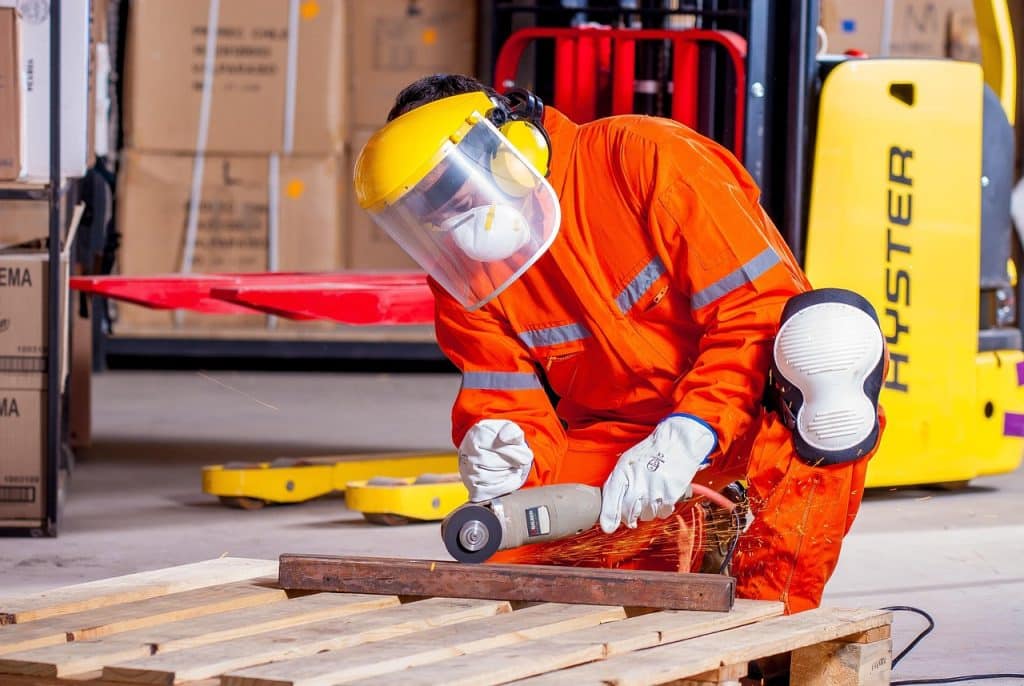
The Foundational Role of Illumination in Industrial Safety
In the demanding world of industrial operations, safety is paramount. Every day, countless workers face environments that can be complex, expansive, and sometimes hazardous. One of the most critical elements in safeguarding these spaces is proper illumination.
Good lighting isn’t just about seeing; it’s about seeing clearly, far, and consistently. It reduces accidents, improves productivity, and boosts overall security. From vast outdoor yards to intricate machinery, ensuring adequate visibility is a foundational step toward a safer workplace.
In this comprehensive guide, we will explore the nuances of long-distance illumination and its vital role in industrial safety. We will dig into the challenges inherent in industrial settings, examine various lighting technologies, and discuss how to select the most effective and durable solutions for your specific needs. Join us as we shine a light on creating safer, more efficient industrial environments.
Proper illumination in industrial settings is far more than a convenience; it’s a fundamental safety requirement and a cornerstone of operational efficiency. Adhering to established visibility standards, such as those set by OSHA and ANSI/IES, is crucial for preventing accidents, enhancing worker productivity, and bolstering overall site security. When an environment is adequately lit, the risk of slips, trips, and falls—common workplace incidents—is significantly reduced. Workers can more easily identify moving machinery, read critical safety signs and labels, and perform intricate tasks without straining their eyes. This not only minimizes errors but also combats worker fatigue, leading to a more alert and effective workforce.
The benefits extend beyond immediate safety. A well-illuminated facility fosters a sense of security, deterring unauthorized access and allowing surveillance systems to operate at peak effectiveness. By investing in superior lighting, industries are not just meeting compliance; they are actively cultivating a safer, more productive, and more secure operational environment.
Enhancing Situational Awareness
Situational awareness is critical in any industrial setting, and lighting plays a pivotal role in its improvement. When workers can clearly perceive their surroundings, they are better equipped to react to potential hazards and perform their duties safely.
- Preventing Slips, Trips, and Falls: Adequate lighting illuminates obstacles, uneven surfaces, and wet areas, helping workers navigate their environment confidently and avoid common accidents. Shadows and glare, often present in poorly lit spaces, can obscure these dangers, making proper light distribution essential.
- Identifying Moving Machinery: In environments with heavy equipment and moving parts, clear visibility is non-negotiable. Bright, uniform illumination enables workers to quickly identify the presence and movement of machinery, maintaining safe distances and preventing collisions.
- Reading Safety Signs and Labels: Critical information, from warning labels on hazardous materials to emergency exit signs, must be instantly legible. Effective lighting ensures that these vital visual cues are easily seen and understood, even from a distance or in rapidly changing conditions.
- Reducing Eye Strain and Fatigue: Performing tasks in dim or flickering light forces the eyes to work harder, leading to strain, headaches, and increased fatigue. High-quality, consistent illumination minimizes these issues, keeping workers more comfortable, focused, and less prone to errors or accidents.
Boosting Productivity and Accuracy
Beyond safety, optimal lighting directly impacts the efficiency and quality of industrial work. When workers can see clearly, they can perform tasks more quickly and accurately, contributing to overall productivity.
- Task-Specific Lighting: Different tasks require different levels and types of illumination. Precision work on an assembly line, for instance, demands brighter, more focused light than general pathway illumination. Tailoring lighting to specific tasks ensures that workers have the exact visual conditions needed to excel.
- Quality Control Inspection: In manufacturing and inspection processes, the ability to detect subtle flaws or inconsistencies is paramount. High Color Rendering Index (CRI) lighting, which accurately reveals true colors, is essential for effective quality control, ensuring products meet stringent standards.
- Minimizing Operational Errors: Clear visibility reduces the likelihood of mistakes, whether it’s misreading a gauge, incorrectly assembling a component, or mishandling materials. This leads to fewer reworks, less waste, and smoother operations.
- Creating a More Comfortable Work Environment: A well-lit space contributes to a positive work atmosphere. It can improve morale, reduce stress, and make the environment feel more open and inviting. A comfortable worker is often more engaged and productive.
Core Challenges in Industrial Environments
Industrial environments pose unique challenges for illumination systems. Unlike standard commercial or residential lighting, industrial lights must withstand harsh conditions, extreme temperatures, corrosive atmospheres, and high-vibration areas while maintaining consistent performance and safety. These demanding settings necessitate lighting solutions engineered for resilience and reliability.
Hazardous Locations
One of the most critical considerations for industrial lighting is its suitability for hazardous locations. These are areas where flammable gases, vapors, liquids, combustible dusts, or ignitable fibers may be present in quantities sufficient to produce explosive or ignitable mixtures.
- Explosive Gases and Dusts: Industries that handle chemicals, petrochemicals, grain, or pharmaceuticals often operate in environments where the air can become saturated with potentially explosive substances.
- Flammable Materials: Storage and processing of flammable liquids and gases pose significant risks, requiring lighting that will not become an ignition source.
- Class/Division/Zone Classifications: Regulatory bodies like the National Fire Protection Association (NFPA) and the International Electrotechnical Commission (IEC) classify hazardous locations based on the type of hazardous material, its likelihood of presence, and the duration of its presence. Understanding these classifications (e.g., Class I, Division 1, Group C & D, or Zone 1, Zone 20) is crucial for selecting appropriate lighting.
- Ignition Risks: Even a small spark, a hot surface, or an exposed electrical component can trigger a catastrophic explosion in these environments. Therefore, lighting fixtures must be designed to contain any internal explosion or prevent surface temperatures from reaching ignition points.
- The Need for Certified Equipment: All lighting used in hazardous locations must be certified by recognized testing agencies (such as UL, CSA, ATEX, or IECEx) to ensure compliance with rigorous safety standards. For instance, the BRICK® portable explosion-proof LED area light is certified for Class 1, Div 1 & 2; Groups C & D, offering over 11,500 lumens of light output with a 60° reflective optic beam angle, making it suitable for tank entry and other high-risk operations.
Demanding Operational Conditions
Beyond explosion risks, industrial lighting must contend with a myriad of other environmental stressors that can compromise performance and longevity.
- Moisture and Water Ingress: From wash-down areas in food processing plants to outdoor facilities exposed to rain and humidity, industrial lights must be sealed against water ingress. IP (Ingress Protection) ratings, such as IP66 or IP67, indicate a fixture’s resistance to dust and water, including high-pressure jets or temporary submersion.
- High-Impact Risks: In busy industrial settings, lights are subject to accidental impacts from machinery, falling objects, or moving vehicles. Fixtures need robust housings, often made from durable materials like aluminum or reinforced plastics, to withstand such abuse without failing.
- Continuous Operation Requirements: Many industrial processes run 24/7, meaning lighting systems must be capable of continuous, long-duration operation without frequent maintenance or replacement. This places a premium on long-life components and efficient thermal management.
- Maintenance Accessibility Challenges: In large facilities or those with high ceilings, accessing light fixtures for maintenance can be costly, time-consuming, and disruptive. This further underscores the need for highly durable, reliable lighting with extended service intervals.
Key Types of Industrial Lighting
The diverse nature of industrial operations necessitates a variety of lighting solutions, each custom to specific requirements. This section will explore the various lighting categories designed to meet these needs, from general illumination to highly specialized applications.
General Area & Task Lighting
The foundation of any industrial lighting scheme involves providing adequate illumination for broad areas and specific workstations.
- High-Bay Fixtures: Designed for spaces with high ceilings (typically 20 feet or more), high-bay lights provide broad, powerful illumination over large areas like warehouses, manufacturing floors, and gymnasiums. Modern LED high-bays offer significant energy savings and longer lifespans compared to traditional HID lamps.
- Low-Bay Fixtures: For spaces with lower ceilings (under 20 feet), low-bay lights offer a more diffused and less intense light distribution, suitable for workshops, garages, and smaller production areas.
- LED Technology: Light-Emitting Diodes (LEDs) have revolutionized industrial lighting due to their superior energy efficiency, long lifespan, instant-on capability, and excellent color rendering. They also offer precise control over light distribution and intensity, making them ideal for a wide range of industrial applications.
- Uniform Light Distribution: Achieving uniform illumination across a workspace is crucial to eliminating dark spots, reducing glare, ensuring consistent visibility, and minimizing eye strain.
- Task-Specific Lights: For detailed work, such as assembly, inspection, or operating control panels, task lights provide focused, adjustable illumination directly where it’s needed. These often include articulating arms or magnetic bases for flexible positioning.
Specialized Industrial Lighting Solutions for Hazardous Locations
As discussed, certain industrial environments require lighting that can safely operate in the presence of flammable or explosive materials.
- Explosion-Proof Design: These fixtures are engineered to prevent internal sparks or explosions from igniting external hazardous atmospheres. They are built with robust housings that can contain an explosion, and their surface temperatures are controlled to prevent ignition.
- UL and CSA Certifications: These certifications from Underwriters Laboratories (UL) and Canadian Standards Association (CSA) verify that lighting products meet stringent safety standards for hazardous environments, ensuring compliance and worker protection.
- NEMA Ratings: The National Electrical Manufacturers Association (NEMA) provides ratings for enclosures that indicate their level of protection against environmental factors such as dust, water, and corrosion. For example, NEMA 4X indicates resistance to corrosion and water jets, which are crucial in many industrial settings.
- Portability for Confined Spaces: Many industrial tasks require temporary lighting in confined spaces, such as tanks, vessels, or underground tunnels. Portable, certified explosion-proof lights are essential here, often featuring durable construction and easy deployment. The BRICK® portable explosion-proof LED area light is a prime example, designed for such demanding applications.
- Tank Entry Lighting: Specifically designed for the unique challenges of tank entry, these lights provide powerful, safe illumination within enclosed spaces where hazardous gases might accumulate.
- Durable Construction: Beyond explosion-proofing, these lights are built to withstand physical abuse, extreme temperatures, and corrosive chemicals, ensuring long-term reliability in the harshest conditions.
Long-Distance and Remote Illumination
For applications like perimeter security, large yard operations, or inspecting tall structures, standard floodlights are often insufficient. This requires reliable industrial long-distance lighting that uses advanced optics and powerful sources to project a focused beam over hundreds of feet, ensuring visibility where it’s needed most. These specialized systems are crucial for various critical functions:
- Surveillance and Security: Long-distance illumination is vital for monitoring vast outdoor areas, critical infrastructure, and borders at night. Technologies like high-powered LED spotlights, often vehicle-mounted, can project intense beams over significant distances. Infrared (IR) illuminators, such as the IP66 LED Illuminator, can provide covert illumination for cameras up to 65 meters or even 450 meters, depending on the model and camera sensitivity. For extreme ranges, advanced systems like ZLID™ (Zoom Laser IR Diode) technology can provide clear, even images in complete darkness for up to 5km, with illumination ranging from 1km to 6km and dynamically adjusting intensity and focus with lens zoom. This allows for detailed identification of objects and subjects far beyond the reach of conventional IR LEDs.
- Search and Rescue Operations: In emergency situations, the ability to illuminate a wide area or pinpoint a distant target is paramount. Powerful vehicle-mounted spotlights, including options like the New LED StarBeam Vehicle Mounted Spotlight or Remote Control Vehicle Spotlights, provide the necessary reach and flexibility. Our NightRay LR Manual and KH NightRay LR Specification Sheet offer further details on robust, long-range spotlight solutions.
- Large-Scale Site Monitoring: Construction sites, mining operations, and port facilities often span vast areas that require consistent, powerful illumination for night work and security. This often involves a combination of fixed long-range floodlights and mobile spotlight units.
- Industrial Inspection: Inspecting tall structures, pipelines, or remote equipment from a distance often relies on specialized long-distance illumination to reveal details that would otherwise be invisible.
- Communication Systems: Beyond direct illumination for vision, long-distance light can also be used for data transmission. For example, a long-range visible-light communication system based on an LED collimating lens can achieve a data rate of 210 Mbit/s at a bit-error rate of 10^-3 over 90 meters using a 1 W LED and a carefully optimized collimating lens. This demonstrates the role of precision optics in focusing light for both visibility and data transfer over distances.
- Scientific Research and Ranging: For highly specialized applications, active laser ranging systems have pushed the boundaries of long-distance illumination and measurement. These systems, which use lasers at both the transmitting and receiving ends, have the potential to achieve sub-millimeter accuracy over interplanetary distances, offering a performance improvement of more than three orders of magnitude over current state-of-the-art space ranging systems. Researchers are exploring how an interplanetary precision laser could reach Mars and beyond, enabling new tests of fundamental physics and detailed studies of other celestial bodies. The crucial difference between active and passive illumination here is that active systems emit their own light, allowing stronger signals over greater distances, whereas passive systems rely on reflected light, which decays much faster (1/R² for active vs. 1/R⁴ for passive).
- Advanced Imaging in Low-Light: A novel approach called “patterned flash” has shown significant promise for seeing farther in the dark. This technique concentrates optical power into a dot array, providing stronger signals at sparsely distributed points. This allows for post-processing to resolve important objects and details at long distances in low-light environments, outperforming conventional flashes. It can even be used for depth perception by projecting texture as a structured light system.
The effectiveness of these long-distance illumination systems is measured and quantified by several factors:
- Range: The maximum distance at which a target can be adequately illuminated or detected.
- Intensity: The brightness of the light at the target distance, often measured in lux or foot-candles.
- Beam Uniformity: How evenly the light is distributed across the illuminated area, preventing hot spots or dark zones.
- Accuracy: For ranging or communication systems, this refers to the precision of measurement or data integrity over distance.
- Beam Divergence: The spread of the light beam as it travels, which is critical for maintaining intensity over long distances. Optics like collimating lenses and mirrors play a crucial role in minimizing divergence and focusing the light into a tight, powerful beam.
Safety considerations are paramount with high-power or long-range illumination systems, especially lasers. Systems like ZLID™ explicitly state Nominal Ocular Hazard Distance (NOHD) ratings, warning of potential permanent eye damage at close ranges. Proper training, protective eyewear, and safety protocols are essential when deploying such powerful light sources. The latest advancements continue to focus on increasing range, improving efficiency, and enhancing the intelligence of these systems through adaptive optics and integrated sensors.
Choosing the Right Industrial Lighting Solutions
Selecting the appropriate industrial lighting solutions requires a systematic approach that considers the unique demands of your facility, operational goals, and safety regulations. It’s not merely about brightness but about smart, durable, and compliant illumination.
Understanding Key Metrics for Industrial Lighting Solutions
To make informed decisions, grasp the fundamental metrics that define lighting performance.
- Lumens vs. Lux:Lumens measure the total amount of visible light emitted by a source. It’s the “output” of the light fixture.
- Lux (or foot-candles in imperial units) measures the illuminance, which is the amount of light falling on a given surface area. This is what truly matters for visibility at the workspace. A light with high lumens might not provide high lux if the beam is too wide or the fixture is too far away.
- Color Rendering Index (CRI): This metric, on a scale of 0-100, indicates how accurately a light source reveals the true colors of objects compared to natural light. A high CRI (typically 80+ for industrial settings) is crucial for tasks requiring color discrimination, such as quality control or wiring.
- Color Temperature (CCT): Measured in Kelvins (K), CCT describes the “warmth” or “coolness” of the light. Lower CCTs (e.g., 2700K-3000K) produce a warm, yellowish light, while higher CCTs (e.g., 5000K-6500K) produce a cool, bluish-white light, often preferred in industrial environments for improved alertness and visibility.
- Beam Angle and Distribution: The angle at which light is emitted dictates how widely or narrowly the light spreads. Narrower beam angles are suitable for long-distance spot illumination, while wider angles are for general area lighting. Proper light distribution ensures uniform illumination without glare or dark spots.
- IP (Ingress Protection) Ratings: This two-digit code indicates a fixture’s resistance to solids (dust) and liquids (water). An IP65 fixture is dust-tight and protected against water jets, while an IP67 fixture can withstand temporary submersion. This is vital for wet, dusty, or wash-down areas.
Prioritizing Durability and Certification
In industrial settings, the longevity and safety compliance of lighting fixtures are as important as their photometric performance.
- Material Construction: Industrial lights must be built from robust materials like heavy-duty aluminum, stainless steel, or impact-resistant polycarbonate to withstand harsh conditions, corrosion, and physical impacts.
- Vibration Resistance: Machinery, forklifts, and other industrial activities can generate significant vibrations. Lighting fixtures must be designed to resist these forces to prevent component failure and ensure consistent operation.
- Thermal Management: LEDs generate heat, and effective thermal management (e.g., through heat sinks and proper housing design) is crucial to dissipate this heat, prevent overheating, and maintain the long lifespan of LED components, especially in high-ambient-temperature environments.
- Verifying UL, CSA, and other relevant certifications for safety compliance: For industrial lighting, especially in hazardous locations, verifying certifications from recognized bodies such as UL, CSA, ATEX, or IECEx is non-negotiable. These certifications ensure that the product has been rigorously tested and meets the necessary safety and performance standards for its intended application. Without proper certification, you risk non-compliance, potential hazards, and liability.
Frequently Asked Questions about Industrial Lighting
We often encounter common questions about the specific requirements and terminology of industrial lighting. Here are some of the most frequent inquiries:
What is the difference between explosion-proof and hazardous location lighting?
The terms “explosion-proof” and “hazardous location lighting” are related but not interchangeable. Hazardous location lighting is a broad category that refers to any lighting fixture designed for use in environments where flammable gases, vapors, liquids, combustible dusts, or ignitable fibers are present. These fixtures are built to prevent ignition of the hazardous atmosphere.
Explosion-proof lighting is a specific type of hazardous location lighting. It is designed with a housing strong enough to contain any internal explosion that might occur from the ignition of hazardous gases or dusts inside the fixture. This containment prevents the explosion from propagating to the surrounding atmosphere. Other types of hazardous location lighting might prevent ignition by limiting surface temperatures, encapsulating components, or using intrinsic safety designs that prevent sparks or excessive heat. So, while all explosion-proof lights are hazardous location lights, not all hazardous location lights are explosion-proof.
How do I determine the right amount of light for my facility?
Determining the right amount of light, typically measured in foot-candles (fc) or lux (lx), involves consulting industry guidelines and standards. OSHA (Occupational Safety and Health Administration) sets general requirements, while more detailed recommendations come from organizations such as the Illuminating Engineering Society (IES). The IES provides specific light-level recommendations based on the task being performed, the level of detail required, and the workspace characteristics. For example, a storage area might require 10-20 fc, while a precision assembly area could need 50-100 fc or more.
The best approach is often to engage a lighting professional who can perform a comprehensive site audit. They will assess your facility’s layout, tasks, and existing conditions to recommend appropriate light levels, fixture types, and optimal layouts to achieve uniform and effective illumination.
What does an IP rating on an industrial light mean?
An IP (Ingress Protection) rating is an international standard (IEC 60529) that classifies and rates the degree of protection provided by mechanical casings and electrical enclosures against intrusion by solid objects (such as dust) and liquids (such as water). It consists of two digits:
- First Digit (0-6): Indicates protection against solid particles.
- 0: No protection.
- 6: Dust-tight (no ingress of dust).
- Second Digit (0-9): Indicates protection against liquids.
- 0: No protection.
- 7: Protected against the effects of temporary immersion in water (up to 1 meter for 30 minutes).
- 8: Protected against long periods of immersion under pressure.
For example, an IP67-rated light is completely dust-tight (6) and protected against temporary immersion in water (7). This makes it highly suitable for wet and dusty industrial environments, such as food processing plants, outdoor facilities, or areas subject to wash-downs. Understanding IP ratings is crucial for ensuring the longevity and safe operation of lighting fixtures in challenging conditions.
Conclusion
In the complex and often challenging landscape of industrial operations, the role of effective illumination cannot be overstated. We’ve seen how proper lighting is not just a regulatory checkbox but a powerful tool for enhancing workplace safety, boosting productivity, and securing valuable assets. From mitigating the risks of slips and falls to enabling precise task performance and deterring intruders, light truly is foundational.
The journey through the core challenges of industrial environments, particularly hazardous locations and demanding operational conditions, underscores the critical importance of specialized, durable, and certified lighting solutions. Whether it’s an explosion-proof fixture for a chemical plant or a high-powered, long-distance spotlight for perimeter security, the right choice makes all the difference.
Advancements in technologies such as LEDs, specialized optics, and remote illumination systems continue to offer unprecedented capabilities. The ability to project focused light over kilometers for surveillance or to enable sub-millimeter accurate ranging for scientific research highlights the dynamic future of this field.
Prioritizing lighting as a key component of a comprehensive workplace safety strategy is an investment that yields significant returns in reduced accidents, improved operational efficiency, and greater peace of mind. By choosing appropriate, certified, and durable solutions, industries can ensure their environments are not just illuminated but truly optimized for safety and success. For more information on advanced long-distance lighting solutions, including remote-controlled vehicle spotlights, explore our full product range.