


The Core Pillars of Portable Sanitation Logistics
Construction sites often face unforeseen challenges. When emergencies arise, ensuring worker well-being and maintaining project momentum become critical. Rapid access to adequate sanitation is not just a convenience; it’s a fundamental necessity.
We understand the vital role that emergency construction toilet rentals play in these urgent situations. They are crucial for upholding public health, maintaining worker productivity, and adhering to strict industry standards. In April 2026, these standards are higher than ever.
This extensive guide provides a comprehensive overview of emergency construction toilet rentals. We will delve into everything from rapid deployment strategies and specialized equipment to essential compliance requirements and cost management. Understanding the broader landscape of National Emergency Sanitation Logistics is key to effective planning.
Effective portable sanitation logistics form the backbone of any large-scale operation, especially in emergency construction scenarios. This involves more than just dropping off units; it encompasses a sophisticated system of supply chain management, precise inventory tracking, and the capability for rapid deployment. Providers like United Site Services and Honey Bucket, with their extensive networks and fleets, exemplify the kind of infrastructure required to meet urgent demands. United Site Services, for instance, boasts over 140 US locations and 300,000+ inventory items, enabling nationwide emergency sanitation deployment. Similarly, Honey Bucket emphasizes its 24/7 emergency response as a core service, supporting diverse construction projects from residential to heavy civil.
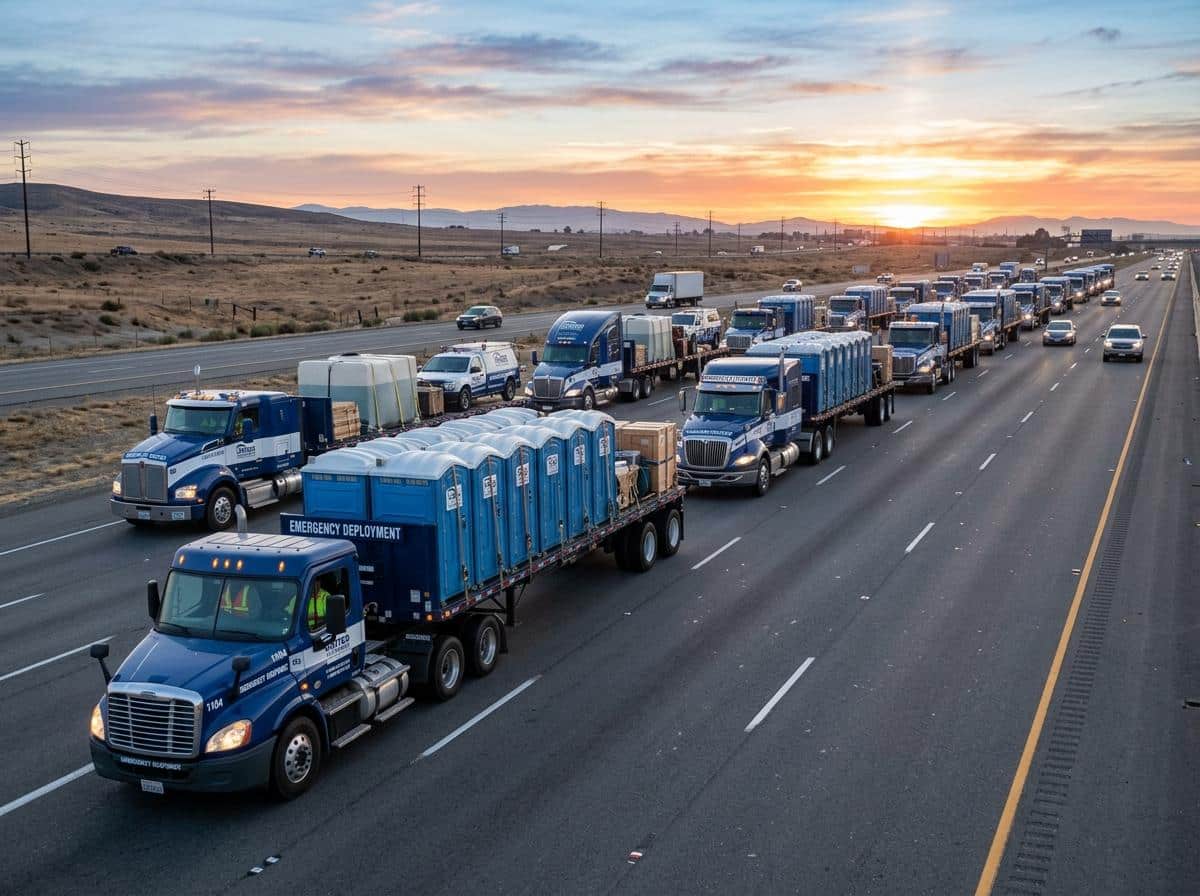
The essential logistical components for successful portable sanitation include:
- Delivery: Ensuring units arrive on-site promptly and are placed strategically.
- Maintenance: Regular servicing, cleaning, and restocking to maintain hygiene standards.
- Removal: Efficient and timely pickup of units once the project or emergency concludes.
- Inventory Management: Tracking available units and coordinating their movement across various locations.
- Customer Support: Providing responsive communication and problem-solving, especially during emergencies.
Strategic Planning for Portable Sanitation Logistics
Strategic planning is paramount to optimizing portable sanitation on any job site. It begins with a thorough site assessment to determine the most effective placement of units. Key considerations include accessibility for service trucks, visibility for workers, and distance from high-traffic areas. Best practices suggest placing units 10-15 feet away from main thoroughfares to minimize disruption and ensure safety. OSHA guidelines also recommend that portable toilets be within a 10-minute walk for workers, a rule of thumb that significantly impacts placement strategy, particularly on sprawling construction sites.
For effective emergency response, equipment staging is crucial. This means having units pre-positioned or readily accessible in strategic depots, allowing for immediate mobilization when a crisis strikes. Clear point of contact coordination ensures that communication channels remain open and efficient, enabling rapid decision-making. Furthermore, transparent billing practices are essential for managing costs and avoiding disputes during often chaotic emergency situations. For a deeper dive into the broader strategies for managing sanitation during unforeseen events, exploring resources on National Emergency Sanitation Logistics can provide valuable insights.
Deployment Speed and Emergency Response
In emergency construction, time is often of the essence. The ability to deploy sanitation solutions rapidly can mean the difference between maintaining a functional site and facing significant delays or health hazards. Providers have developed sophisticated systems to ensure swift response. United Site Services, for example, has supported recovery efforts in 75 declared disasters across over 30 states, and their teams undergo specialized training through a Hurricane Simulation Program to prepare for immediate, effective disaster response. This proactive approach ensures that when natural disasters like hurricanes or wildfires strike, their teams are ready to act.
United Rentals also highlights its extensive experience, having supported over 250 emergency responses across 30+ states, including major weather events and other critical incidents. Similarly, PortaPros emphasizes its 24/7 availability and pre-staged equipment for rapid deployment in emergencies such as wildfires or unexpected site disruptions. Their ability to mobilize immediately, often within 24-48 hours, is critical for supporting first responders and construction crews in crisis zones. This immediate fleet mobilization ensures that relief camps and urgent construction sites receive the necessary sanitation infrastructure without delay, allowing workers to focus on recovery and rebuilding efforts.
Compliance and Safety Standards for Modern Jobsites
Adhering to regulatory compliance and safety standards is non-negotiable on any construction site, and emergency situations are no exception. The Occupational Safety and Health Administration (OSHA) sets clear guidelines under 29 CFR 1926.51, which mandates the provision of toilet facilities. Specifically, OSHA requires at least one toilet for every 20 workers on construction sites with fewer than 20 employees. For sites with more employees, the ratio is typically one per 40 workers, though many industry experts and providers recommend a more generous ratio of one unit per 10 construction employees to ensure optimal hygiene and productivity, especially during intense emergency operations.
Beyond basic provision, accessibility is key. The Americans with Disabilities Act (ADA), often referenced through Title 24 standards in construction, requires accessible units for individuals with disabilities. These units are larger, feature grab bars on three sides, slip-resistant flooring, and wider doors with low-entry ramps to accommodate wheelchairs. Furthermore, gender-specific requirements may necessitate separate facilities or a sufficient number of unisex units to prevent queues and maintain privacy.
To ensure safety and environmental protection, modern portable toilets incorporate features like slip-resistant flooring to prevent falls and containment trays beneath units to prevent chemical spills, especially important in sensitive environments. Waste disposal must also comply with EPA wastewater guidelines, ensuring that waste is responsibly collected and treated at licensed facilities.
Number of Workers OSHA Requirement (29 CFR 1926.51) Recommended Best Practice (April 2026) 1-20 1 toilet 2 toilets 21-40 2 toilets 4 toilets 41-60 3 toilets 6 toilets 61-80 4 toilets 8 toilets 81-100 5 toilets 10 toilets >100 1 per 40 workers 1 per 10 workers Maintaining Hygiene through Portable Sanitation Logistics
Maintaining high standards of hygiene is critical for worker health and morale, particularly in emergency construction environments where conditions can be challenging. Regular and thorough servicing is the cornerstone of this effort. Typically, units are serviced weekly, but for high-usage sites, or during periods of extreme heat, twice-weekly servicing is often recommended to manage odors and maintain cleanliness.
The servicing process involves several key steps: vacuum pumping the waste from the holding tank, thoroughly cleaning and sanitizing all surfaces with eco-friendly disinfectants, and replenishing essential supplies such as toilet paper and hand sanitizer. Many providers utilize a multi-point sanitization check to ensure every unit meets stringent cleanliness standards before it’s put back into service.

Integral to modern sanitation is the integration of handwashing stations. These units are often placed alongside or near portable toilets and provide a crucial first line of defense against the spread of germs. PortaPros, for example, offers Breeze Handwash Stations capable of providing up to 300 hand washes per unit, significantly enhancing on-site hygiene. Some handwashing stations are foot-pedal operated, ensuring hands-free use for added sanitation.
Durable Features for High-Traffic Environments
Construction sites, especially those involved in emergency response, demand portable toilets that can withstand harsh conditions and heavy usage. Unlike units designed for events, construction-grade portable toilets are engineered for durability. They often feature reinforced steel corners and heavy-duty latches to prevent damage and ensure longevity. Anti-graffiti coating is a common addition, helping to maintain a professional appearance despite challenging environments.
For user comfort and safety, these units typically include translucent roofing to allow natural light, reducing the need for internal lighting during the day. Cascading wall vents provide optimal ventilation, minimizing odors and improving air quality inside the unit. Vandal-resistant door springs ensure the doors function reliably over thousands of uses, even in demanding situations.
The holding tanks in construction units are often oversized, with capacities around 65-70 gallons, capable of handling approximately 225 uses per cycle. This larger capacity reduces the frequency of servicing required, which can be particularly advantageous in remote or difficult-to-access emergency sites. These robust features contribute significantly to the reliability and functionality of portable sanitation in high-traffic construction environments.
Specialized Equipment for Emergency and High-Rise Projects
Modern construction, particularly in urban emergency scenarios, often requires sanitation solutions that go beyond the standard portable toilet. Specialized equipment has been developed to meet these unique challenges. For high-rise construction, units equipped with lift hooks allow them to be hoisted by cranes to upper floors, providing essential facilities as buildings ascend. Similarly, elevator-fit designs, often with caster wheels, enable units to be easily transported within service elevators to various levels of a structure.
For mobile or rapidly reconfiguring sites, trailer-mounted stations offer flexibility, allowing units to be easily relocated as project phases evolve. Innovation also extends to sustainability and comfort. Solar-powered restrooms provide eco-friendly options with amenities like fresh-water faucets and lighting, ideal for remote locations where power access is limited. Climate-controlled restroom trailers offer a higher level of comfort with heating and air conditioning, flushing toilets, and running water, which can be crucial for worker morale during long emergency deployments or in extreme weather conditions. Additionally, holding tank extensions can be utilized to increase capacity for extended periods between servicing, further enhancing operational efficiency.
Additional Site Services and Infrastructure
Beyond portable toilets, a comprehensive approach to emergency construction site logistics often includes a suite of complementary services and infrastructure. These additions enhance safety, efficiency, and overall site management. Temporary fencing, typically in 12-foot panels, is essential for securing perimeters, controlling access, and managing crowd flow, especially in disaster-affected areas. Roll-off dumpsters are critical for waste management, helping to keep sites clear of debris and maintaining a safe working environment.
For extended emergency operations, portable showers provide much-needed hygiene facilities, supporting worker well-being and preventing the spread of illness. Temporary power solutions ensure that critical equipment, lighting, and even climate-controlled restroom trailers remain operational. Specialized hydroflow sanitation systems offer advanced wastewater management for larger, more complex setups. Hand sanitizer stations, often freestanding or integrated into portable toilets, offer an immediate and convenient option for hand hygiene.
Here is a list of complementary site rentals that can significantly enhance emergency construction operations:
- Temporary Fencing (panels, gates, windscreens)
- Roll-Off Dumpsters (various sizes)
- Portable Showers (single or multi-stall trailers)
- Temporary Power Generators and Distribution
- Hydroflow Sanitation Systems
- Freestanding Hand Sanitizer Stations
- Potable Water Delivery
- Storage Containers
- Light Towers
Many providers, such as United Site Services, offer these diverse solutions as part of a “one provider, complete site solutions” model, streamlining logistics and coordination for construction managers. For more information on comprehensive site solutions, consider exploring resources like United Site Services’ offerings at Emergency Portable Toilet and Porta Potty Rental.
Operational Challenges and Cost Management
Emergency construction toilet rentals, while essential, come with their own set of operational challenges that can impact both efficiency and cost. Weather extremes pose significant hurdles. In winter, freezing temperatures necessitate winterization protocols, including the use of specialized anti-freeze chemicals in tanks and the temporary removal of external handwashing stations to prevent damage. Conversely, extreme heat can accelerate odor development and bacterial growth, requiring more frequent servicing.
Vandalism is another persistent issue on construction sites, leading to repair costs and potential downtime. Providers often use durable, reinforced units with anti-graffiti coatings to mitigate this. Site accessibility can also be a major challenge, especially in disaster zones or remote construction areas. Difficult terrain or limited access points can complicate delivery, servicing, and removal, potentially increasing operational costs.
Pricing for emergency rentals can be highly variable. Factors include the type of unit (standard, deluxe, ADA, high-rise), the rental duration, the frequency of servicing, and the distance for delivery and pickup. Standard porta potties might range from $50-$100 per week, while deluxe or specialized units can cost $75-$200 per week. Long-term rental discounts are often available for projects spanning several weeks or months, which can help manage overall expenses.

Requesting Quotes and Evaluating Provider Reliability
When facing an emergency construction situation, efficiently requesting quotes and evaluating provider reliability is crucial. Most reputable providers offer an online quote request process or dedicated emergency hotlines. To get the most accurate quote quickly, be prepared with details such as the estimated number of workers, project duration, site location, desired unit types, and required servicing frequency. Some providers, like United Rentals, even offer porta potty calculators to help estimate the number of units needed based on worker count and hours, ensuring OSHA compliance and optimal coverage.
Evaluating provider reliability involves several factors. Customer reviews can offer valuable insights; providers with 4.9/5 Google ratings and positive testimonials often indicate consistent service quality. Checking their track record in emergency deployments, such as United Site Services’ involvement in numerous declared disasters, can provide confidence in their capabilities. It’s also wise to inquire about their service call rates and response times.
While nationwide providers like United Rentals or United Site Services offer extensive inventory and broad geographic reach, local providers such as Callahead or National Construction Rentals might offer more personalized service or faster response times in specific regions. For example, Callahead emphasizes its construction-grade portable toilets designed for durability, while National Construction Rentals highlights its commitment to clean and reliable units across the nation. Understanding the strengths of both national and local options can help in making an informed decision for your specific emergency construction toilet rental needs.
Frequently Asked Questions about Emergency Sanitation
How quickly can units be deployed during a construction emergency?
In emergency construction scenarios, rapid deployment is a top priority. Most national providers maintain 24/7 emergency hotlines and operational teams dedicated to urgent responses. Depending on the scale of the disaster, the proximity of the nearest depot, and the specific site location, deployment can range from same-day service for critical needs to within 48 hours for larger-scale demands. Companies like United Site Services and PortaPros emphasize their immediate fleet mobilization and pre-staged equipment to ensure the quickest possible response when warnings are issued or emergencies arise.
What is the recommended ratio of toilets to workers on a large site?
While OSHA guidelines (29 CFR 1926.51) mandate a minimum of one toilet for every 20 workers (or one per 40 for larger sites), industry best practices for April 2026 often recommend a more generous ratio, especially in emergency construction settings. To maintain optimal hygiene, reduce wait times, and enhance worker productivity, many experts advise providing one portable toilet for every 10 employees. This higher ratio helps prevent overcrowding, ensures cleaner facilities, and supports better overall site sanitation, which is crucial during high-stress or extended emergency operations.
How do weather conditions affect sanitation maintenance schedules?
Weather conditions significantly impact the maintenance of portable toilets on construction sites. During periods of extreme heat or very high usage, units may require servicing twice a week instead of the standard weekly schedule to effectively manage odors and prevent bacterial growth. Conversely, cold weather presents challenges such as freezing waste and water. In these conditions, providers implement winterization protocols, which include adding specialized anti-freeze chemicals to the holding tanks. Additionally, external handwashing stations are often removed during winter months to prevent pipes from freezing and bursting, ensuring that internal hand sanitizer dispensers or alternative hand hygiene solutions are readily available.
Conclusion
The role of emergency construction toilet rental extends far beyond mere convenience; it is a critical component of project efficiency, worker welfare, and public health, especially in urgent situations. By understanding the core pillars of portable sanitation logistics, adhering to stringent compliance standards, and leveraging specialized equipment, construction managers can ensure their sites remain functional, safe, and productive, even in the face of unforeseen challenges.
As we move forward in April 2026, the emphasis on long-term sustainability, advanced hygiene practices, and robust infrastructure reliability continues to grow. Partnering with reliable providers who offer rapid deployment, comprehensive services, and a commitment to professional sanitation standards is paramount. Effective emergency construction toilet rental is an investment in the success and resilience of any project, from ground zero to final site clearance.