

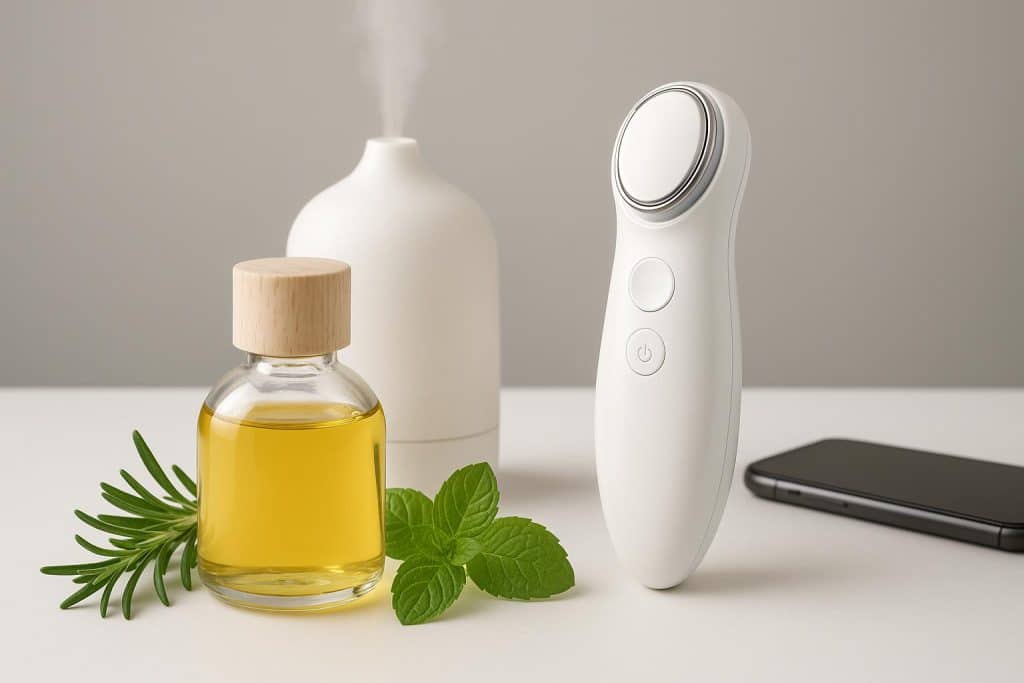
You’ve spent hundreds on beauty devices and organic essential oils, yet somehow your routine still feels incomplete. The facial steamer sits on one shelf, your lavender oil collection on another, and you’re stuck wondering if combining them is genius or disaster. Here’s what nobody tells you: most people get the integration completely wrong, either damaging their devices or irritating their skin because they’re following outdated advice. Modern beauty technology creates conditions where certain essential oils may enhance skincare routines—but only when you understand safe pairing principles. This guide shows you exactly which combinations work, which ones cause problems, and how to create an aromatherapy-enhanced routine that delivers spa-inspired results without the professional price tag.
QUICK TAKEAWAY:
Essential oils paired correctly with beauty devices may support enhanced skincare routines. Success requires heat-stable oils (lavender, frankincense), proper dilution ratios (0.25-0.5%), and understanding which combinations risk irritation or device damage.
Why Modern Devices Changed the Equation
Traditional aromatherapy meant applying oils and hoping they penetrated your skin barrier—a barrier specifically evolved to keep substances out. Results were inconsistent because the stratum corneum blocks most topical compounds effectively. Modern heat-based beauty devices changed this approach by creating controlled conditions that may temporarily affect skin barrier properties.
Facial steamers use warmth and humidity to soften the stratum corneum. While moderate heat exposure can influence transepidermal water loss (a marker of barrier function changes), this doesn’t guarantee deep penetration of essential oil compounds. What it does create is a narrow window where properly prepared oils may work more effectively than on dry, unstimulated skin.
Here’s the critical mistake most people make: assuming any essential oil works with any device. Tea tree oil in steam can trigger respiratory irritation. Certain citrus oils may increase photosensitivity concerns. The intersection demands understanding compatibility, dilution, and safety protocols rather than random experimentation.
Understanding Oil Selection and Stability
Not all essential oils behave identically when exposed to warmth or oxidative conditions. Several factors influence whether an oil works well with beauty devices. For comprehensive guidance on which oils maintain quality during heated treatments and proper dilution protocols for device-enhanced application, science-backed essential oil research provides detailed analysis matched to different skin types and equipment methods.
Heat and oxidation considerations: Heat can accelerate oxidation or degradation of essential oils, potentially reducing therapeutic value and increasing sensitization risk. Oils like rose and German chamomile tend to remain stable under moderate warmth, while more delicate compounds may lose potency or become more irritating when repeatedly heated.
Photosensitivity awareness: Cold-pressed citrus oils (bergamot, lime, lemon) contain furocoumarins that cause phototoxic reactions primarily with UV exposure. While the risk with visible LED wavelengths appears lower, it’s safest to avoid photosensitizing oils before any light-based treatments or sun exposure within 12-24 hours.
Skin tolerance factors: Individual skin reactivity varies significantly. Oils that work beautifully for one person may cause irritation in another, particularly when skin permeability changes from device use create enhanced contact with active compounds.
Creating Your Device-Enhanced Routine Safely
Professional estheticians treat essential oils as precision ingredients requiring careful preparation. Success comes from systematic approaches rather than guessing. Start with conservative dilution—one to two drops of essential oil per tablespoon of carrier oil creates a 0.25-0.5% dilution appropriate for facial application. This concentration provides aromatic benefits while minimizing irritation risk.
Apply diluted oils to clean skin before device use, or add three to four drops maximum to aromatherapy trays if your equipment includes them. For detailed safety protocols including optimal positioning and session timing tailored to different skin sensitivities and device types, Viva Aura Glow’s aromatherapy steaming protocols provide step-by-step instructions that integrate natural ingredients with modern equipment safely.
Critical device care: Never add essential oils directly to water tanks. This damages internal mechanisms, clogs components, and voids manufacturer warranties. If your device lacks an aromatherapy tray, topical application is your only safe option.
Timing considerations: Apply water-based serums while skin remains slightly damp from treatment, as this may support better absorption than application to completely dry skin. Wait thirty minutes before heavier oil-based products to avoid interfering with lighter actives.
Safety Protocols and Risk Management
When skin barrier properties change temporarily from device use, both beneficial and potentially irritating compounds may have enhanced contact. This makes safety protocols non-negotiable. Patch test every new combination twenty-four hours before full facial application. Mix one drop with carrier oil, apply to inner forearm, and monitor for reactions. Redness, itching, or burning indicates that combination isn’t suitable for you.
What to avoid: Undiluted essential oils on facial skin (high irritation risk), oils added to water tanks (device damage), mixing multiple unfamiliar oils simultaneously (impossible to identify problem sources if reactions occur), and facial application of known irritants like cinnamon or clove essential oils regardless of dilution.
Recognizing normal versus problematic responses: Mild, temporary pinkness that fades within fifteen minutes typically indicates normal thermal response. Persistent redness, itching, burning sensations, or hives signal problems requiring immediate cessation and cool water rinsing.
FAQ: Essential Oils + Beauty Devices
Q: Can I add essential oils directly to my facial steamer’s water tank?
A: No. Manufacturers explicitly prohibit this as oils damage heating elements, clog mechanisms, and void warranties. Use designated aromatherapy trays if your device includes them, or apply properly diluted oils topically before steaming sessions.
Q: Which essential oils work well with heated beauty devices?
A: Lavender, German chamomile, and frankincense show good thermal stability and lower irritation rates in general use. Avoid cold-pressed citrus oils due to photosensitivity concerns and spice oils like cinnamon or clove that commonly irritate facial skin.
Q: How do I know if my skin is reacting badly?
A: Mild pinkness fading within fifteen minutes typically indicates normal thermal response. Persistent redness, itching, burning sensations, or hives signal problems—stop immediately, rinse with cool water, and avoid that combination going forward.
Q: Can essential oils enhance LED light therapy results?
A: There’s insufficient evidence to confirm enhancement, but photosensitizing citrus oils should be avoided before any light therapy due to increased sensitivity risk. If using oils with LED devices, choose non-photosensitizing options like sandalwood.
Q: What’s the biggest mistake people make combining oils with devices?
A: Treating oils as afterthoughts rather than planning selection based on device type, treatment goal, and individual tolerance. Professional spas pre-select compatible oils and never use more than two simultaneously during technology treatments.
PRO TIP FROM ESTHETICIANS:
The ten minutes immediately after device treatment represent optimal application timing for water-based products. Professional protocols involve pre-selecting essential oils and serums before sessions, never improvising afterward. They apply lightweight, water-based products first (hyaluronic acid, niacinamide) while skin remains slightly damp, wait five minutes for absorption, then seal with appropriate moisturizer. This sequencing maximizes the post-treatment window—wandering off to find products wastes this timing advantage.
Integration Requires Knowledge, Not Just Products
The divide between natural skincare and beauty technology becomes less meaningful as users learn to combine approaches strategically. Essential oils may provide complementary benefits when paired thoughtfully with devices that create supportive conditions. Beauty technology offers controlled environments where properly selected oils can be integrated safely. This isn’t about choosing between methods—it’s understanding both sufficiently to avoid common mistakes while creating routines that work for your specific skin type and goals. When you know which oils show better stability, how dilution affects safety, and why application timing matters, you can develop spa-inspired protocols achievable at home.