

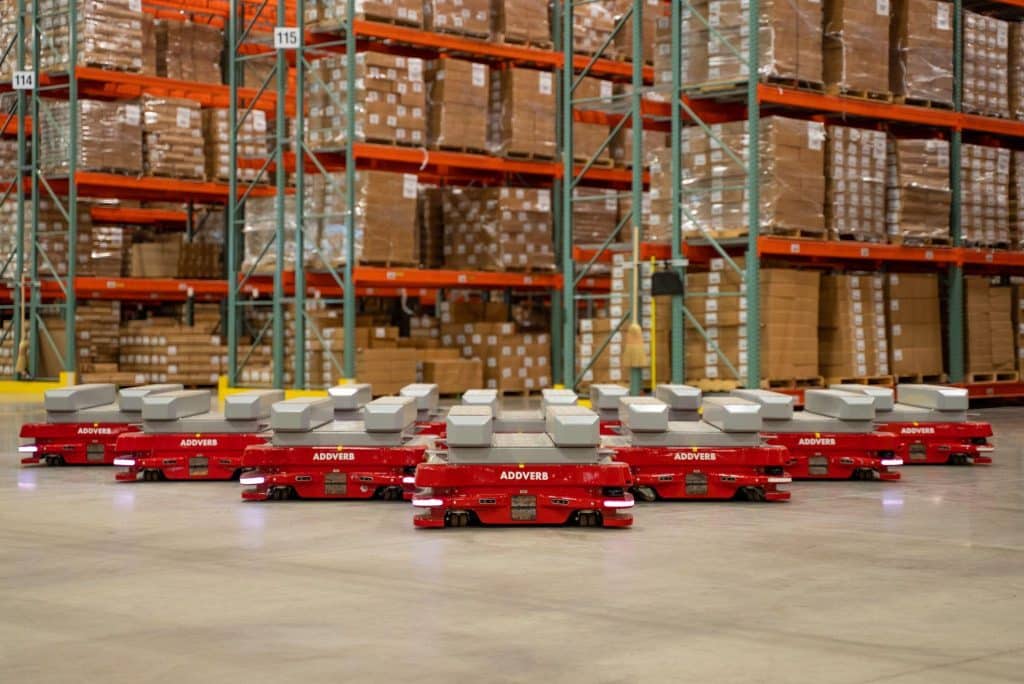
Warehousing has come a long way from dusty storage rooms and manual ledgers. Today, a single tap on a digital dashboard can track, move, and optimize thousands in real time. Much of this dramatic transformation is driven by the evolution of the Warehouse Management System (WMS), the digital backbone of modern supply chains.
With the expansion of e-commerce, logistics, and manufacturing, warehouse management solutions have grown from simple tracking systems into highly intelligent command centers operating through robotics, artificial intelligence, and automation.
How WMS Has Evolved with Robotics and Automation
In the early days, WMS platforms were nothing more than digital inventory trackers. TThey kept the operators informed regarding the matters inside a warehouse but gave little aid in optimizing the movement, storage, or retrieval of those items.
Then came the automation wave. Robotics, particularly Autonomous Mobile Robots (AMRs) and Automated Storage and Retrieval Systems (ASRS), transformed static storage spaces into dynamic, self-regulating ecosystems.
In the modern era, a warehouse management system is integrated with these robotic units. The WMS communicates on task assignments like picking, sorting, or replenishment to these robots instead of relying on human operators. This means faster rates of work, minimizing human errors amongst other things, and constant feedback from data that, over time, learns and gets better.
Key Technological Milestones in Warehouse Management
Any major leap in the WMS history has coincided with a technological breakthrough.
- Barcoding and RFID Tracking: Such systems brought visibility and accountability to every item, moving away from manual entries.
- Cloud Computing: Gave warehouse management solutions scalability, accessibility, and real-time service among different facilities.
- Internet of Things (IoT): The network connected devices, pallets, and robots for predictive maintenance and live tracking of performance.
- Artificial Intelligence (AI): Enabled systems to predict demand, optimize routes, and adapt workflows on the fly.
- Integration with Robotics: The latest and most revolutionary step, giving opportunity for real-time coordination of WMS and robotic systems to perform automated processes seamlessly.
While such developments have greatly increased warehouse efficiency, they have also changed the way human beings work: Those involved in manual labor on repetitive tasks are now engaged more in supervision, analytics, and optimization of systems
Real-World Examples of WMS Adapting to Robotics
A clear example can be seen in global e-commerce giants. Amazon, for instance, integrated robotics into its fulfillment centers, where their in-house WMS assigns picking routes to thousands of Kiva robots. This integration reduced order processing time by over 50%.
Similarly, many Indian logistics and retail companies now use warehouse management solutions that communicate directly with AMRs and robotic sortation systems. The WMS doesn’t just record product movement, it actively orchestrates it, ensuring every robot and human operator works in harmony.
Such hybrid models are setting the new global benchmark for warehouse efficiency and resilience.
Future Trends in WMS and Warehouse Automation
Warehouse management systems are still evolving. New trends will create new avenues for putting intelligence and automation even further into the process:
- AI-driven decision-making: WMS will anticipate demand surges and dynamically reconfigure storage layouts.
- Digital twins: Virtual replicas of entire warehouses can be simulated and optimized before implementing physical changes.
- Voice & vision automation: The systems will integrate with AR glasses and voice-directed devices for hands-free operation.
- Blockchain integration: To maintain traceability and security in a data-heavy warehouse ecosystem.
- Collaborative robotics: Cobots working with humans will become common, with the management done via a single WMS interface.
These technological evolutions will make the warehouses intelligent, fast, and adaptive, ready to usher in an era where agility will be distinguished as the defining factor for success.
Addverb’s Role in Shaping the Future of Warehouse Management
Among many actors of change stands Addverb, a global pioneer in robotics and automation. They conceptualize highly sophisticated warehouse management solutions that integrate with their robotic systems such as Dynamo (AMR), Zippy (Robotic sorter), Quadron (Shuttle-based ASRS), and SortIE (Vertical sortation).
Addverb’s Warehouse Management System, “Optimus,” acts as the intelligent brain of this automated infrastructure. It can carry out real-time data exchange between all machines, software, and operators, allowing for a highly synchronized and efficient warehouse ecosystem. Leveraging AI, IoT, and machine vision, Addverb guarantees that every warehouse it automates is more productive, accurate, and ready for the future.
Addverb is changing warehouse thinking, movement, and delivery through this deep integration of robotics and WMS.
Conclusion
From a simple inventory tracking system to an AI-powered robotics-integrated system, the warehouse management system evolves with the industries. As the automated landscape globalizes supply chains, smart warehouse management implementations will evolve businesses into being agile and intelligent to stay ahead.
Tomorrow’s warehouses will do more than just storing goods-they will think, adapt, and act. And in that future, the collaboration between humans, robots, and intelligent systems will become the epitome of true operational excellence.