

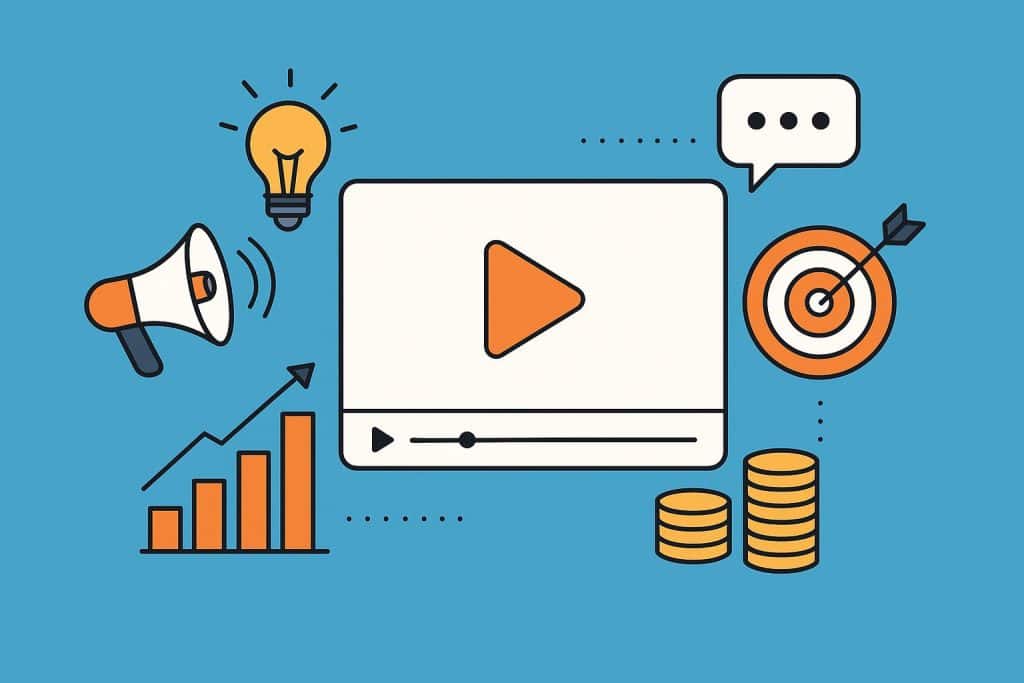
In a world where the average human attention span has supposedly dropped to less than that of a goldfish, marketers are facing a monumental challenge: how do you explain a complex product or service before the user scrolls past?
You can write a 2,000-word whitepaper, but most people won’t read it. You can host a webinar, but many won’t show up. Or, you can use an animated explainer video, a medium that combines the power of visual storytelling, audio reinforcement, and emotional connection into one neat, two-minute package.
Here is why animated explainer videos are no longer just a “nice-to-have” but a fundamental pillar of a modern marketing strategy.
1. Breaking Down the Complex
The primary job of an explainer video is right there in the name: to explain. However, some things are harder to explain than others. If you are selling a toothbrush, a photo works fine. But if you are selling a cloud-based SaaS platform that optimizes logistical supply chains using AI, a photo isn’t going to cut it.
Animation allows you to visualize the invisible. You can show data moving through a network, highlight the inner workings of a microscopic medical device, or demonstrate a global shipping route in seconds. By stripping away the clutter of the real world and using clean, purposeful visuals, you can create an effective explainer video that makes the complex feel simple.
2. Boosting Conversion Rates
At the end of the day, marketing is about ROI. Statistics consistently show that including a video on a landing page can increase conversion rates by up to 80%.
Why? Because video reduces “buying friction.” When a potential customer visits your site, they usually have a lingering fear that they don’t fully understand what you’re offering. If they don’t understand it, they won’t buy it. An animated video acts as a safety net, providing them with the clarity and confidence they need to hit the “Sign Up” or “Buy Now” button.
3. Better SEO and Longer “Dwell Time”
Google loves video. More specifically, Google loves websites that keep people engaged. One of the key metrics search engines use to rank your site is “dwell time”—how long a user stays on your page before heading back to the search results.
If a visitor lands on your blog and sees a wall of text, they might bounce in five seconds. If they see an engaging thumbnail for a 90-second animation, they are likely to stay and watch. This signals to Google that your page is valuable, which in turn helps boost your organic rankings. Essentially, animation doesn’t just help you sell; it helps people find you in the first place.
4. Personality and Brand Identity
Live-action video is great, but it has limitations. You are restricted by the actors you hire, the locations you can access, and the lighting on the day. Animation, however, is a blank canvas.
You can use your brand’s exact colour palette, incorporate your specific fonts, and create characters that perfectly represent your target demographic. This level of customization allows you to build a cohesive brand identity. Whether you want to be seen as a quirky, fun startup or a sleek, high-end financial firm, the style of animation, from hand-drawn motion graphics to 3D modelling, sets the tone instantly.
5. It’s Cost-Effective and Scalable
People often assume animation is more expensive than live-action, but the opposite is often true. For a high-quality live-action shoot, you need to pay for a crew, equipment, location permits, actors, and travel. If you want to change a line of dialogue three months later, you have to re-assemble the whole team.
With animation, the “set” exists in a computer. If you update your software interface or change your pricing, an animator can go back into the files and update the visuals without needing to start from scratch. It is a long-term asset that can be easily tweaked and repurposed for social media ads, email signatures, and trade show displays.
6. Tapping into Emotion
We are hardwired to respond to stories. Since childhood, most of us have associated animation with storytelling and entertainment. This creates a “lowered guard” effect. When a viewer watches an animated character facing a problem—a problem that mirrors their own—they empathize with that character.
When your service appears in the video as the solution to that character’s problem, the viewer feels a sense of relief. This emotional arc is much harder to achieve with a static PDF or a dry “About Us” page. By combining a relatable script with a compelling soundtrack and professional voiceover, you aren’t just giving them information; you’re giving them an experience.
7. Perfect for the “Mute” Generation
Think about how people consume content today. They are on the train, in a waiting room, or lying in bed next to a sleeping partner. Often, they are scrolling through social media with the sound off.
Animated videos are uniquely suited for this because they rely heavily on visual cues and on-screen text. Unlike a “talking head” video where you need to hear the speaker to understand the context, a well-designed animation can convey the message through motion and typography alone.
Summary
In a crowded digital marketplace, clarity is your greatest competitive advantage. If you can explain what you do faster and more effectively than your competitor, you will win the customer.
Animated explainer videos bridge the gap between “what you do” and “why it matters.” They capture attention, simplify the message, and drive the viewer toward action. If you’re looking to refresh your marketing strategy, it might be time to stop telling