

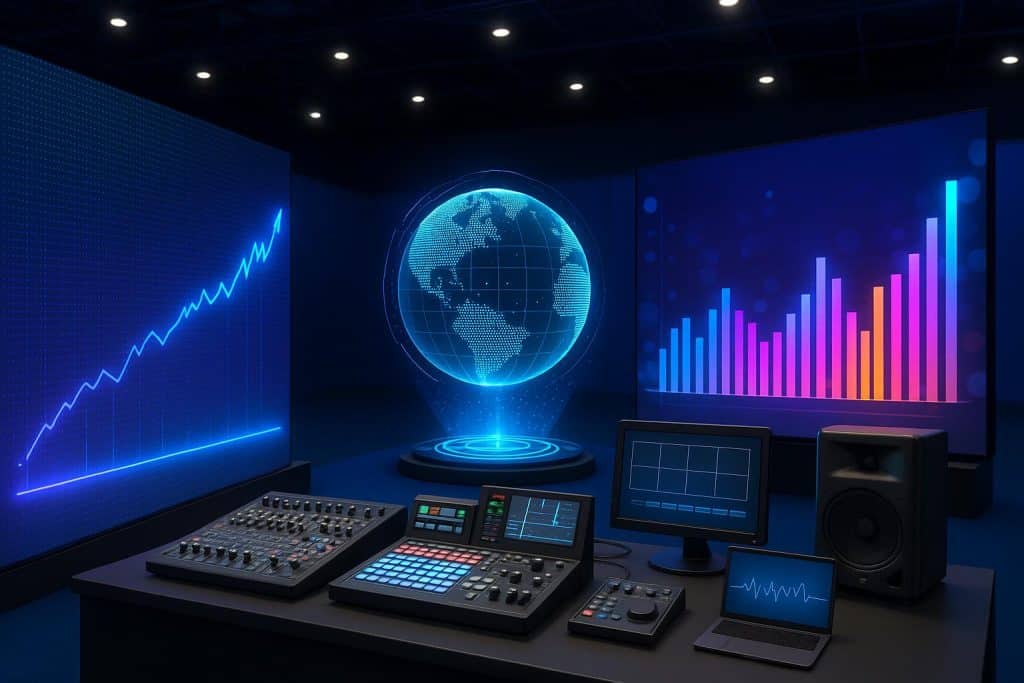
The audiovisual landscape for conventions and trade shows has undergone a dramatic transformation. What once required days of setup and extensive troubleshooting now deploys in hours with greater reliability and visual impact. For event planners and exhibitors preparing for upcoming shows at major convention centers, understanding these shifts is essential for creating memorable attendee experiences.
AI-Powered Production Is Becoming Standard
Artificial intelligence has moved well beyond buzzword status in live event production. AI-driven systems now handle real-time captioning and language translation, breaking down communication barriers at international conventions. Behind the scenes, predictive maintenance technology analyzes AV equipment performance in real-time, identifying potential issues before they disrupt an event.
For technical directors, this means fewer surprises during keynotes. For attendees, it translates to smoother, more accessible experiences where technology fades into the background and content takes center stage.
LED Video Walls Have Replaced Traditional Projection
The era of projector screens and ambient light battles is ending. High-resolution LED video walls now dominate convention floors and general sessions, delivering crisp visuals regardless of venue lighting conditions. Unlike projection systems that wash out under exhibit hall lighting, LED walls maintain vibrancy and contrast throughout the event day.
The technology has also become more accessible. What was once reserved for major arena productions is now standard equipment for experienced AV production companies serving regional convention centers. This democratization means mid-sized corporate events and regional trade shows can achieve visual quality that rivals national productions.
Hybrid Event Infrastructure Has Matured
The pandemic-era scramble to add virtual components has evolved into sophisticated hybrid production. Today’s hybrid events aren’t simply in-person events with a camera pointed at the stage. They require dedicated production teams managing multi-camera setups, platform integration, and real-time engagement tools that serve remote attendees as effectively as those in the room.
Convention centers have responded by upgrading their permanent infrastructure, installing dedicated connectivity and broadcast-quality systems. Event producers now regularly coordinate simultaneous in-person and virtual experiences with the same production values across both audiences.
Sustainability Requirements Are Driving Equipment Choices
Environmental responsibility has shifted from optional initiative to client requirement. Many organizations now mandate carbon reporting for their events, pushing AV vendors to document energy consumption and implement offset programs.
This pressure is accelerating adoption of LED lighting systems with intelligent dimming, hybrid power configurations incorporating renewable sources, and reusable scenic and cabling systems that reduce waste. Vendors who can quantify their environmental footprint are gaining competitive advantages, particularly with corporate clients managing ESG commitments.
AV-over-IP Networks Are Replacing Traditional Signal Distribution
The technical backbone of convention AV is transitioning from dedicated cable runs to network-based signal distribution. AV-over-IP technology allows audio, video, and control signals to travel over standard network infrastructure, offering flexibility that traditional systems cannot match.
For large convention centers, this means faster setup times and easier reconfiguration between events. A ballroom can transform from a general session space to multiple breakout rooms with minimal physical rewiring. Most industry observers expect AVoIP-ready devices to dominate new installations through the end of 2026.
What This Means for Event Planners
These technological shifts carry practical implications for anyone planning conventions or trade shows. Early engagement with AV production partners who understand both the technology and venue-specific requirements becomes more important as systems grow more sophisticated. The gap between vendors who have invested in current technology and those still operating with legacy equipment is widening.
The most successful events in 2026 will leverage these capabilities thoughtfully, using technology to enhance rather than overshadow the human connections that remain central to live events. Stunning visuals and seamless technical execution should serve the content and the community gathering to experience it.
For exhibitors and event organizers, the question is no longer whether to incorporate these technologies but how to deploy them most effectively within budget constraints. The good news: as adoption increases, costs continue to decrease, putting professional-grade AV production within reach of more events than ever before.