

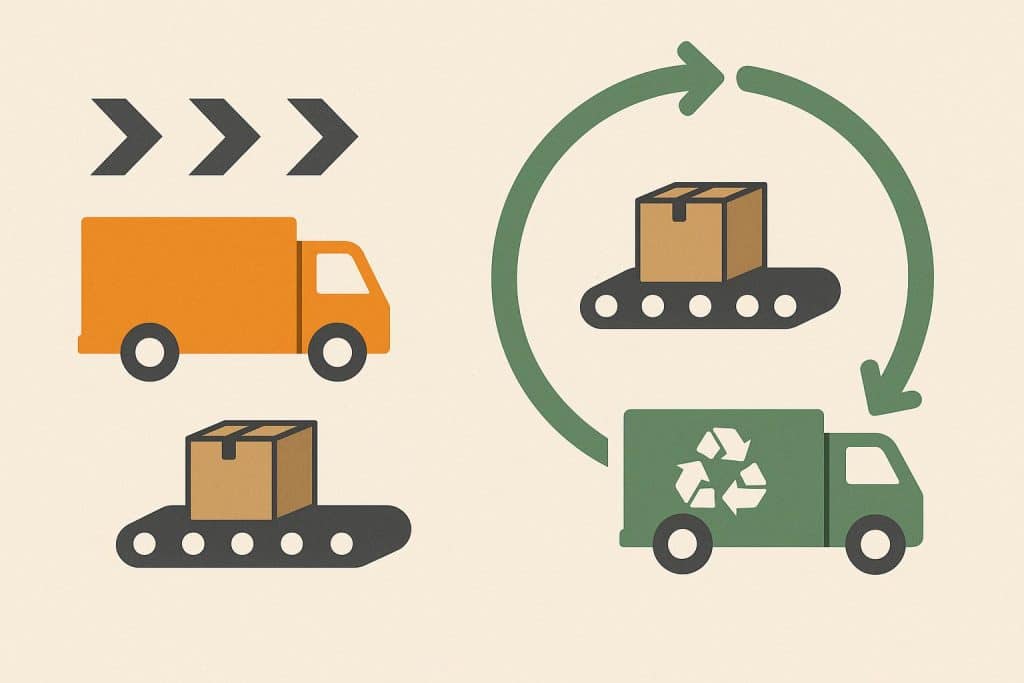
For decades, the goal of logistics was simple: get a product from point A to point B. Fast and cheap. This is the linear model. We take materials, make something, ship it out, and that’s it. The customer uses it and eventually throws it away. The journey has a clear, one-way path.
But this model has a problem. It creates a lot of waste. It uses up raw materials constantly. It fills landfills. And it’s starting to hit its limits.
Now, the industry is quietly shifting. The focus is turning from a straight line to a circle. This is circular logistics. It’s not just about delivery anymore. It’s about the return trip. It’s about learning to bring things back.
The Problem with the One-Way Street
The traditional supply chain is brilliant at moving things forward. But it often ignores what happens at the end. Think of all the packaging, the pallets, the containers, and the products themselves. They make a single, final journey to a home or a dump.
This is expensive. Businesses constantly buy new packaging and pay for waste removal. It’s also risky. Relying on ever-scarce raw materials can disrupt production. And, more and more, customers expect companies to be responsible for their environmental footprint. The old “take-make-dispose” approach doesn’t fit that expectation.
The linear model is hitting a dead end. We need a road that leads back.
Closing the Loop: What Circular Logistics Looks Like
Circular logistics designs the return journey into the system from the start. The goal is to keep products, materials, and packaging in use for as long as possible. It turns waste into a resource.
It starts with how things are designed. Can a product be easily repaired? Can its parts be separated and recycled? Then, it changes how things are packed. Are the boxes and pallets durable enough for many trips? Can they be easily collected?
Finally, and most crucially, it requires a robust system to bring things back. This is where logistics companies are learning new tricks. Instead of an empty truck returning to a warehouse, that truck now has a job on the return leg. It might collect used electronics for refurbishment. It might pick up empty shipping containers from a retail store. It might transport defective items to a repair center.
This isn’t just recycling. It’s a smarter way to manage physical assets. It treats everything in the supply chain as valuable, not just on its way out, but on its way back, too.
The Practical Benefits for Businesses
This shift isn’t just about being “green.” It’s about being resilient and smart. A circular approach offers clear, practical advantages.
First, it cuts costs. Reusing packaging and materials is cheaper than always buying new. It reduces waste disposal fees. It can even create new revenue streams from refurbished goods or reclaimed materials.
Second, it builds a more secure supply chain. By recovering materials, a business is less vulnerable to shortages and price swings in the raw material market. It gives a company more control.
Third, it meets a real demand. Consumers and other businesses increasingly prefer to partner with companies that have a clear plan for sustainability. A circular logistics model is a solid, actionable part of that plan. It’s a real answer, not just a marketing claim.
Implementing this requires a partner that gets it. This is where Deliveree business-focused delivery services show their value. A forward-thinking logistics provider doesn’t just see a delivery job. They see the entire cycle. They have the network and the mindset to help you plan the return flow, turning a cost centre into a recovery system.
The Road Ahead is a Circle
The move to circular logistics won’t happen overnight. It requires redesign, new partnerships, and a change in mindset. The first step is to start seeing the backhaul as an opportunity, not empty miles.
Look at your own operations. What materials are you throwing away? What products do your customers discard? Is there a way to design a return path for them? Start with one item, like your most common shipping pallet or a key product at its end-of-life.
Logistics is the circulatory system of commerce. For a long time, we thought it only had to flow one way. Now we know better. A healthy system recovers, reuses, and regenerates.
The future of getting things there is learning how to bring them back. And that changes everything.